Beetroot in Pots: Root and Leaves From One Plant
Grow beetroot in pots: pot depth, thinning seedlings, steady watering and harvest. Discover that the leaves are edible too and absolutely delicious.
In this article
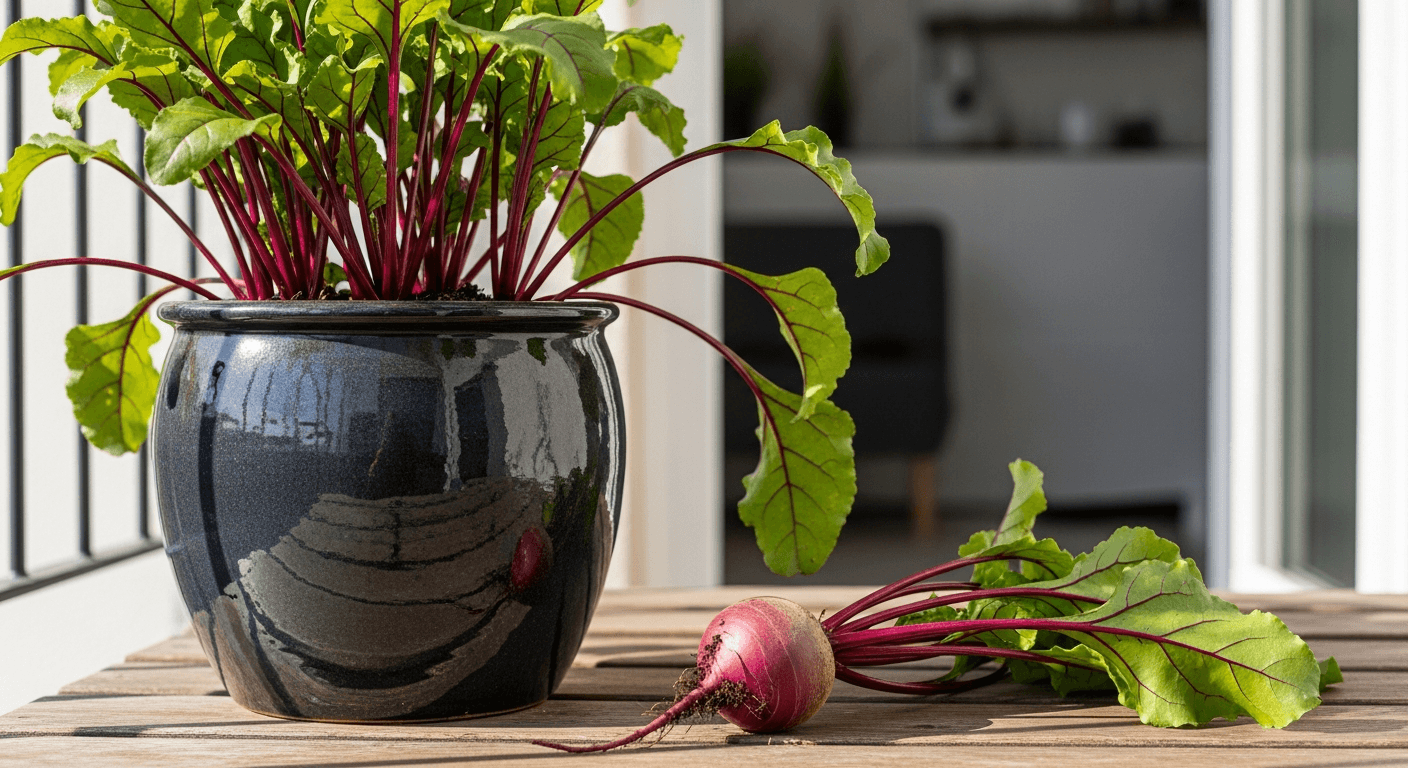
Beetroot is an ideal crop to start with on the balcony: it's tough, fast and double, because you use both the root and the leaves (just like chard — they're in the same family). In a pot it grows without trouble as long as you give it depth and steady watering.
| Fact | Beets in pots |
|---|---|
| Pot depth | 8-10 inches |
| Sowing | Clusters; thin to the strongest |
| Light | Half a day; tolerates part shade |
| Temperature | Cool season |
| Watering | Steady (prevents cracking) |
| Harvest | 8-12 weeks; root and leaves |
How to grow it, point by point
Pot and soil
- A deep pot: at least 8–10 in (20–25 cm) so the root can swell without hitting the bottom.
- A wide planter lets you grow several in a row.
- A loose, stone-free mix, rich in compost but not too high in fresh nitrogen (that would make lots of leaf and little root).
Is your plant looking off and you are not sure why?
Free AI diagnosisSowing and thinning: the key step
Each beet "seed" is actually a cluster containing several seeds, so you almost always get seedlings in groups. That's why thinning is essential:
- Sow ½–¾ in (1–2 cm) deep, in groups about 4 in (10 cm) apart.
- When the seedlings are 2 in (5 cm) tall, thin to the strongest one in each group.
- Don't toss the thinnings: their tender leaves are perfect for salad.
Without thinning, the roots compete and come out small and misshapen.
Sun, temperature and watering
- Sun: half a day or more. It tolerates a little part shade.
- Temperature: it's a cool-weather crop; it does great in spring and fall. Extreme heat toughens the root.
- Steady watering: this is the secret. Irregular watering (dry then soggy) makes the root crack or turn woody. Keep the soil evenly moist.
The leaves are edible too
A big bonus with beets: the leaves are edible and very nutritious, with a flavor somewhere between chard and spinach. You can pick the odd outer leaf while the root swells, without harming the plant. Don't take more than a third of the leaves at once.
Varieties and colors
Beets aren't just red. For pots, these work great:
- Round, small-rooted varieties (like "Detroit"), which fatten quickly and don't need as much depth.
- Colored beets: golden (yellow), white, or the candy-striped "Chioggia," with pink and white rings when you slice it. They taste mild and look striking on the plate.
- For leaves, any variety works, but the leafy ones give you more greens on top of the root.
The seeds germinate better if you soak them for a few hours before sowing, because their coat is hard.
Harvest
- Beets are ready in 8–12 weeks, depending on variety and climate.
- Pull them when the root is the size of a golf ball to a tennis ball (2–3 in / 5–8 cm). Bigger ones can turn fibrous.
- You'll see the root "shoulder" poke out of the soil; pull gently while holding the base of the leaves.
Tip: sow a fresh handful every 2–3 weeks (succession sowing) and you'll have fresh beets all season long.
Cold, heat and storage
Beets tolerate cold well and even a light frost, which makes the root a little sweeter; that's why they're an easy crop for fall and mild winters. Extreme heat, on the other hand, is their enemy: it toughens the root and triggers bolting. Once harvested, trim the leaves leaving an inch of stalk (cut flush and the root "bleeds" its color), and keep the roots in the fridge, where they last several weeks.
Beets share a pot and a calendar with the other cool-season roots: carrots, which want more depth, and radishes, which crop in weeks. And since the tops are edible, it doubles as a chard with a root attached.
Common problems
- Small or misshapen roots: not thinning, or too shallow a pot.
- Lots of leaf, little root: too much nitrogen.
- Woody or cracked root: irregular watering or harvesting too late.
Beets share their care with other root crops in pots like carrots: depth, thinning and steady watering are the common recipe.
Got spotted leaves or wilting seedlings? Take a photo and upload it to the AI diagnosis to identify the problem.
Related articles
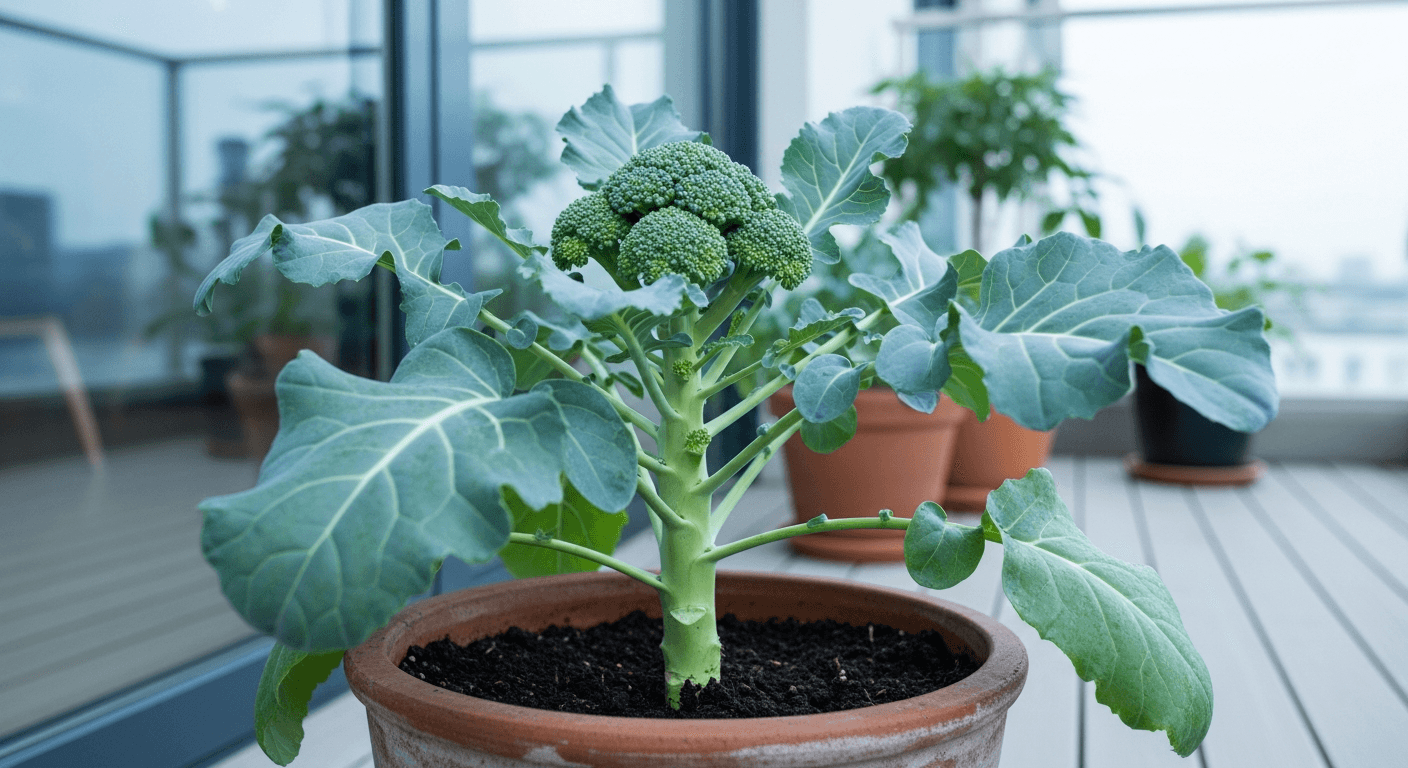
How to Grow Broccoli in Pots Step by Step
Grow broccoli in pots: a cool-season crop, a deep pot, sun, watering and harvesting the central head plus side shoots. Avoid the common pests and mistakes.
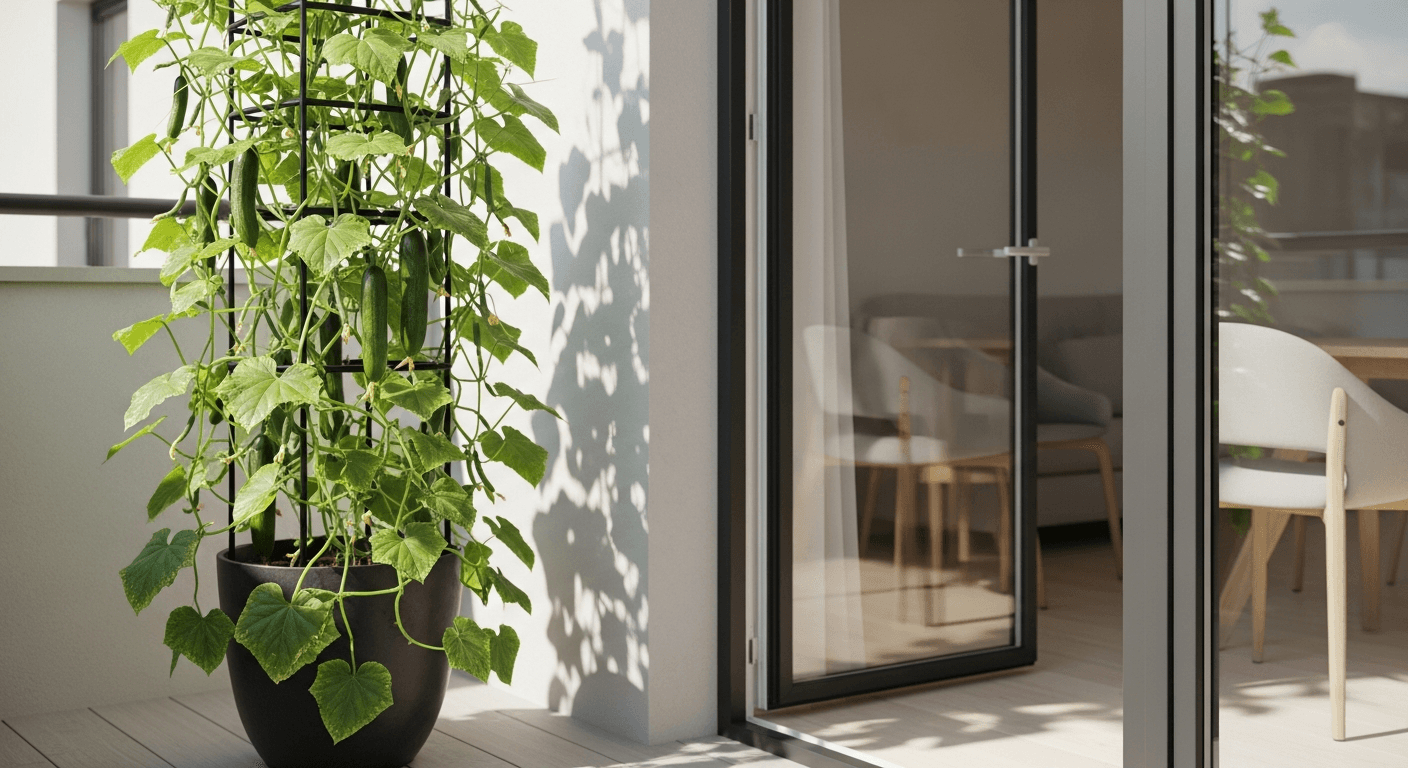
How to Grow Cucumbers in Pots Step by Step
Grow cucumbers in pots: the right pot size, a trellis to climb, plenty of sun and steady water, and how to harvest often so they keep producing all summer.
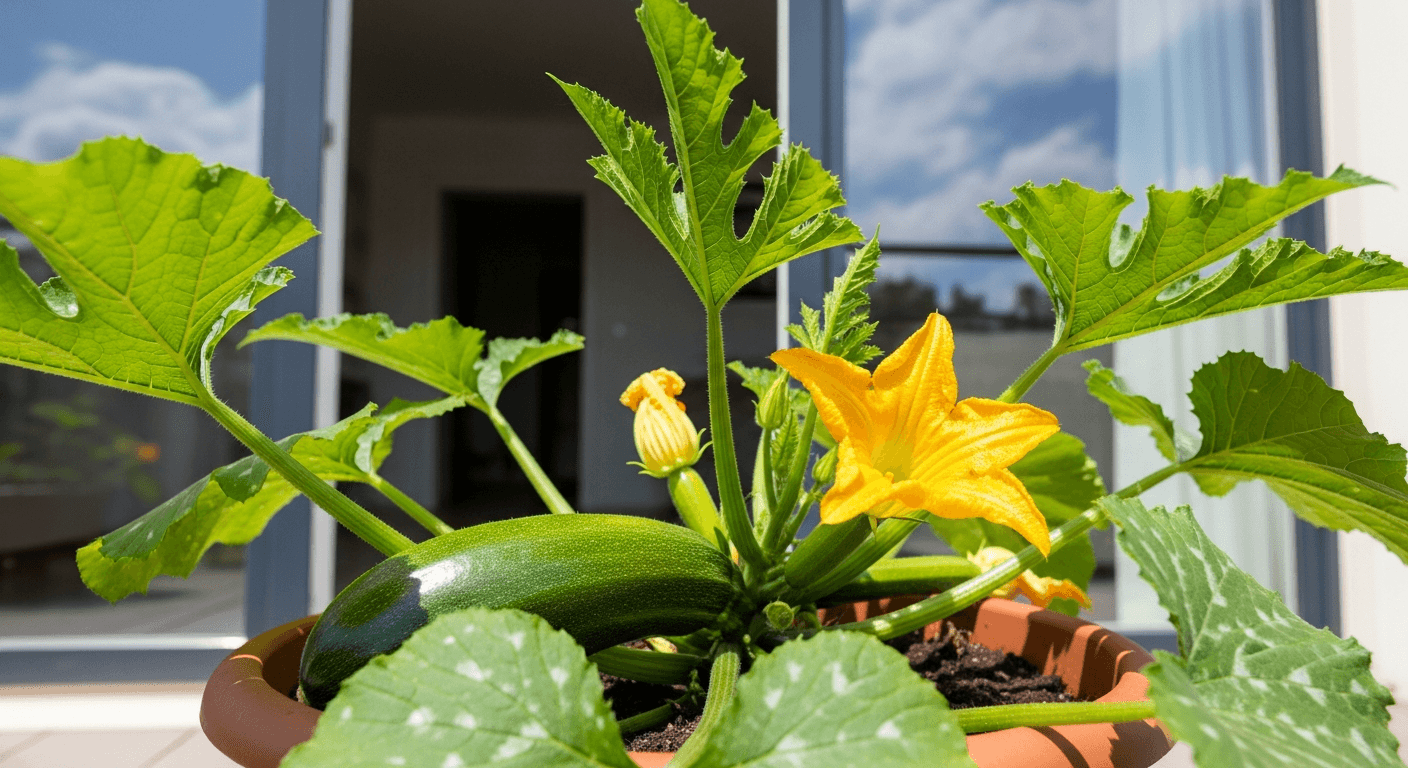
How to Grow Zucchini in Pots (Big Harvest, Small Space)
Grow zucchini in a large pot: variety, size, sun, watering and hand pollination. Learn why baby zucchini drop off and how to prevent it.
Trouble with your plant?
AI diagnosis