Watering, Feeding and Repotting: What to Do Each Season
A season-by-season houseplant care calendar: watering, feeding, repotting, light and pests through spring, summer, autumn and winter, made simple and clear.
In this article
- Spring: the plant wakes up
- Watering and feeding as growth restarts
- Repotting and spring pruning
- Summer: peak growth (and watch the heat)
- Watering and humidity in the heat
- Direct sun and summer pests
- Autumn: easing off
- Winter: rest
- Watering and feeding a resting plant
- Light and temperature once the heating is on
- Tasks for all year round
- Adapt the calendar to your home
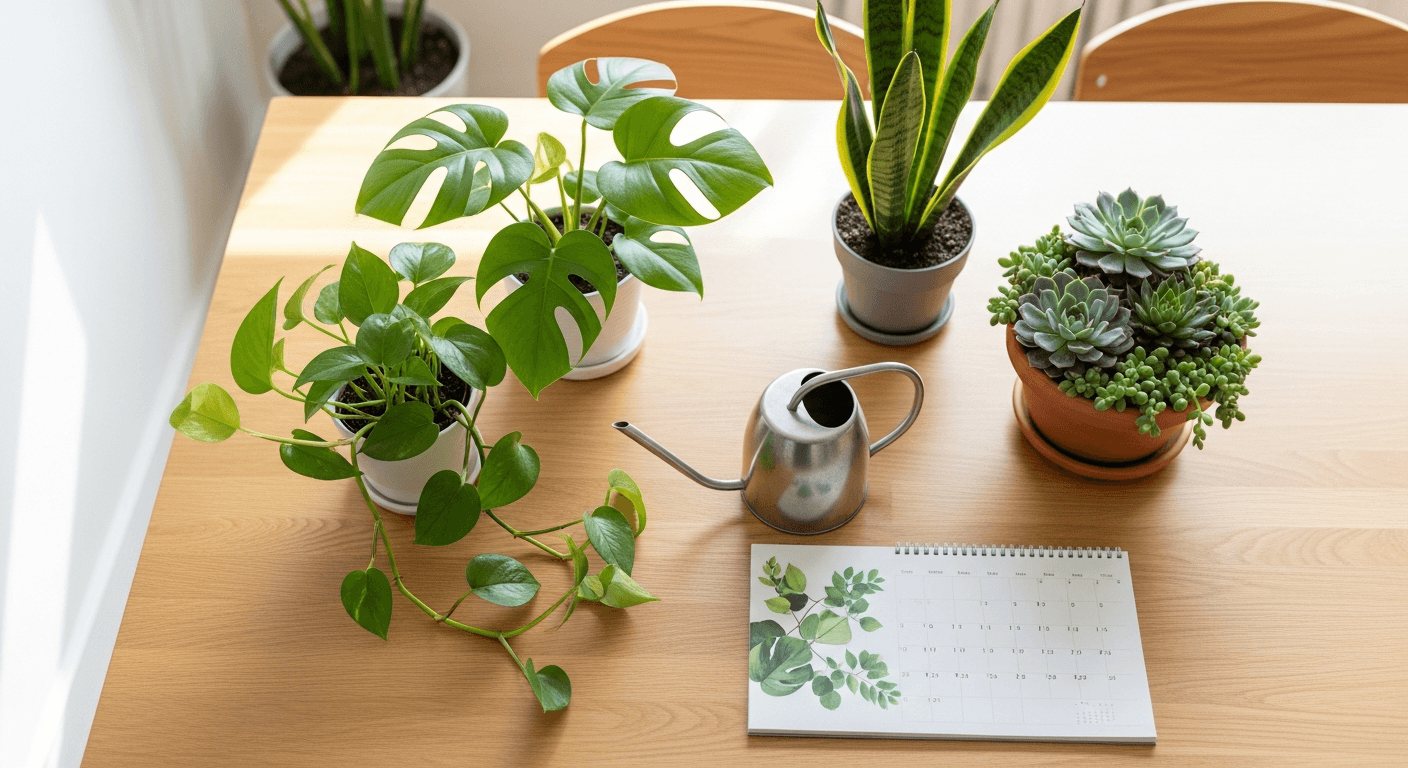
In spring and summer your plants are growing: water more often, feed every 2-4 weeks and repot if they need it. In autumn and winter they rest: cut back the water, stop feeding and move them to the brightest window you have. That's the whole calendar in two sentences, and following it is the difference between a collection that thrives and one that lurches from crisis to crisis. Below is the season-by-season detail, with the actual numbers for each time of year.
Spring: the plant wakes up
This is the headline season. With more light and warmth, plants kick back into growth and welcome a boost.
Watering and feeding as growth restarts
- Watering: increase it gradually as the soil dries out faster.
- Feeding: resume fertilizing every 2-4 weeks while the plant is actively growing. If you're unsure about the dose, our guide on how to fertilize plants without burning them has the safe dilutions.
Repotting and spring pruning
- Repotting: this is the best time of year to move up a pot size, because the plant recovers quickly. Follow the steps in our guide on how to repot a plant.
- Pruning and cleaning: remove dead leaves and shape the plant to encourage new growth.
Get one plant-care guide a week, no spam.
Subscribe freeSummer: peak growth (and watch the heat)
Plants grow flat out, but extreme heat and direct sun can take a toll.
Watering and humidity in the heat
- Watering: this is when they need the most water; check the soil every few days, especially in small or terracotta pots.
- Humidity: with dry air or air conditioning, group plants or use a humidifier.
- Holidays: arrange watering if you're away; practical ideas in our guide on watering while away.
Direct sun and summer pests
- Light: shield them from harsh midday sun through glass, which scorches leaves.
- Pests: watch for spider mites and thrips, which explode in the heat.
The rest of the heatwave playbook is in our guide to summer care for indoor plants.
Autumn: easing off
The days shorten and the plant starts to slow. Your job is to ease it down gently.
- Watering: reduce it gradually; the soil takes longer to dry.
- Feeding: space it out and stop toward the end of the season.
- Repotting: avoid it unless urgent; better to wait for spring.
- Placement: move plants closer to windows to make the most of the fading light.
- Heating: when you switch it on, keep plants away from radiators and watch the humidity.
Winter: rest
Most houseplants enter a resting phase. Less light means less growth and, therefore, less care.
Watering and feeding a resting plant
- Watering: far less. Water only when the soil is dry deep down; overwatering in winter is the leading cause of rot.
- Feeding: pause it almost entirely until spring.
- Don't panic if they stop growing or drop the odd leaf — it's normal this time of year.
Light and temperature once the heating is on
- Light: place plants in the brightest spots in the house.
- Temperature: protect them from cold windows at night and from drafts.
The full picture for this season is in our guide to winter care for indoor plants.
Tasks for all year round
Some care doesn't care about seasons:
- Rotate pots a quarter turn each week so plants grow straight.
- Wipe dust off leaves so they breathe and capture light better.
- Check leaf undersides for pests whenever you water.
- Remove dead leaves to prevent fungus and keep the plant healthy.
Adapt the calendar to your home
This calendar is a general guide for the Northern Hemisphere; if you live in the South, flip the seasons. A home with strong heating or lots of windows can also shift these rhythms. Always watch your plant — it will tell you whether it needs more or less.
If at any point in the year your plant shows odd signs you can't read, take a photo and run it through our AI diagnosis tool to find out what's going on.
With these seasonal tweaks, your plants will grow strong in spring and summer and rest easy in autumn and winter, ready to flush again.
Related articles
How to Revive a Dying Plant Step by Step
Your plant is dying and you don't know why. A guide to diagnosing and reviving a dying plant: watering, roots, light, pests and when it is simply too late.
Summer Care for Indoor Plants
Summer houseplant care guide: water more often, shield plants from harsh midday sun, raise humidity, feed during growth and avoid heat stress on hot days.
How to Keep Plants Watered While on Holiday
Tricks to keep plants watered while you're away: wicks, water bottles, grouping them in the bathroom, and how to prep your home before you walk out the door.
Trouble with your plant?
AI diagnosis