What to Do With Your Houseplants When the Cold Arrives
Winter houseplant care guide: water far less, chase the light, keep them away from radiators and drafts, pause feeding and raise the humidity.
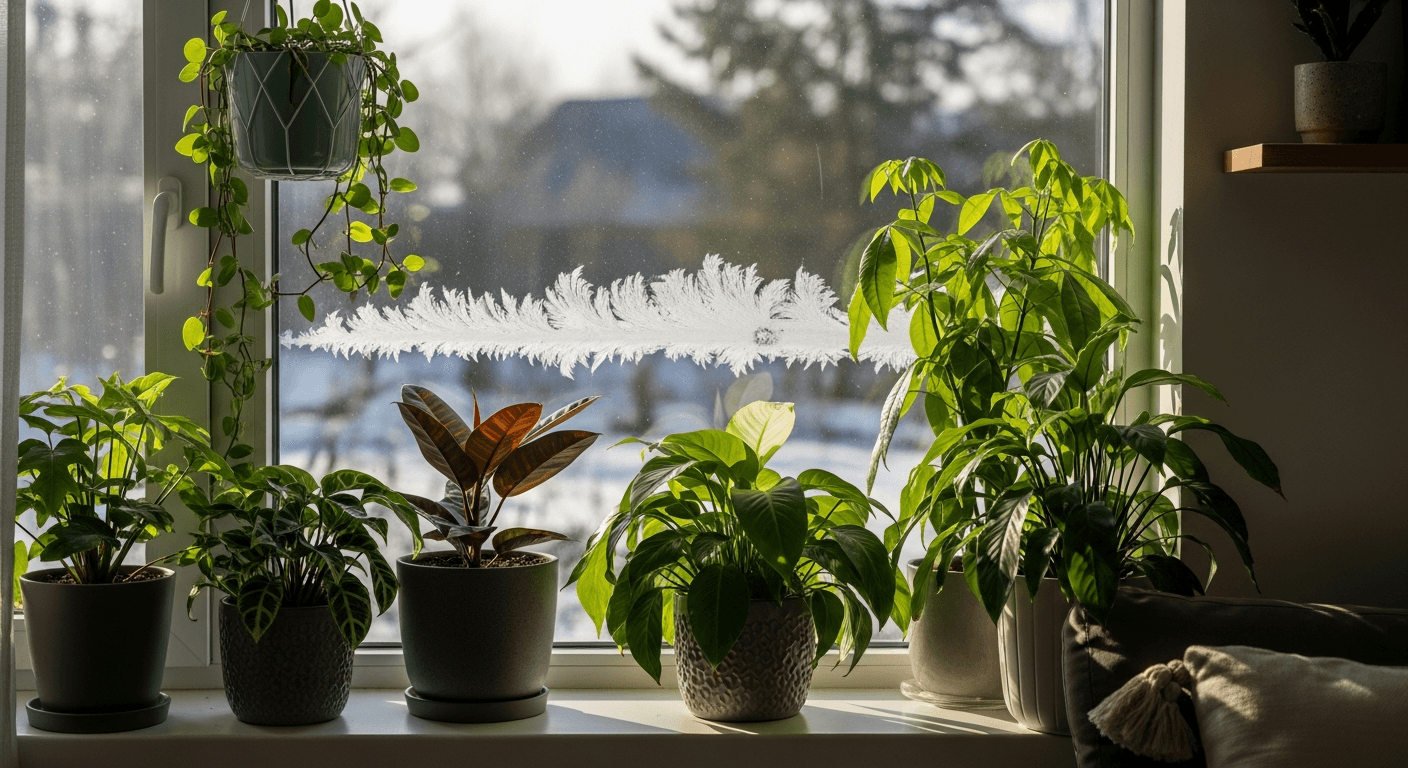
In this article
- 1. Water far less
- 2. Move them toward the light
- Make every hour of sun count
- When the home is dark to begin with
- 3. Keep them away from radiators and drafts
- Dry heat from radiators
- Cold drafts and the minimum temperature
- 4. Pause feeding
- 5. Raise the humidity
- Methods that actually work
- Why misting isn't the answer
- Signs something is wrong
- What NOT to do in winter
In winter you need to water far less — every two or three weeks instead of weekly — pause feeding, move plants to your brightest window and keep them clear of radiators and drafts. Put another way: your plants don't die of cold, they die because you keep caring for them like it's summer. With less light and less warmth most of them slow right down and their needs change completely. Adjust these five things and they'll reach spring strong.
1. Water far less
This is the number one winter mistake. With low light and cool temperatures, the soil takes much longer to dry and the roots drink less. If you watered weekly in summer, in winter it might be every two or three weeks.
- Always check before watering: push a finger 1-2 inches into the soil. If it's damp, wait.
- Empty the saucer: standing water in winter is the perfect recipe for root rot.
- Use room-temperature water, never cold from the tap, so you don't shock the roots.
Winter golden rule: when in doubt, don't water. This time of year overwatering kills far more plants than drought.
Is your plant looking off and you are not sure why?
Free AI diagnosis2. Move them toward the light
Days are shorter and the sun is weaker. Move your plants closer to windows, ideally south- or west-facing, so they catch every hour of light.
Make every hour of sun count
- Clean the glass: a dirty window steals light.
- Wipe the leaves with a damp cloth so they absorb light better.
- Turn the pot a quarter turn each week so it doesn't lean.
If you're not sure how much light each corner really gets, our guide to light for indoor plants explains how to read each window by its aspect.
When the home is dark to begin with
In a back-facing flat or a room with small windows, even the best spot isn't enough. That leaves two options: top up with a grow light for a few hours a day, or stick to species that handle gloom without going leggy. The shortlist is in our roundup of plants that tolerate low light.
3. Keep them away from radiators and drafts
The biggest winter enemy is dry air and sudden temperature swings.
Dry heat from radiators
A plant sitting on a radiator or right above a hot-air vent loses water through its leaves faster than the roots can replace it: tips turn brown and the soil dries out alarmingly fast. Leave at least three feet of clearance, or move the plant to another wall for the heating months.
Cold drafts and the minimum temperature
Watch for drafts from windows and doors: a freezing night with leaves pressed against the glass can damage any tropical. Keep most houseplants between 60 and 72 °F and avoid sudden drops when you air the room.
4. Pause feeding
If the plant isn't growing, it doesn't need to eat. Fertilizing during the slowdown just builds up salts in the soil and can burn the roots.
- Stop feeding from late autumn until you see new growth in spring.
- Exception: plants that bloom in winter, like the Christmas cactus, do appreciate a gentle feed while flowering.
5. Raise the humidity
Heating dries the air to desert levels, and tropicals suffer with brown, crispy tips.
Methods that actually work
- Group plants together: as a cluster they create a humid microclimate.
- Use a humidifier, or set pots on a tray of pebbles and water (base not touching the water).
Our guide to humidity for indoor plants has the percentage each plant type wants and how to check it with a cheap hygrometer.
Why misting isn't the answer
Don't over-mist: the effect on ambient humidity lasts minutes, and in winter water sits on the leaves and evaporates slowly, which invites fungus. If you do mist, do it in the morning and only on thin-leaved plants.
Signs something is wrong
| Symptom | Likely winter cause |
|---|---|
| Yellow, soft leaves | Overwatering |
| Brown, dry tips | Dry air from heating |
| Long, weak stems | Not enough light (etiolation) |
| Sudden leaf drop | Cold draft or sharp change |
What NOT to do in winter
- Don't repot unless it's an emergency: the plant has no energy to recover. Wait for spring, as our seasonal houseplant care calendar sets out.
- Don't force growth with extra water or feed; respect its rest.
- Don't panic if it drops an old leaf or two — that's normal this time of year.
- Don't buy new tropicals on a freezing day and carry them home uncovered: a short walk in the cold can shock or even kill a tender plant. Wrap it well and let it acclimatise indoors before you do anything else.
Caring for plants in winter is mostly about doing less: less water, less feed, no repotting. Give them light, protect them from dry air, and let them rest. Is your plant looking off and you're not sure if it's cold, overwatering or something else? Try it in our AI diagnosis and find out.
Related articles
How to Revive a Dying Plant Step by Step
Your plant is dying and you don't know why. A guide to diagnosing and reviving a dying plant: watering, roots, light, pests and when it is simply too late.
Summer Care for Indoor Plants
Summer houseplant care guide: water more often, shield plants from harsh midday sun, raise humidity, feed during growth and avoid heat stress on hot days.
How to Keep Plants Watered While on Holiday
Tricks to keep plants watered while you're away: wicks, water bottles, grouping them in the bathroom, and how to prep your home before you walk out the door.
Trouble with your plant?
AI diagnosis