How to Train a Monstera or Philodendron Up a Moss Pole
A moss pole guide for climbing plants like Monstera and philodendron: what it's for, how to build one, attach the plant and keep the moss moist.
In this article
- What is a moss pole for?
- When is the best time to add one
- Which plants love it
- Plants that don't need one
- How to make a moss pole at home
- What height to choose
- Alternatives to sphagnum moss
- How to attach the plant to the pole
- Keeping the moss moist: the key to success
- When your home is very dry
- Common mistakes
- What if my plant still won't grip?
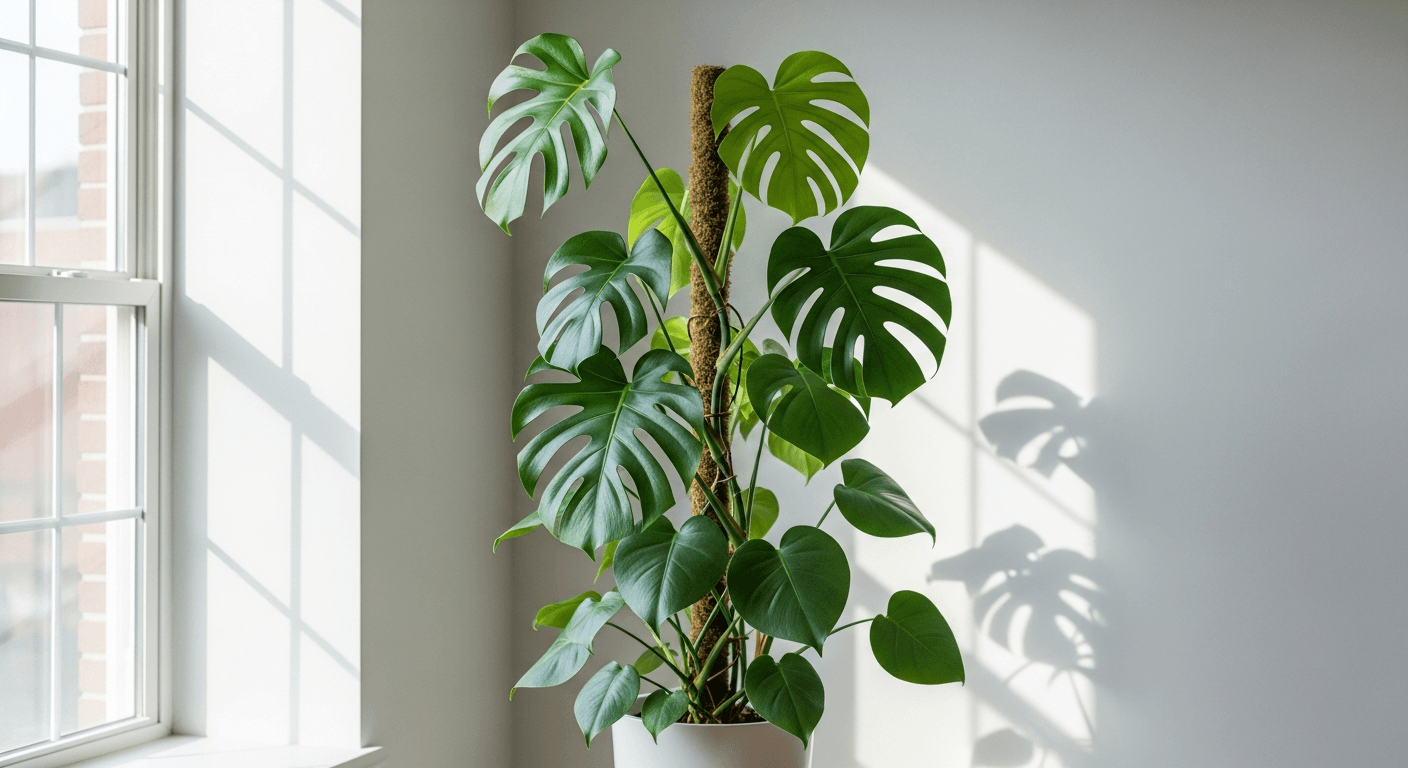
A moss pole is a column of damp sphagnum moss driven into the pot so your climber can haul itself upward. Growing vertically flips the plant from its juvenile form to its mature one, and the leaves get dramatically bigger — with more holes, in the case of a Monstera. You can buy one ready-made or build it at home in half an hour with moss, mesh and a bit of twine. The one non-negotiable is keeping the moss damp: a dry pole does nothing. If your Monstera, philodendron or pothos is sprawling sideways with ever-smaller leaves, this is exactly what it's missing.
What is a moss pole for?
Climbing plants have two growth modes. When they creep along the ground or trail, their leaves stay small (the juvenile form). When they climb vertically, they switch to their mature form: large leaves and, in many species, fenestrations. A moss pole provides two things:
- A vertical support that the plant grips with its aerial roots.
- Moisture for those aerial roots, because the damp moss gets colonized by the roots, improving nutrition.
The result is bigger leaves and a more stable, striking plant.
When is the best time to add one
The ideal moment is a spring repot: the pot isn't yet packed with roots, so you can drive the pole all the way down without breaking anything. If the plant has sat in the same pot for years, take the chance to refresh the mix too, following our guide on which potting soil to use. Adding a pole mid-winter isn't a mistake, but the plant will take far longer to grip because it's barely growing.
Get one plant-care guide a week, no spam.
Subscribe freeWhich plants love it
- Monstera deliciosa and other climbing monsteras.
- Climbing philodendrons (not the self-heading rosette types).
- Pothos (epipremnum), which produces much larger leaves on a pole.
- Syngonium and other aroids with aerial roots.
If your question is about a Monstera specifically, you'll find its full care in our Monstera deliciosa guide, and if you want to see how far a trained pothos can go, our pothos care guide covers it.
Plants that don't need one
Not every aroid climbs. Self-heading philodendrons (like 'Birkin' or 'Xanadu'), calatheas, succulents and naturally trailing plants — string of hearts, tradescantia — have no aerial roots to grip with, and a pole only gets in their way. Those look far better in a hanging pot or on a high shelf.
How to make a moss pole at home
You don't need to buy one ready-made. With basic materials you can build it:
- Gather your supplies: dry sphagnum moss, a sturdy tube or stake (PVC, thick bamboo or rolled mesh), garden twine or zip ties, and a bucket of water.
- Hydrate the moss: soak it for 15-20 minutes until saturated, then squeeze out the excess without wringing it dry.
- Form the column: if using mesh, roll it into a cylinder and pack it with moss. If using a stake, tie the moss around it in a spiral.
- Pack it firmly so it's solid but spongy, with no big gaps.
- Drive it into the pot to the bottom, close to the base of the stem, taking care not to break roots.
What height to choose
Reckon on at least twice the plant's current height. A healthy Monstera puts on 30-60 cm a year, so a 60 cm pole is outgrown in a single season. If you'd rather not rebuild it every year, go for a stackable model, or leave the inner stake long so you can pack more moss on top later.
Alternatives to sphagnum moss
If you can't find sphagnum or would rather not use it, rolled coco coir works reasonably well: it holds less water but it's cheaper and more sustainable. Shredded pine bark inside mesh also does the job and breaks down far more slowly. What doesn't work is a bare plastic pole or a naked bamboo cane: they give support, but no moisture, so the aerial roots never anchor.
How to attach the plant to the pole
The plant won't climb on its own straight away; you have to guide it:
- Place the main stem against the moss, turning the nodes and aerial roots toward the pole.
- Secure it gently with soft twine, ties or plant clips, without cinching tight and strangling the stem.
- As it grows, keep tying in the new sections. Within a few weeks the aerial roots will anchor themselves into the damp moss.
Keeping the moss moist: the key to success
A dry pole is useless: aerial roots only grip if they find moisture. To keep it damp:
- Mist the moss every 1-2 days, especially the top, which dries first.
- Water the pole from above now and then so water trickles down inside.
- Some growers insert a tube or bottle to top up water slowly.
When your home is very dry
In a centrally heated flat the top of the pole can dry out in a single day. Misting alone won't cut it there: raise the ambient humidity around the plant with a humidifier or a pebble tray, as we explain in our guide to humidity for indoor plants. Keeping the plant away from radiators and draughts helps too.
Common mistakes
- Too short a pole: the plant outgrows it in months. Choose a tall one or an extendable type.
- Always-dry moss: without moisture, the aerial roots won't anchor.
- Tying too tightly: it scars and damages the stem; leave slack.
- Adding it too late: it's easiest to place at repotting time, with no roots in the way.
What if my plant still won't grip?
Be patient: some take weeks to push new aerial roots that seek out the moss. Make sure it gets good indirect light — if you're unsure whether that corner delivers enough, check our guide to light for indoor plants — that the moss is genuinely damp, and that the nodes touch the pole. If it still looks weak or off, take a photo and run it through our AI diagnosis tool to rule out other problems.
With a well-made, moist moss pole, your climber will stop sprawling and start ascending, rewarding you with the big, dramatic leaves that made it famous.
Related articles
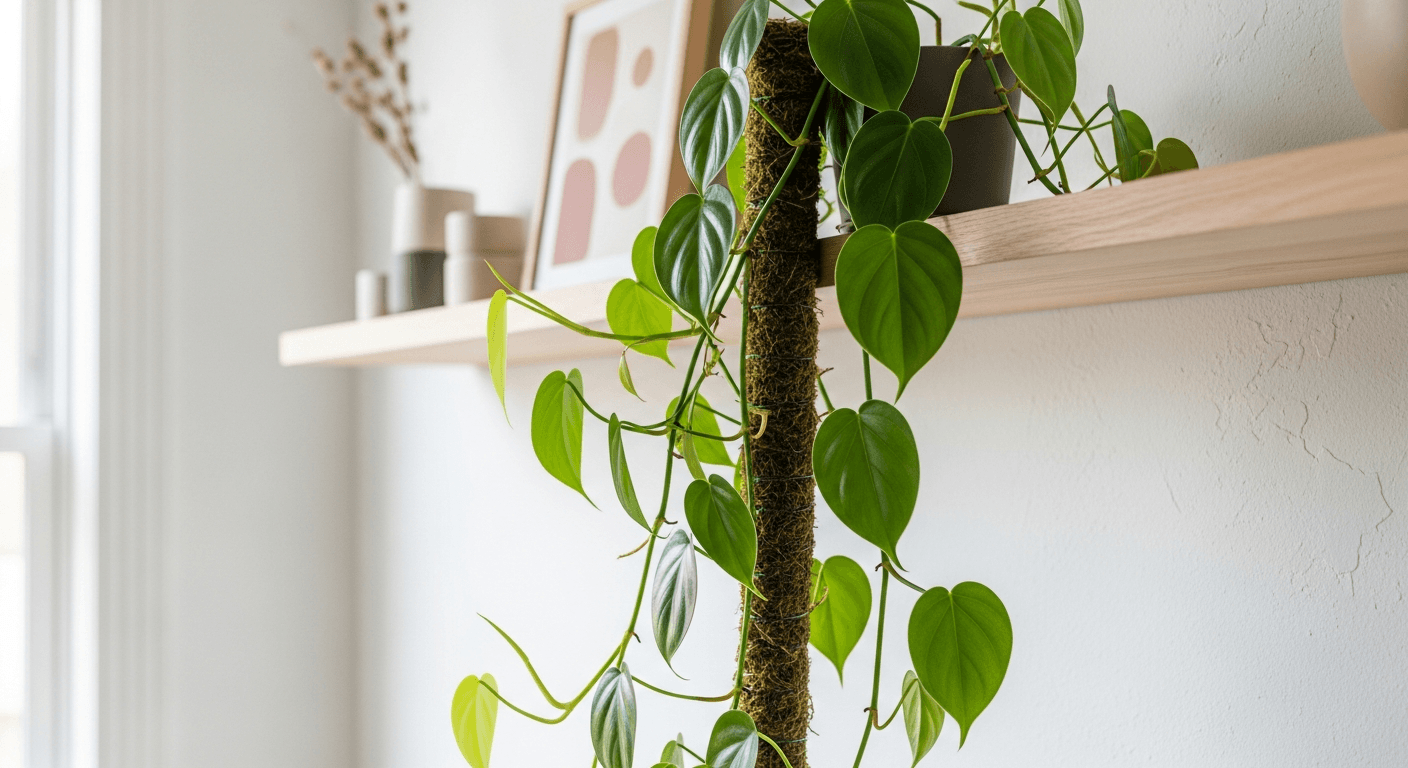
Philodendron: Care for the Most Forgiving Tropical Climber
Philodendron care (climbing and upright): light, watering, a moss pole for bigger leaves, and how to propagate it. Tough, fast-growing and very decorative.
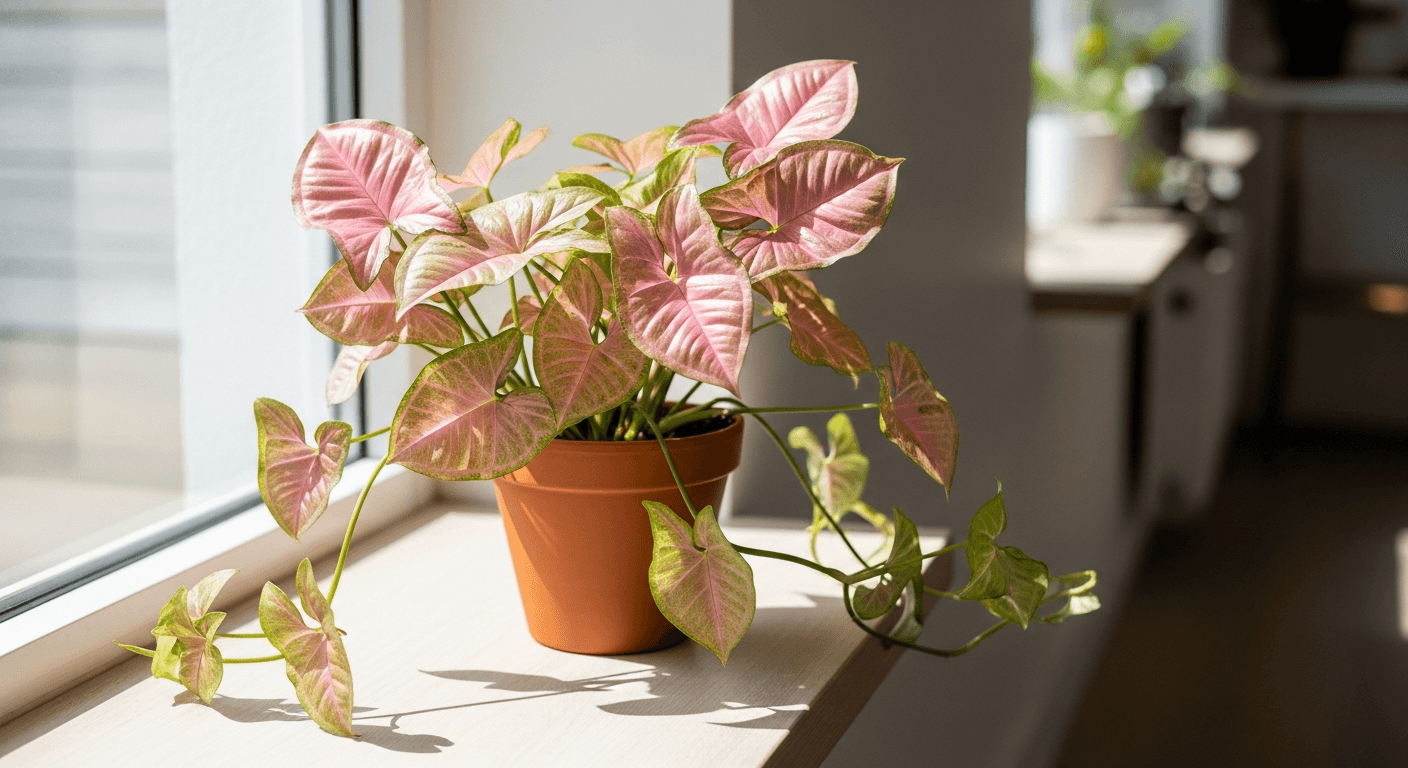
Syngonium (Arrowhead Plant): Care Guide
How to care for syngonium (arrowhead plant): light for variegation, watering, training it to climb or stay bushy, easy propagation, and toxicity to pets.
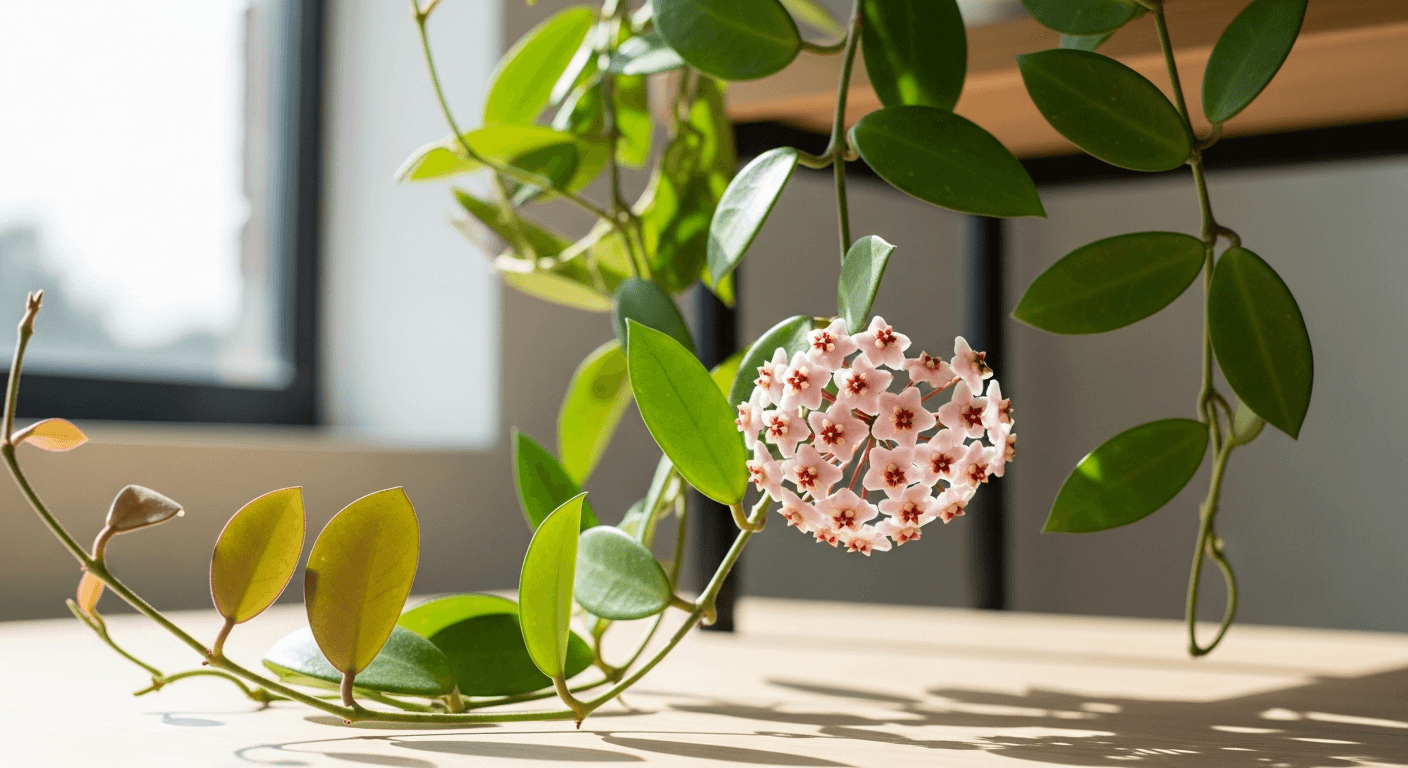
Hoya (Wax Plant): Care to Get Those Flowers
Hoya (wax plant) care: light, watering, soil and the secret to make it bloom. A tough trailing plant with incredible flowers you shouldn't prune wrong.
Trouble with your plant?
AI diagnosis