Syngonium: It Changes Shape Depending How You Grow It
How to care for syngonium (arrowhead plant): light for variegation, watering, training it to climb or stay bushy, easy propagation, and toxicity to pets.
In this article
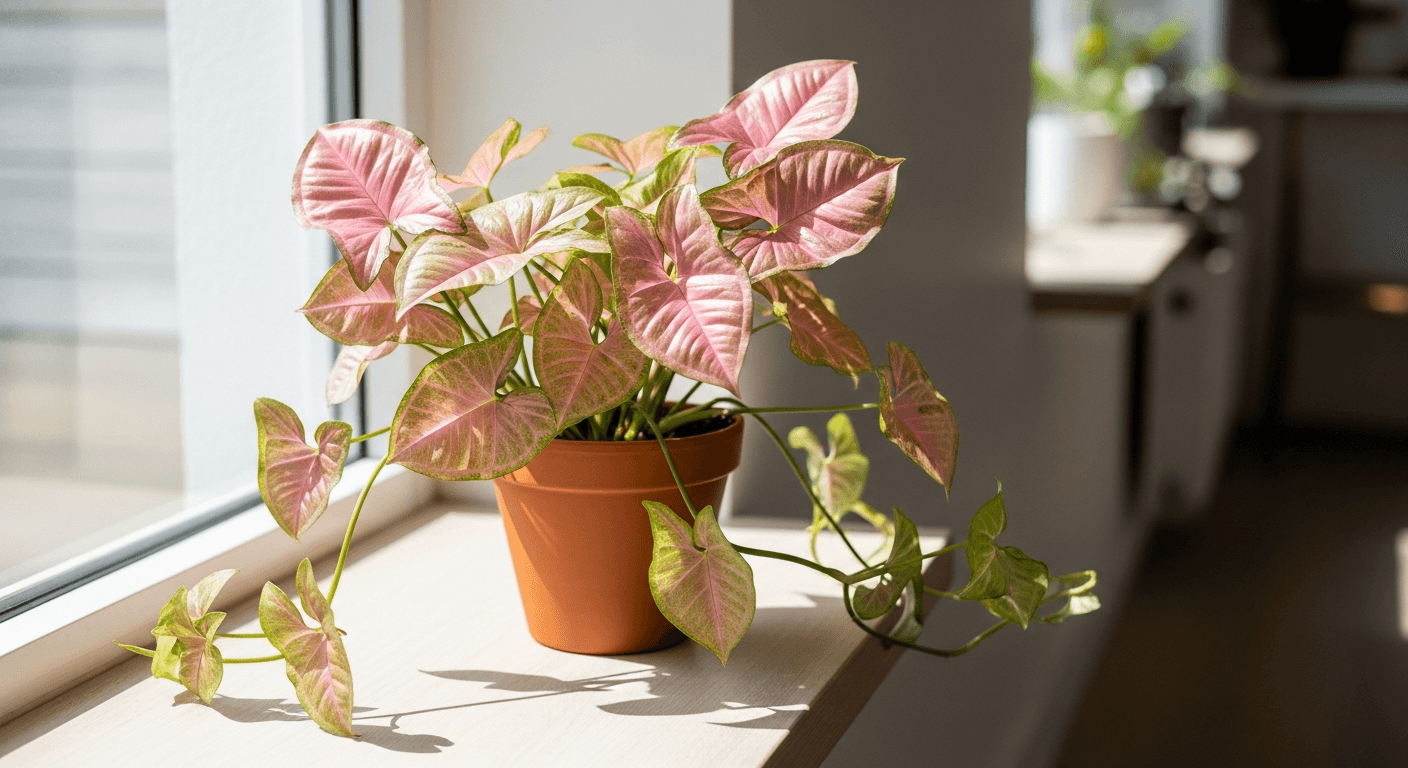
Syngonium (Syngonium podophyllum), also called the arrowhead plant, is a tropical climber with arrow-shaped leaves in colors ranging from green to pink, cream or nearly white depending on the variety. It grows fast, propagates easily and adapts to either a bushy pot or a pole to climb. It's ideal for beginners who want a showy, rewarding plant.
A leaf that changes with age
A fun fact about syngonium is that its leaves change shape as they mature: young leaves are simple and arrow-shaped, while adult leaves become more lobed, almost like a hand. If you let it climb, that transformation is more pronounced.
Is your plant looking off and you are not sure why?
Free AI diagnosisBasic care, point by point
Light
- Ideal: bright indirect light, which keeps the variegation vivid.
- Tolerates: medium light; green varieties cope well with less bright spots.
- Avoid: harsh direct sun, which scorches and fades the leaves.
Pink or heavily variegated varieties need more light to keep their color. In low light, the tones fade back to green.
Watering
It likes soil that's slightly moist, without being soggy:
- Water when the top inch (2-3 cm) is dry.
- In spring and summer, that's usually 1-2 times a week.
- In winter, water less often.
Yellow leaves usually mean overwatering; brown tips mean dry air or hard, calcium-rich water.
Humidity and temperature
Being tropical, it appreciates humidity above 50%, though it tolerates normal home conditions better than fussier relatives like calathea. Keep it between 65 and 80 °F (18-27 °C) and away from cold drafts and air-conditioning vents, which dry out the leaf edges.
Climbing or bushy: your choice
Syngonium is versatile:
- Bushy and trailing: let it loose in a pot or hanging basket and pinch the tips so it branches.
- Climbing: give it a moss pole. When climbing, the leaves grow larger and mature.
Popular varieties
- 'Pink Allusion' / 'Neon Robusta': pinkish tones, the most sought-after.
- 'White Butterfly': light green with a nearly white center, very bright.
- 'Arrow' (classic green): the toughest and most tolerant of low light.
- 'Confetti' and 'Mottled': flecked with pink or cream.
- 'Berry Allusion': pink with green veining, one of the showiest.
They're all cared for the same way; the more pink or white the variety, the more light it needs to keep its color.
Propagation: very easy
It multiplies almost as readily as pothos:
- Find a node (where the leaf emerges, with a small aerial root).
- Cut just below it with clean scissors.
- Put the cutting in water or damp soil.
- In 2-3 weeks you'll have roots.
If you like easy climbers in this style, you'll love our pothos guide, with very similar care.
Feeding and repotting
Syngonium grows quickly, so in peak season it appreciates nutrients. From spring to summer, feed every 3-4 weeks with a foliage-plant liquid fertilizer diluted to half strength. In winter, when growth slows, stop feeding.
Being a fast grower, it usually needs repotting every 1-2 years. You'll know it's time when roots poke out of the drainage holes or water runs straight through the root ball without being absorbed. Move it in spring to a pot a couple of inches larger, with an airy mix of coco coir or peat plus perlite. While you're at it, add the moss pole if you want to train it to climb.
Common problems
- Yellow leaves: almost always overwatering.
- Dull color or reverting to green: not enough light.
- Brown tips and edges: dry air or hard water.
- Long, bare stems: low light and no pinching.
Looking rough and you're not sure why? Upload a photo to our AI diagnosis tool to pin down the problem.
Quick care table
| Care | Syngonium |
|---|---|
| Light | Bright indirect (for color) |
| Water | When dry (top inch) |
| Humidity | Medium (50%+) |
| Difficulty | Very easy |
| Pets | Toxic if eaten |
Is it toxic?
Yes. It contains calcium oxalates, which irritate the mouths of pets and children if chewed. Keep it out of reach; if you have pets, see the pet-safe plants. If you like easy tropical climbers, it shares care with the philodendron and the Monstera.
In short
Bright indirect light, watering when the soil starts to dry, and pinching or a pole depending on the shape you want: syngonium is one of those plants that gives a lot in return for very little.
Related articles
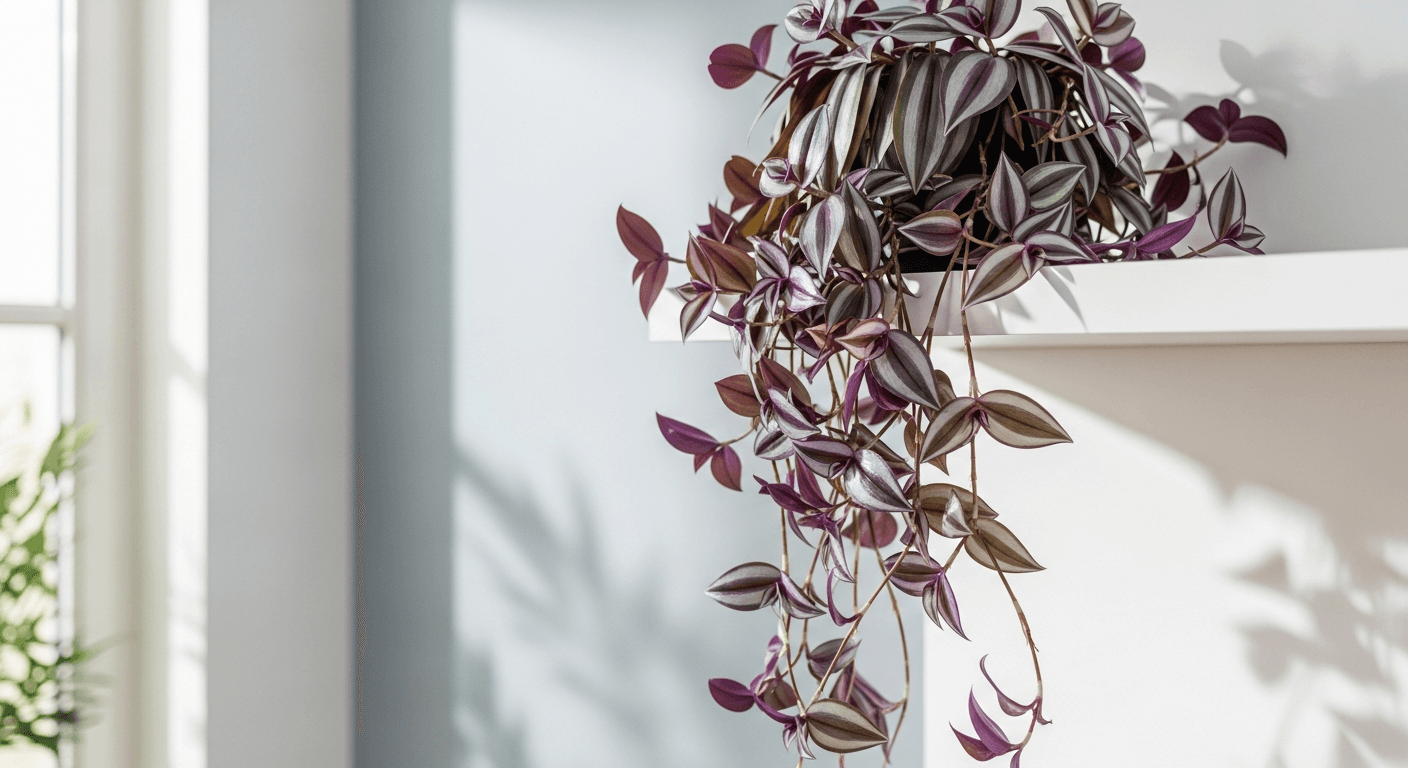
Tradescantia (Wandering Dude): Care Guide
How to care for tradescantia (zebrina, purple heart): bright light for color, watering, pinching to keep it full, super easy propagation, and toxicity.
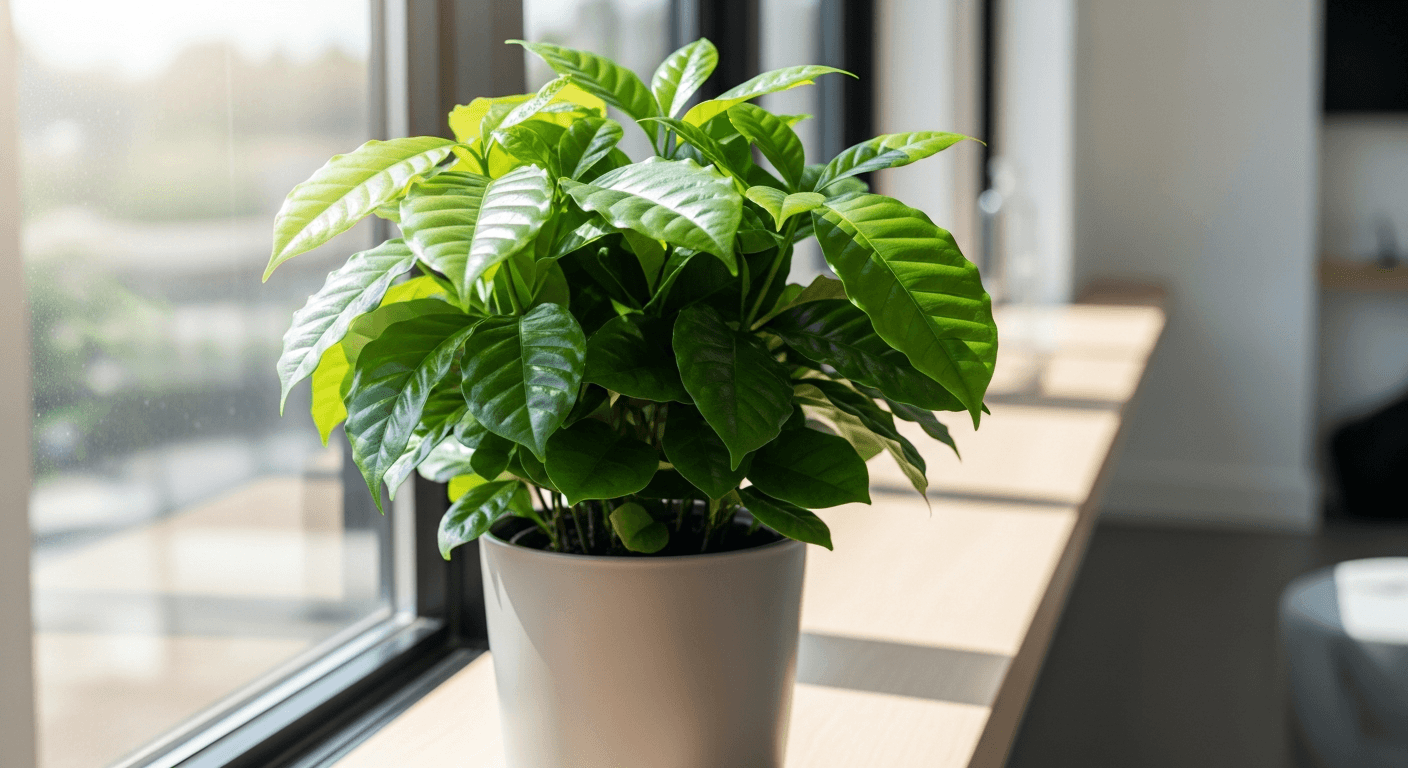
Coffee Plant Care: Growing Coffea at Home
Coffee plant (Coffea arabica) care as a houseplant: bright indirect light, humidity, watering, and whether you can really harvest your own coffee beans.
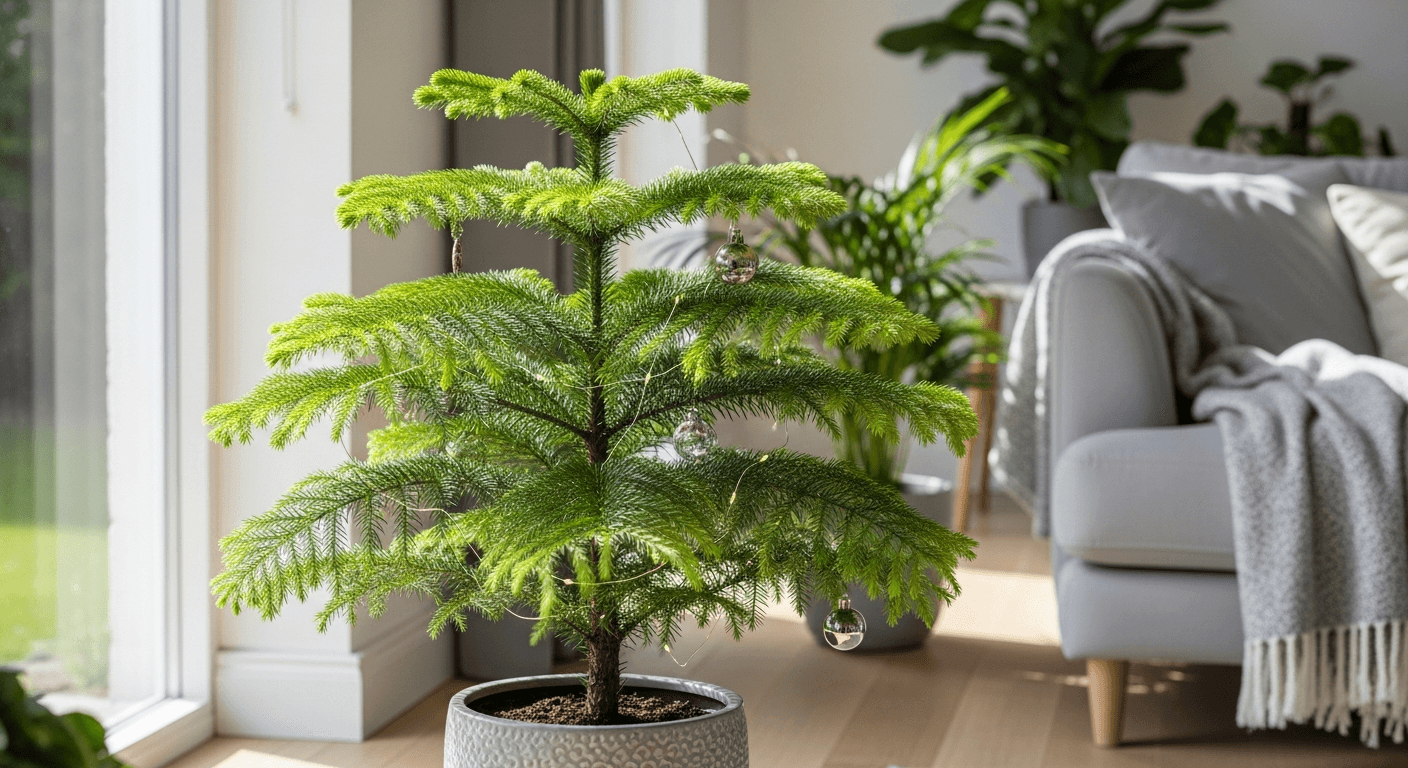
Norfolk Island Pine Care: The Living Christmas Tree
Norfolk Island pine (Araucaria heterophylla) care: light, watering, humidity and why its branches turn brown and drop. The living indoor Christmas tree guide.
Trouble with your plant?
AI diagnosis