Coffee Plant Indoors: Glossy Leaves, Beans With Patience
Coffee plant (Coffea arabica) care as a houseplant: bright indirect light, humidity, watering, and whether you can really harvest your own coffee beans.
In this article
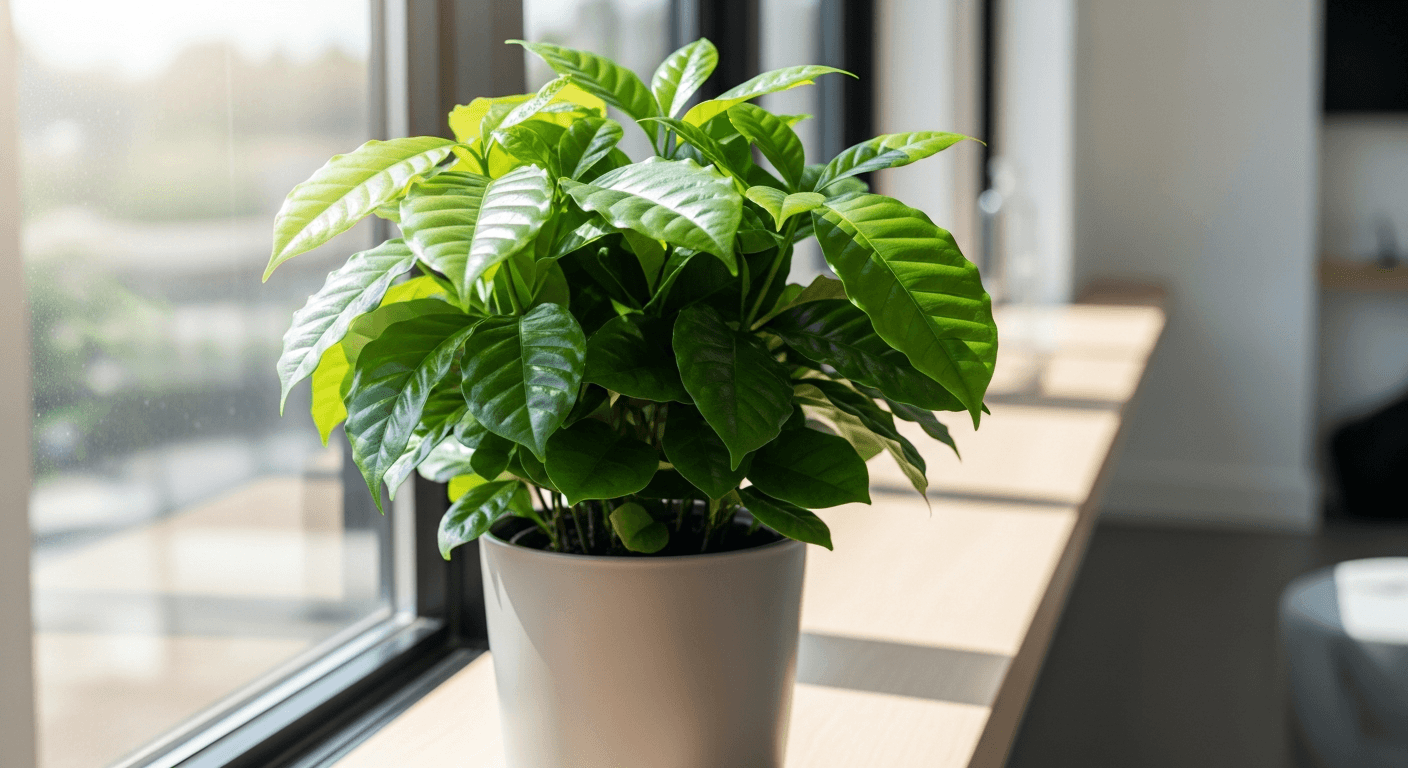
Imagine growing the very plant your morning coffee comes from. The coffee plant (Coffea arabica) is a beautiful houseplant in its own right: glossy, wavy green leaves forming a compact, elegant shrub. Whether you ever harvest beans is another story, but as an ornamental it's very rewarding if you mimic its tropical home.
Basic care, point by point
Light
In the wild, coffee grows under the shade of taller trees, so it doesn't want harsh direct sun:
- Ideal: bright, indirect light, near a window without midday sun.
- Tolerates: a little gentle morning sun.
- Avoid: strong direct sun, which scorches and yellows the leaves.
Is your plant looking off and you are not sure why?
Free AI diagnosisWatering
Keep the soil lightly and consistently moist; this plant doesn't forgive total drought well:
- Water when the top inch or so of soil starts to dry.
- It'll be more frequent in spring and summer; space waterings out in winter.
- Don't leave it sitting in water: waterlogging rots the roots.
The sweet spot: neither puddle nor desert. If the leaves suddenly go limp and brown, it's usually drought; if they yellow and drop, it's overwatering.
Humidity: the key factor
Coffee is tropical, and ambient humidity is the difference between a healthy plant and one with brown tips:
- Keep humidity above 50%.
- Group plants together or use a humidifier, especially with heating on.
- Keep it away from radiators and dry drafts.
If keeping the air humid is a struggle, our humidity for indoor plants guide will help.
Temperature
It prefers a warm, stable spot between 65 and 79 °F. It won't tolerate hard cold or frost, so protect it in winter.
Soil, feeding and repotting
Use a fertile, slightly acidic, free-draining mix (houseplant soil with perlite works). Feed every 3-4 weeks in spring and summer with a balanced fertilizer. Repot every 1-2 years in spring into a slightly larger pot.
Can I harvest my own beans?
This is the big question. The honest answer:
- The coffee plant can produce white flowers and then red fruits (coffee "cherries"), but usually only once it's mature, from about 3-4 years old, and in very good light and humidity.
- Each fruit holds the beans that, once roasted, become coffee.
- Indoors, any harvest tends to be small and symbolic: grow it mainly for its beauty, and treat fruit as a lovely bonus.
Pruning and shape
The coffee plant naturally grows on a single central stem with side branches. If you want a more compact, bushy shrub, pinch out the tip of the main stem once it reaches the height you want: that triggers branching and a denser shape. Use spring pruning to remove any dead or crossing branches and keep a balanced silhouette. Wipe the leaves now and then with a damp cloth: being large and glossy, they collect dust that reduces photosynthesis.
Quick care table
| Care | Coffee plant |
|---|---|
| Light | Bright indirect; no strong sun |
| Water | Always slightly moist |
| Humidity | High (50%+) |
| Difficulty | Medium |
| Pets | Toxic (caffeine) |
The coffee plant is a tropical understory species, so it appreciates the same ambient humidity as a fern: in the dry air of central heating you get brown tips and leaf spots. Raise it with the methods in the humidity guide.
Common problems
- Brown tips and edges: air that's too dry or hard, limy water.
- Yellow leaves: overwatering or lack of nutrients.
- Scorched or bleached leaves: too much direct sun.
- Sticky leaves: check the undersides for mealybugs or aphids.
Not sure what's wrong with your coffee plant? Upload a photo to our AI diagnosis tool to narrow down the cause before you act.
Is it toxic?
Yes. Every part of the plant except the mature bean contains caffeine and is considered toxic to dogs and cats if chewed. Keep it out of their reach.
With filtered light, steady watering and good humidity, the coffee plant will be a glossy green shrub that brings a tropical, exotic feel to any corner of your home. Yours looking off? Try the AI diagnosis tool.
Related articles
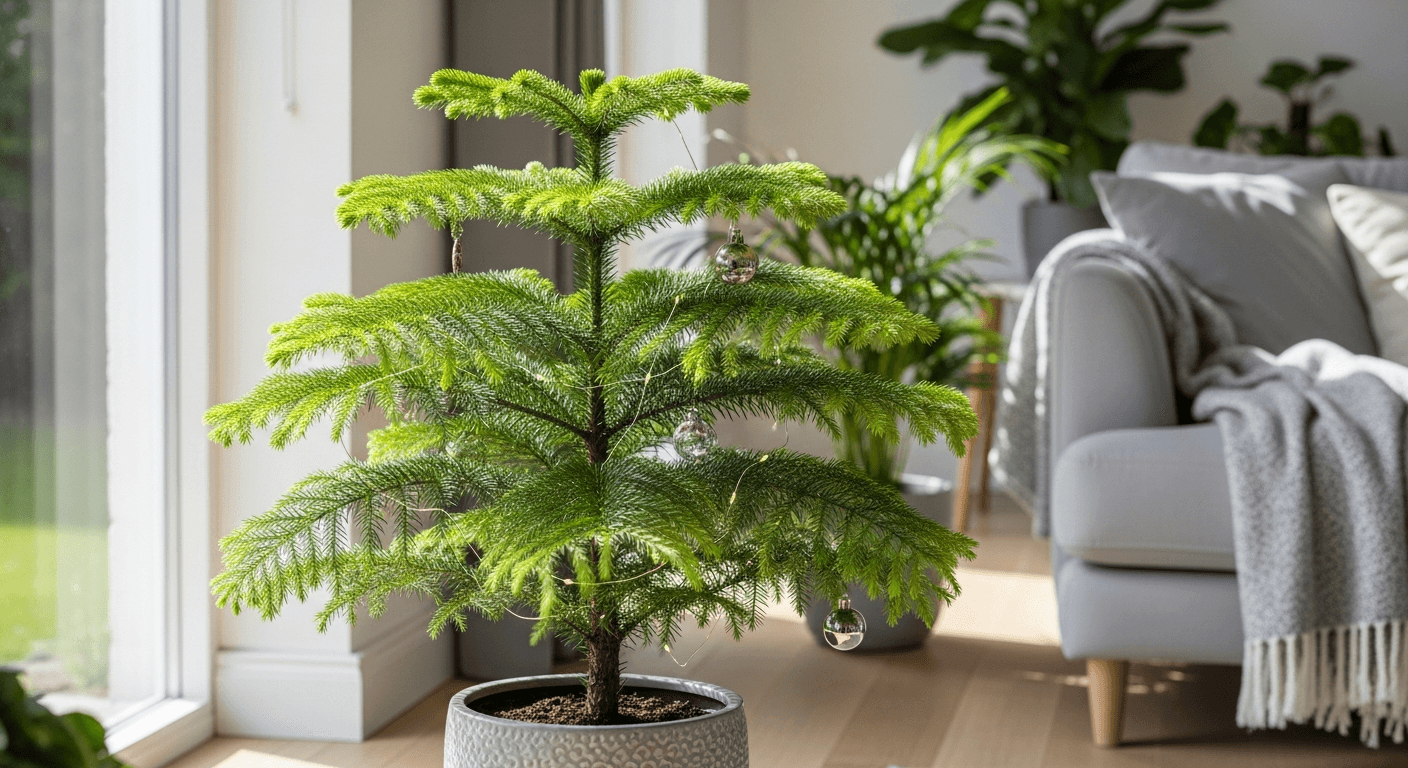
Norfolk Island Pine Care: The Living Christmas Tree
Norfolk Island pine (Araucaria heterophylla) care: light, watering, humidity and why its branches turn brown and drop. The living indoor Christmas tree guide.
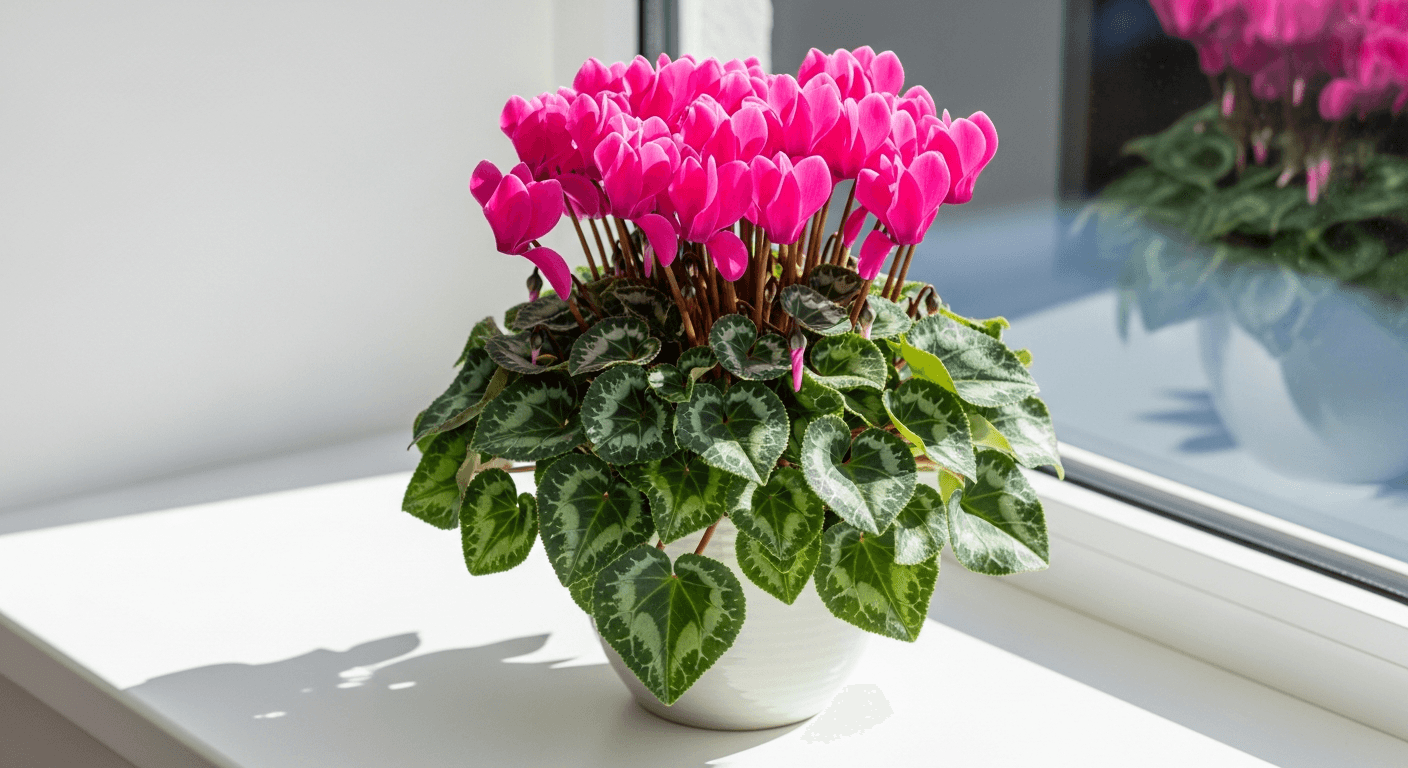
Cyclamen Care: Keep It Blooming All Winter
Cyclamen care so it blooms all winter: cool temperatures, light, watering from below to avoid crown rot, and how to handle its summer dormancy.
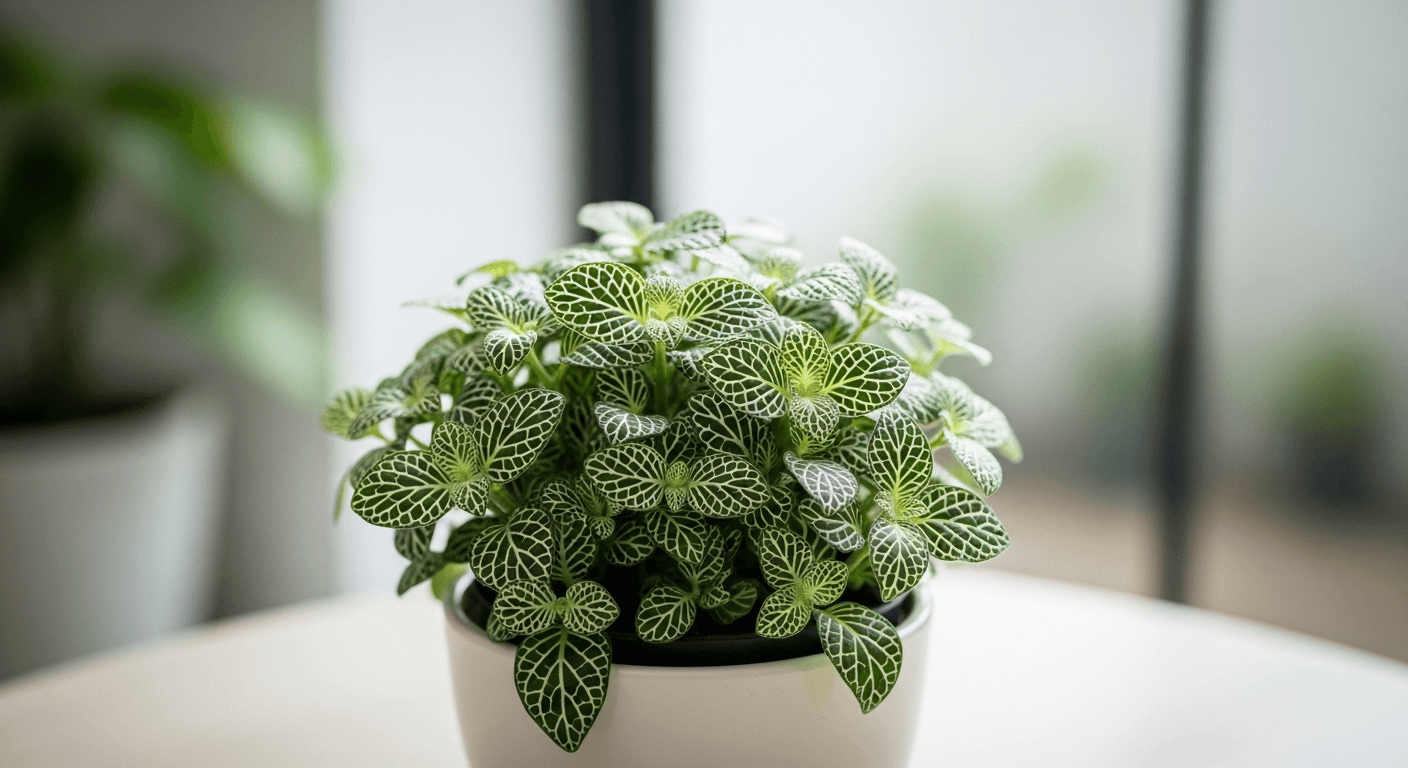
Fittonia (Nerve Plant): Care and Humidity Guide
Fittonia or nerve plant care: high humidity, indirect light, keeping it moist, and why it dramatically wilts and revives. Pet-safe. Complete guide.
Trouble with your plant?
AI diagnosis