Pruning Houseplants: When, Where and How Much to Cut
Learn how to prune houseplants: when and where to cut, the right tools to use, pinching for bushier growth and the common mistakes to avoid when pruning.
In this article
- Why prune
- When to prune
- Shaping cuts: spring and summer
- Clean-up cuts: any time of year
- Tools and hygiene
- How to prune step by step
- Pinching: the trick for compact growth
- Don't throw away the cuttings
- Which pieces work as cuttings
- Water or soil
- Common pruning mistakes
- How often should you prune?
- What to do after pruning
Cut just above a node, use sharp disinfected scissors, and never take off more than a third of the plant in one session; the best window is early spring through summer. Pruning feels intimidating because cutting looks like causing harm, but it's one of the most beneficial things you can do for a houseplant: it keeps it compact, healthy and full, and removes everything that's only draining its energy. This guide explains when, where and how to do it without fear.
Why prune
- For bushier growth: cut a tip and the plant branches out from the sides instead of staying a long, bare stem.
- To remove the sick or dead: yellow leaves, dead stems or pest-ridden parts steal resources from the rest.
- To control size and shape, especially climbers and trailers that get out of hand; if you'd rather train them upwards than shorten them, a moss pole is the alternative.
- To rejuvenate an old plant that has gone leggy from lack of light.
Get one plant-care guide a week, no spam.
Subscribe freeWhen to prune
Shaping cuts: spring and summer
The best window for shaping is early spring or summer, when the plant is growing strongly, heals fast and has energy to spare for pushing new shoots from where you cut. Make the same cut in October and it may sit there for months without responding. It helps to keep this alongside the rest of your seasonal houseplant care calendar.
Clean-up cuts: any time of year
Dead leaves, rotten stems and pest-ridden parts come off the day you spot them, December or July: you aren't asking the plant to regrow anything, you're removing dead weight that can otherwise turn into a fungal foothold. In winter, while the plant rests, keep pruning to just that.
Tools and hygiene
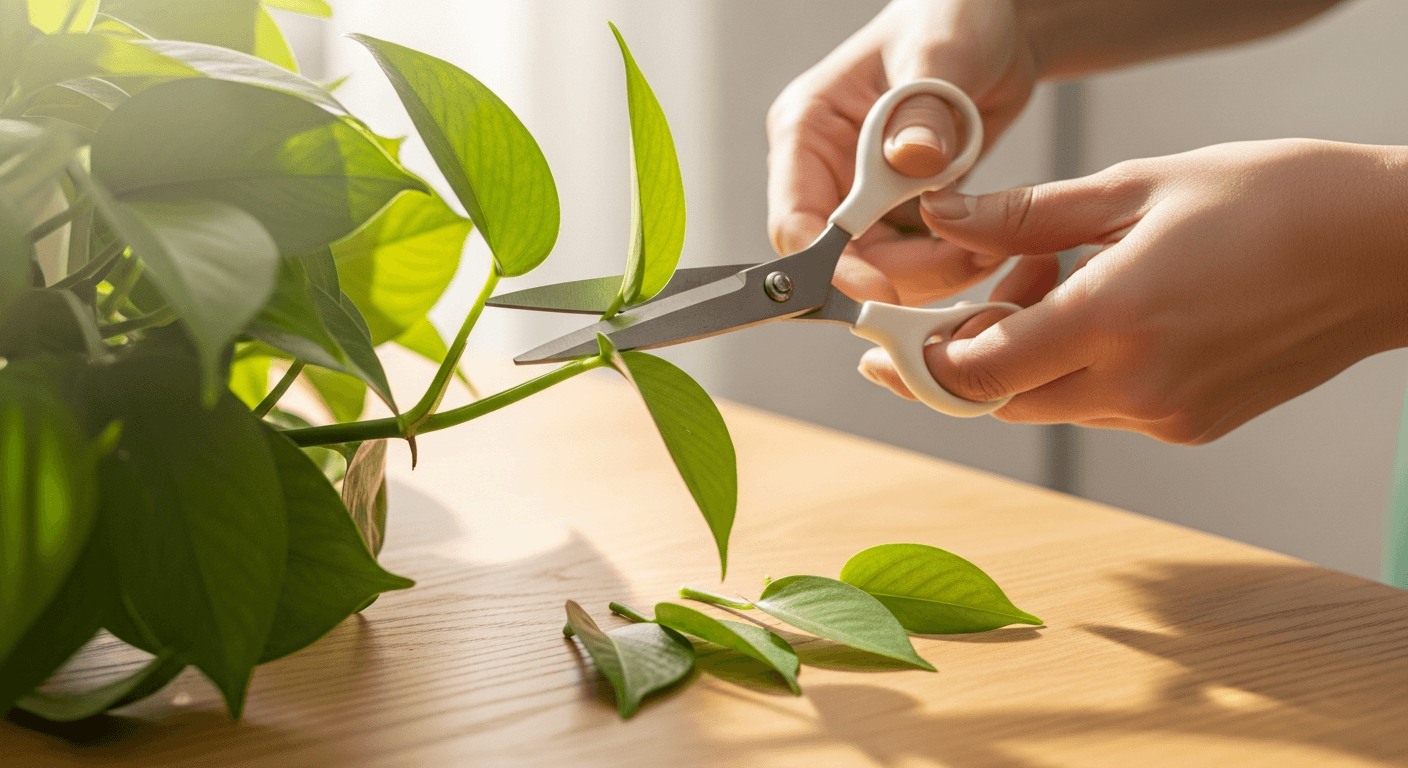
- Sharp pruning shears or kitchen scissors; blunt ones crush the stem.
- Disinfect them with alcohol before and after, especially if you cut a sick plant, so you don't spread fungus.
- Gloves if you're working with irritating sap (like ficus or euphorbia).
How to prune step by step
- Look at the plant and decide what you want: more volume? less height? removing the ugly bits?
- Start with the dead: yellow, dry leaves or lifeless stems. That alone clears a lot.
- Cut just above a node (the point a leaf grows from). New stems will sprout from there.
- Make a clean, angled cut, without tearing.
- Don't remove more than a third of the plant at once so you don't stress it.
Pinching: the trick for compact growth
Pinching is simply nipping off the tip of a growing stem with your fingers or scissors. The plant responds by pushing out two shoots where there was one, and gradually becomes denser. It's ideal for pothos, tradescantia, basil and plants that tend to stretch.
Don't throw away the cuttings
Many of the pieces you cut can become new plants, so it's worth sorting the usable ones out of the pile before it goes in the bin.
Which pieces work as cuttings
Any length of healthy stem with at least one node and a leaf or two will do: the node is where roots form. Discard anything dry, mushy or spotted, and skip loose leaves from plants that won't root from a leaf — a pothos needs a node, no matter how many leaves you drop in the glass.
Water or soil
Water lets you watch the roots appear and is the easiest way to start, though those roots are more fragile when you pot them up. Damp soil roots a little slower but produces sturdier roots and saves you the transition. Both methods, with timings, are in our guide to propagating plants.
Common pruning mistakes
- Cutting mid-internode: it leaves a stub that dies back; always cut near a node.
- Using dirty or blunt scissors: they spread disease and mash the stem.
- Pruning too much at once: removing more than a third leaves the plant without leaves to feed itself.
- Pruning in the cold: healing is slow and the plant suffers more.
- Yanking leaves off: you tear the stem; always cut with scissors.
How often should you prune?
There's no fixed rule: it depends on the species and its pace. Fast climbers like pothos or tradescantia appreciate a light pinch every few weeks during the growing season. Slow growers barely need a tidy-up once or twice a year to remove the dead and keep their shape. The practical rule: prune when you see leggy stems, dead leaves or a lopsided silhouette — not by the calendar.
What to do after pruning
Put the plant somewhere with good indirect light, water as normal and don't feed until you see new shoots. Take advantage of the thinned-out shape to wipe down the leaves that are left: with less foliage, every clean leaf counts for more. Within a week or two you'll notice growth pushing from where you cut. If after pruning you see yellow leaves or an odd look, the issue might not be the shape but something with watering or light: check it with our AI diagnosis.
Pruning is care with the future in mind. With clean scissors, cuts near the node and a light hand on the quantity, your plant will come back fuller and healthier than before.
Related articles
How to Revive a Dying Plant Step by Step
Your plant is dying and you don't know why. A guide to diagnosing and reviving a dying plant: watering, roots, light, pests and when it is simply too late.
Summer Care for Indoor Plants
Summer houseplant care guide: water more often, shield plants from harsh midday sun, raise humidity, feed during growth and avoid heat stress on hot days.
How to Choose the Right Pot for Your Plant
How to choose a pot: why drainage is essential, what size to use (not too big, not too small), and the pros and cons of terracotta, plastic, ceramic and fabric.
Trouble with your plant?
AI diagnosis