Radishes in Three Weeks: The Fastest Balcony Crop
Grow radishes in pots in under a month. Sowing, depth, watering and why they grow all leaf and no bulb. The perfect crop to start with and for kids.
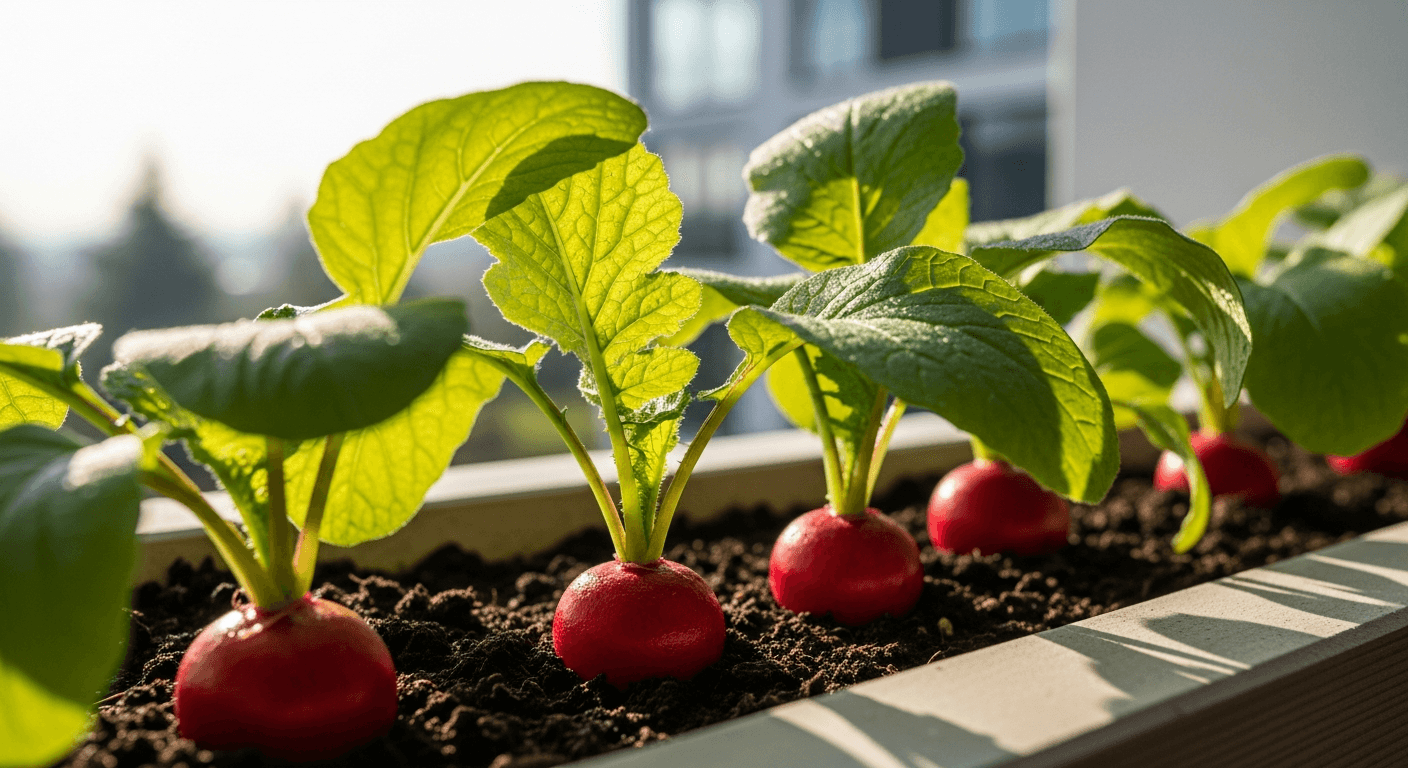
In this article
If you want a quick win in your urban garden, sow radishes: they're harvested in 3-4 weeks, take no space and are nearly foolproof. They're the ideal crop to get started and to get kids hooked on gardening.
| Fact | Radishes in pots |
|---|---|
| Pot depth | 6 inches |
| Sowing depth | 1/2 inch |
| Spacing | 1-2 inches |
| Light | Sun or part shade (4-6 h) |
| Harvest | 3-4 weeks |
| Best season | Spring and fall |
How to grow them, point by point
Pot and soil
Radishes have shallow roots: a pot or planter just 6 inches deep is enough. Use loose, fine soil with good drainage; stony or very compact soil deforms the bulb and makes it fork. A lined fruit crate, a window box or any wide, shallow container works perfectly, because what matters is the surface area, not the depth.
Is your plant looking off and you are not sure why?
Free AI diagnosisSowing (direct and simple)
- Sow the seeds directly, half an inch deep and about an inch apart.
- Keep the soil moist: they germinate in a few days.
- Thin them if they come up too close: if they compete, the bulb won't swell.
Light and watering
They want sun or part shade (4-6 hours) and, above all, steady watering. Lack of water makes them spicy, fibrous and hollow. Consistent moisture gives crisp, mild radishes.
Why they grow "all leaf and no bulb"
It's the most common problem, usually due to:
- Too much heat: they're a cool-season crop; in heat they go to leaf. Sow in spring and fall.
- Too little light: they need sun to form the bulb.
- Sowing too dense: they compete and don't swell.
Succession sowing
Sow a handful every 1-2 weeks and you'll have fresh radishes continuously. Since they grow so fast, slip them in between slower crops: they make a perfect "filler" between lettuce, carrots or tomatoes, which use them up before they need the space.
With carrots the trick is doubly useful: sowing radish in the same row marks where you sowed and loosens the soil while the far slower carrot germinates.
Harvest and storage
Harvest as soon as the bulb pokes above the surface and reaches the size of a large coin; wait too long and they turn fibrous, hollow and spicy. Pull gently on the leaves. Don't throw the leaves away: they're edible, taste like mild arugula and are great in salads or sautéed. The bulbs keep for a week or two in the fridge in a sealed container, ideally without the leaves, which steal moisture from them.
Varieties for pots
Small round radishes like 'Cherry Belle' or 'Scarlet Globe' are the fastest and the most rewarding in shallow depth. Elongated types like 'French Breakfast' also do well. Leave the big winter radishes (daikon, black radish) for deeper pots, since they need much more depth to form their root.
With sun, steady watering and cool weather, you'll get your first harvest in under a month. Your radishes looking off? Try the AI diagnosis.
Related articles
Spinach in Pots: Fresh Leaves Year-Round on the Balcony
Grow spinach in pots: sowing, watering, part shade and the trick of harvesting leaf by leaf. A fast, nutritious, easy leafy crop for the urban garden.
How to Grow Lettuce in Pots (Harvest in 30 Days)
Grow lettuce in pots at home or on a balcony: varieties, pot, watering, light and the cut-and-come-again trick. The fastest, easiest garden to start with.
How to Grow Beets in Pots (Roots and Leaves)
Grow beetroot in pots: pot depth, thinning seedlings, steady watering and harvest. Discover that the leaves are edible too and absolutely delicious.
Trouble with your plant?
AI diagnosis