Ants Marching Up Your Plant: What It Means and How to Stop It
Ants on your plants are almost always farming aphids or scale for honeydew. Learn how to remove the ants and, above all, treat the real pest behind them.
In this article
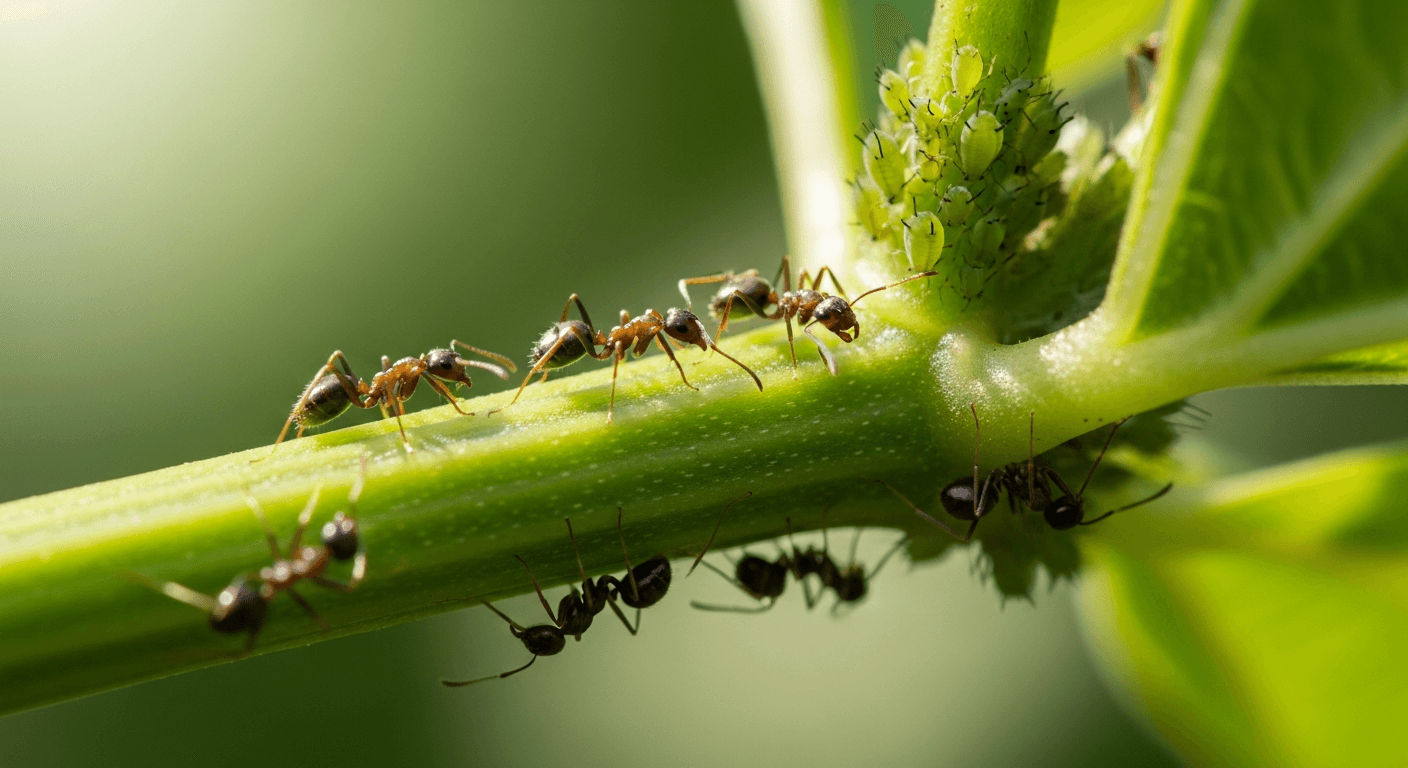
Ants are almost never the problem: they are the symptom. They rarely eat the plant; what they are doing is farming, tending aphids or scale insects to harvest their sugary honeydew. So the fix is not killing ants but removing the sap-sucking pest that attracts them: with no honeydew, they leave on their own within days. A steady parade of ants up a stem is in fact the best early warning that a pest is hiding on the leaf undersides.
Why ants are on your plant
Ants are drawn to honeydew, a sticky, sugary liquid secreted by aphids, mealybugs, whitefly and scale insects as they suck sap. The ants:
- Protect those insects from their natural predators (like ladybugs).
- Even move them from a healthy plant to another to "milk" them.
That's why a steady line of ants almost always means there's a hidden sap-sucking pest, usually on the undersides of leaves and the tender new growth.
Is your plant looking off and you are not sure why?
Free AI diagnosisSigns there's a pest behind it
- Sticky or shiny leaves (the honeydew).
- A black powder or mold on that honeydew: that's sooty mold.
- Colonies of green or black aphids on the new growth.
- Brown bumps (scale) or white cottony specks (mealybugs) on stems and veins.
Other reasons (less common)
- Very dry soil: sometimes ants just want a dry, airy place to nest. You'll see disturbed soil and tunnels.
- Just passing through: if the pot is near an outdoor nest, they may use it as a route with no other intent.
How to clear them and keep them away
How to get rid of them, step by step
- Treat the sap-sucking pest first. Without honeydew, the ants lose interest and leave on their own. Wipe the leaves and apply insecticidal soap or neem oil to the aphids and scale.
- Wash off the honeydew with a damp cloth to cut off their food supply.
- Cut the "highway": a ring of petroleum jelly around the base of the stem or pot stops them climbing.
- If they've nested in the soil, submerge the pot in a tub of water (with a few drops of soap) for 15–20 minutes: the ants float out. Let it drain well afterward.
- Ant baits near the pot (not on the plant) to attack the colony if the problem is large.
Don't drench the plant in strong insecticides "just in case": you'll kill the beneficial insects too and never address the cause.
How to prevent them
- Check the undersides of leaves weekly to catch aphids and scale early.
- Don't leave the soil bone-dry: regular watering discourages nesting.
- Inspect new plants before grouping them with the others.
- Keep saucers and standing water clean, as they also attract ants.
Home remedies that actually work
Before reaching for chemicals, these home tricks are usually enough:
- Cinnamon or coffee grounds sprinkled on the soil: ants avoid those smells and stop using the pot as a route.
- Soapy water (a few drops of mild soap per glass of water) sprayed directly on the trail breaks the pheromone scent that guides them.
- Cucumber slices or citrus peel on the rim of the pot act as a natural repellent for a few days.
- Crushed eggshell or a line of chalk around the base is hard for them to cross.
Remember: these remedies drive the ants away, but if there's a sap-sucking pest behind them, they'll come back as soon as the smell fades. Always treat the pest first.
Are they dangerous to the plant?
On their own, ants almost never harm the plant. The damage comes from the pest they protect, which weakens the plant, yellows the leaves and encourages sooty mold. That's why the solution is never "kill the ants," but remove whatever is attracting them.
Not sure which pest is hiding under all those ants? Take a photo of the leaf undersides and upload it to the AI diagnosis to identify it and treat it correctly.
Related articles
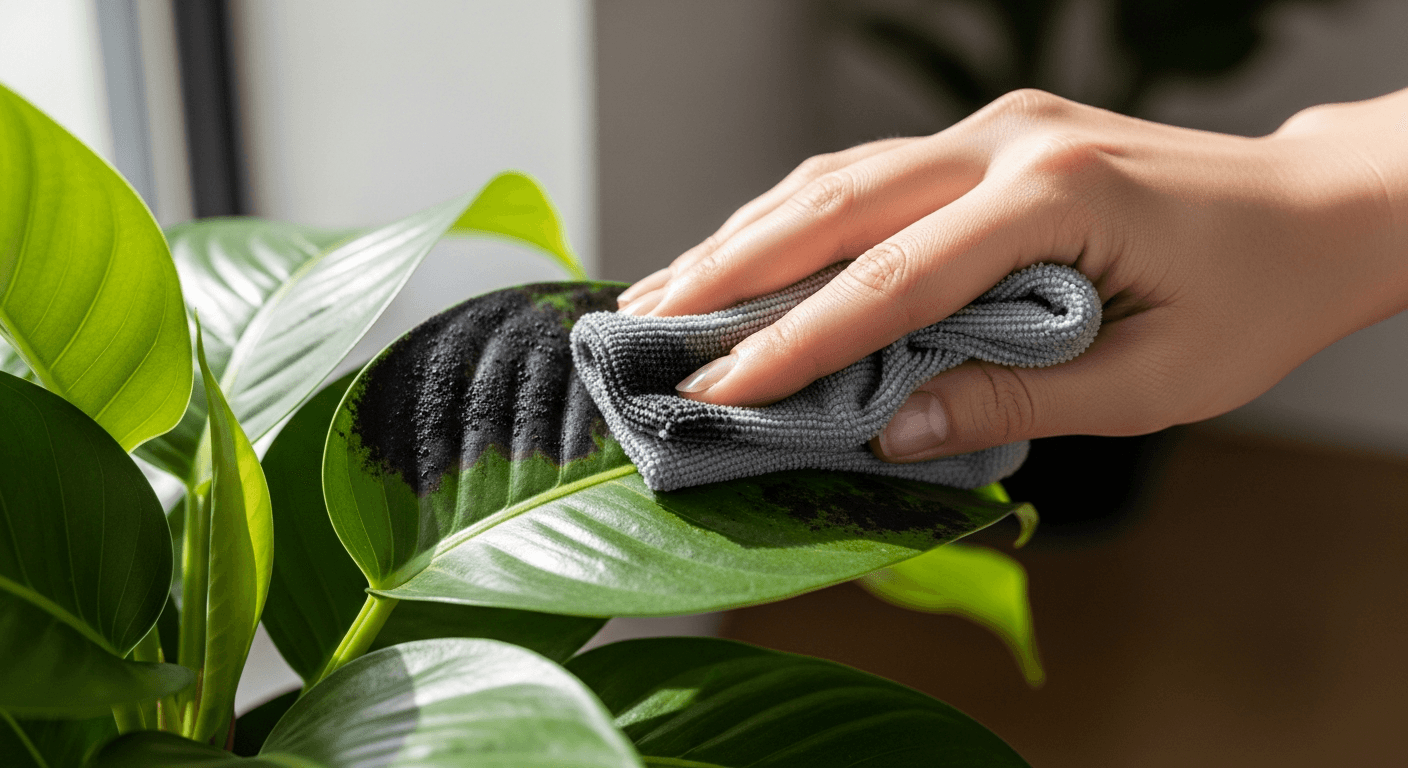
Sooty Mold: The Black Mold on Leaves and How to Remove It
Sooty mold is that sticky black soot on leaves. It doesn't attack the plant directly: it grows on pest honeydew. Learn how to wipe it off and treat the real cause.
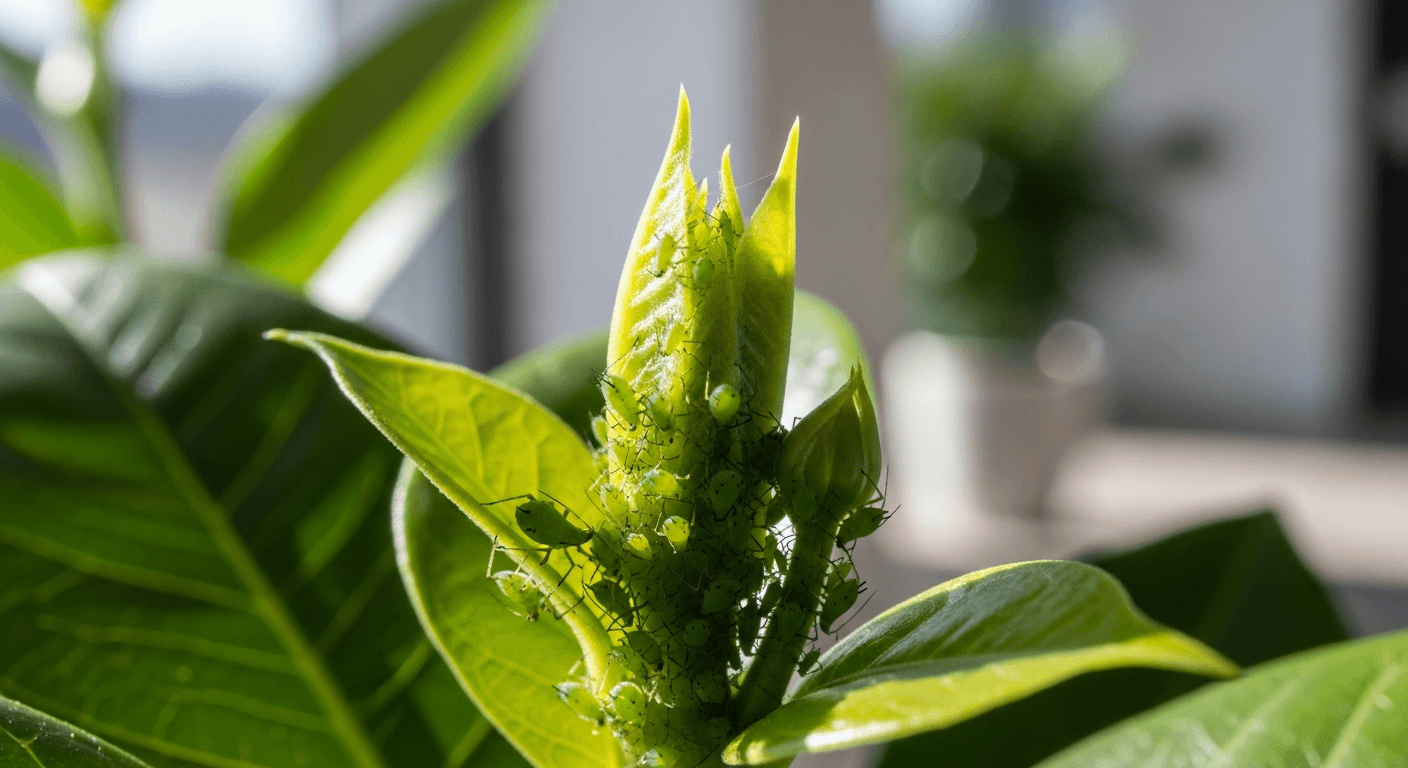
Aphids: How to Get Rid of Them With Easy Remedies
Aphids breed at lightning speed on new shoots and buds. Learn to identify them, clear them with water, soap and natural remedies, and prevent a comeback.
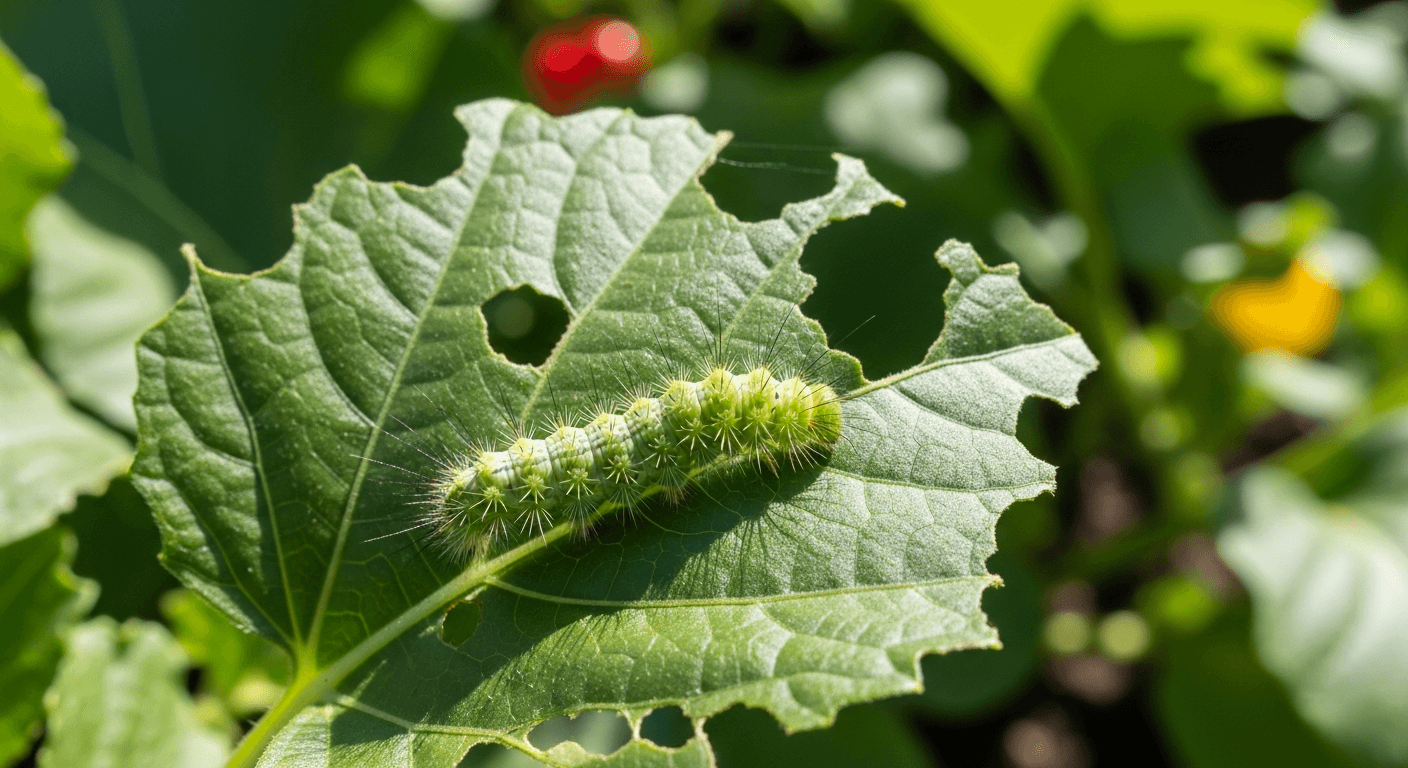
Caterpillars on Plants: How to Identify and Get Rid of Them
Caterpillars eating garden leaves: how to spot the holes and droppings, handpick them, and treat with Bacillus thuringiensis (Bt) without harsh chemicals.
Trouble with your plant?
AI diagnosis