Aphids on New Growth: How to Clear Them Without Insecticide
Aphids breed at lightning speed on new shoots and buds. Learn to identify them, clear them with water, soap and natural remedies, and prevent a comeback.
In this article
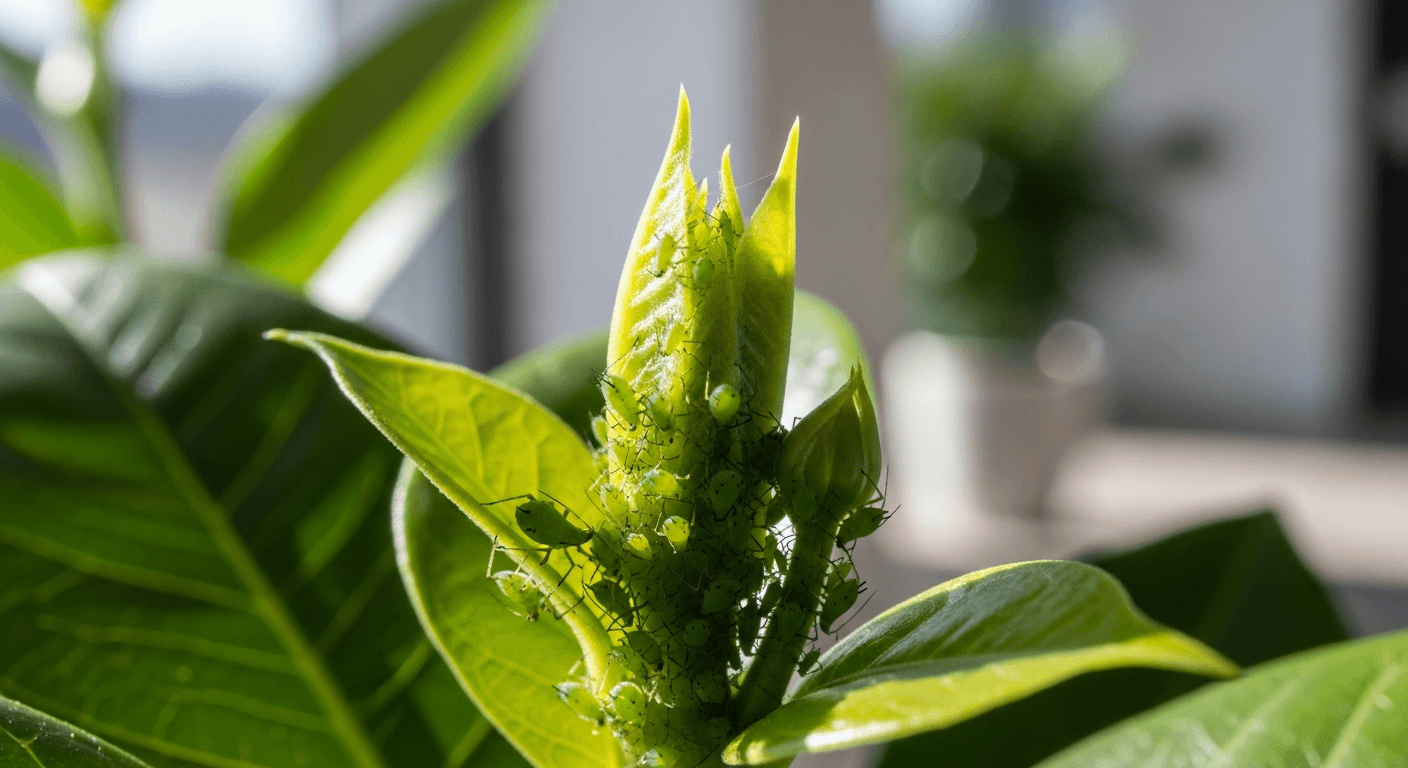
Aphids are cleared with a jet of water to knock the colony off and insecticidal soap sprayed on the undersides and shoots, repeated every 5-7 days until none are left. No insecticide is needed: they are soft-bodied insects that die on contact with the soap. They cluster on tender new growth and leaf undersides, suck sap, and leave sticky honeydew that draws ants and encourages sooty mold.
How to identify them
| Sign | Detail |
|---|---|
| Clusters of tiny insects | On new shoots, buds and undersides |
| Sticky leaves (honeydew) | Sometimes with sooty mold on top |
| Deformed, curled shoots | Won't open properly; stunted growth |
| Ants marching up and down | They "farm" aphids for the honeydew |
Is your plant looking off and you are not sure why?
Free AI diagnosisWhy it multiplies so fast
Here's why a couple of aphids become a cloud in days: in spring and summer, the females reproduce without males (parthenogenesis) and give birth to live nymphs, not eggs. Each female can produce dozens of young that, in turn, breed within a week. That's why checking early and repeating treatment matters so much: leave a few and they explode again.
Treatment and natural remedies
Step-by-step treatment
- Jet of water: the easiest and surprisingly effective. Spray the undersides and shoots with pressured water to wash them off. Repeat every few days.
- Insecticidal soap: spray, covering shoots and undersides well (the soap dissolves their coating and dries them out). Repeat every 5-7 days until under control.
- Neem oil: a good ally for stubborn infestations; see how to use neem oil.
- By hand: for small cases, squash the clusters or wipe with a cotton pad dipped in soapy water.
Always treat at dusk or with the plant in shade, never in full sun, so the soap or neem doesn't scorch the leaves.
Natural remedies and allies
- A diluted garlic infusion acts as a mild repellent.
- Ladybugs and their larvae are their biggest predator: a single one can eat hundreds of aphids. If you see them, protect them and avoid insecticides that kill them.
- Plants like calendula attract these beneficial insects to the garden.
The link with ants
If you see a constant traffic of ants on the plant, there's almost certainly aphids (or scale). The ants "milk" the aphids' sweet honeydew and, in return, protect them from predators and even move them to new shoots. Controlling the ants is part of the treatment.
How to prevent a comeback
- Check new shoots weekly: that's always where it starts.
- Don't over-fertilize: excess nitrogen produces soft, tender growth that aphids love.
- Control the ants, which protect and spread them.
- Quarantine new plants for 1-2 weeks before mixing them in with the rest.
Quick table
| Action | Key |
|---|---|
| Identify | Clusters on shoots + sticky honeydew + ants |
| Treat | Pressured water → insecticidal soap every 5-7 days → neem |
| Prevent | Check shoots, less nitrogen, control ants |
Aphids or another pest?
Don't confuse them with other sap-suckers: whitefly flies up in a cloud when you move the plant; mealybugs look like specks of cotton; thrips leave a silvery stippling. The treatment (soap/neem and repeat) is similar for all.
Aphids rarely kill a healthy plant, but they weaken it and disfigure the new growth. Treat them early and it's a matter of days. Not sure it's aphids? Upload a photo to the AI diagnosis tool.
Related articles
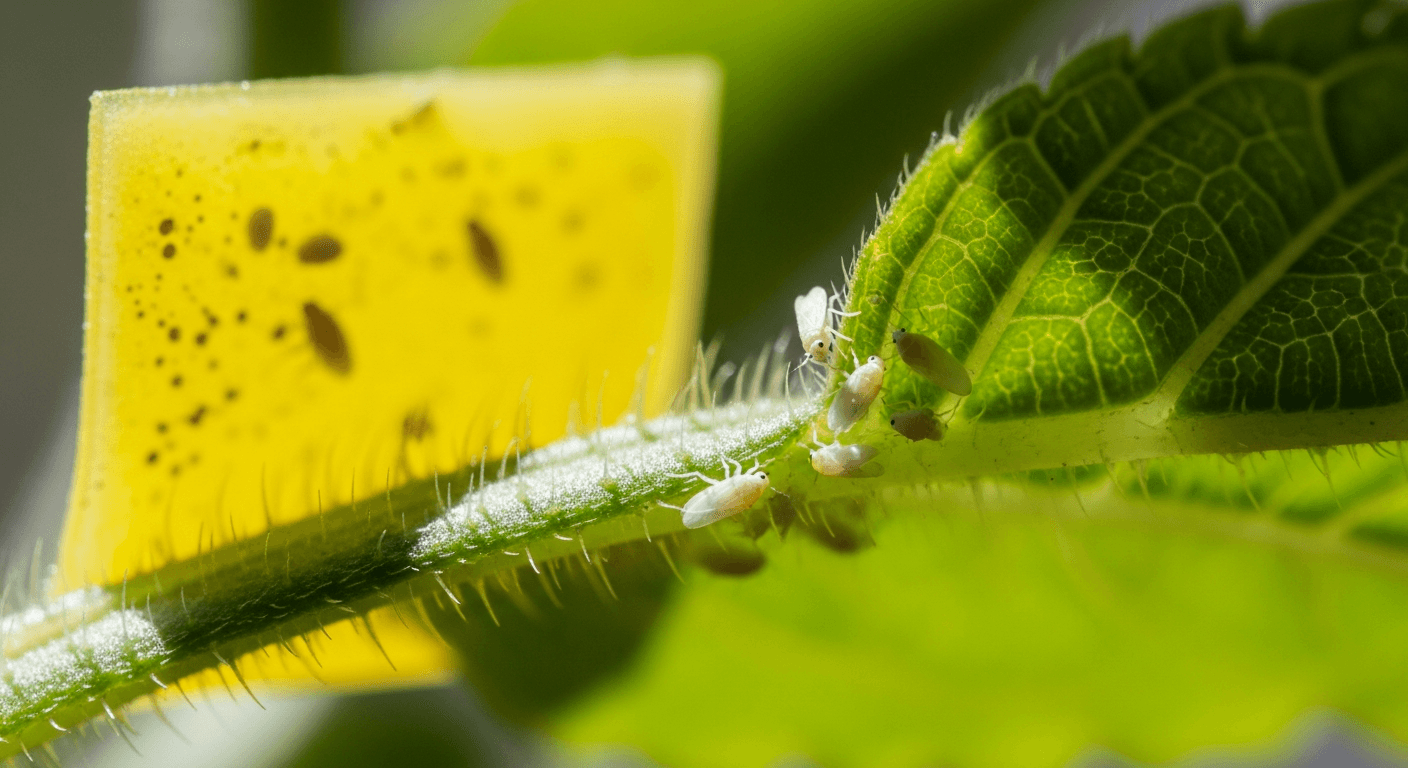
Whitefly: How to Clear the White Cloud From Your Plants
If tiny white flies take off when you move the plant, it's whitefly. Learn to identify and eliminate it with yellow traps, soap and persistence.
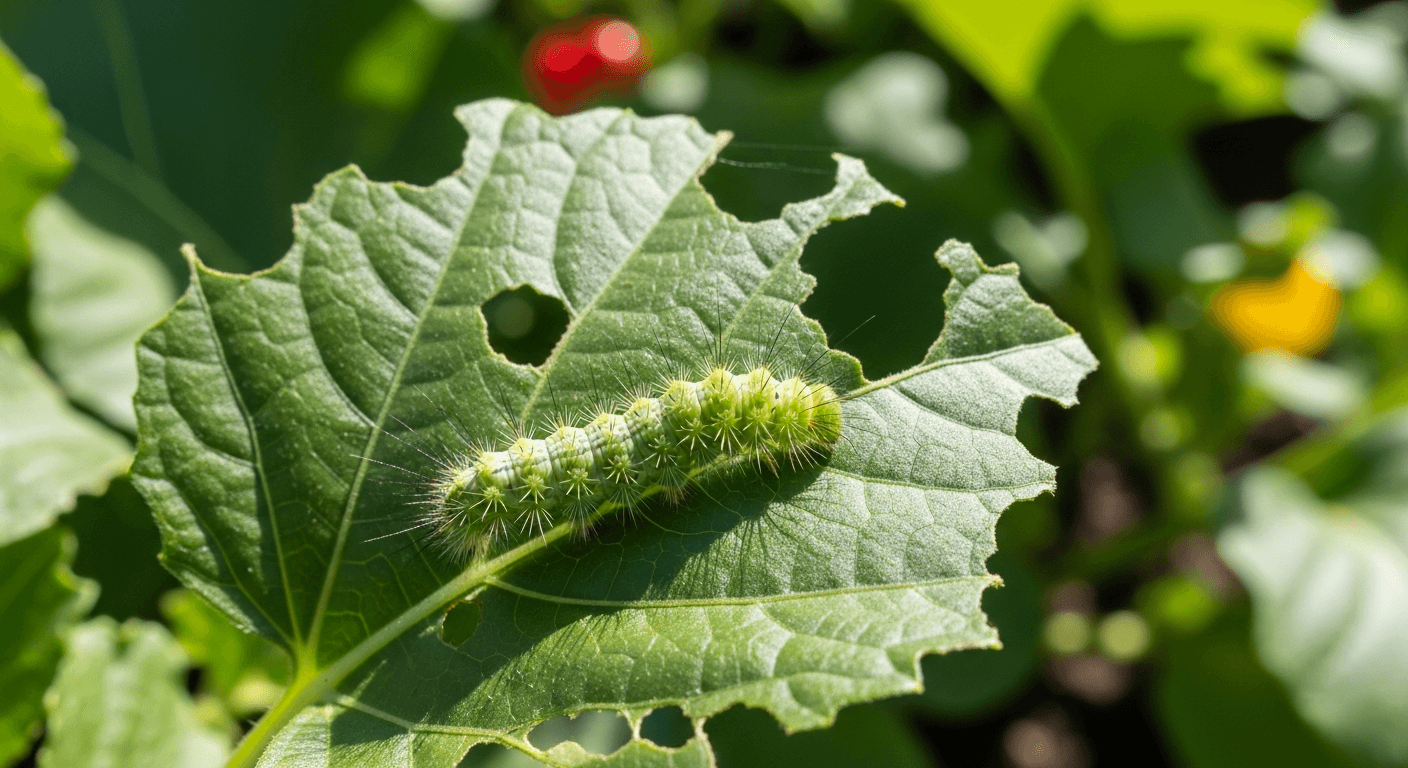
Caterpillars on Plants: How to Identify and Get Rid of Them
Caterpillars eating garden leaves: how to spot the holes and droppings, handpick them, and treat with Bacillus thuringiensis (Bt) without harsh chemicals.
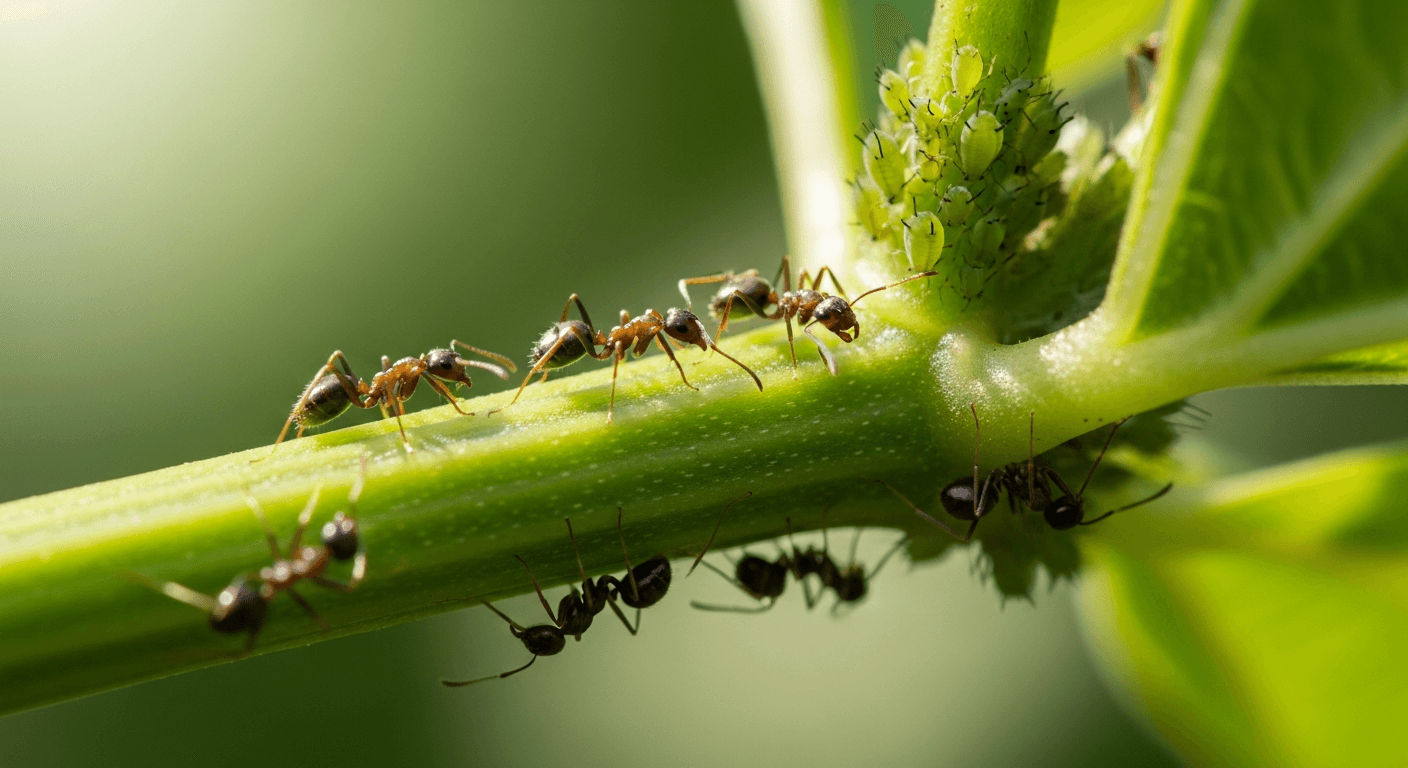
Ants on Your Plants: What They Want and How to Get Rid of Them
Ants on your plants are almost always farming aphids or scale for honeydew. Learn how to remove the ants and, above all, treat the real pest behind them.
Trouble with your plant?
AI diagnosis