Lavender in Pots: Sharp Drainage or It Dies
Lavender in pots: lots of sun, sharp drainage, careful watering (overwatering kills it) and pruning so it doesn't go woody. The full care guide.
In this article
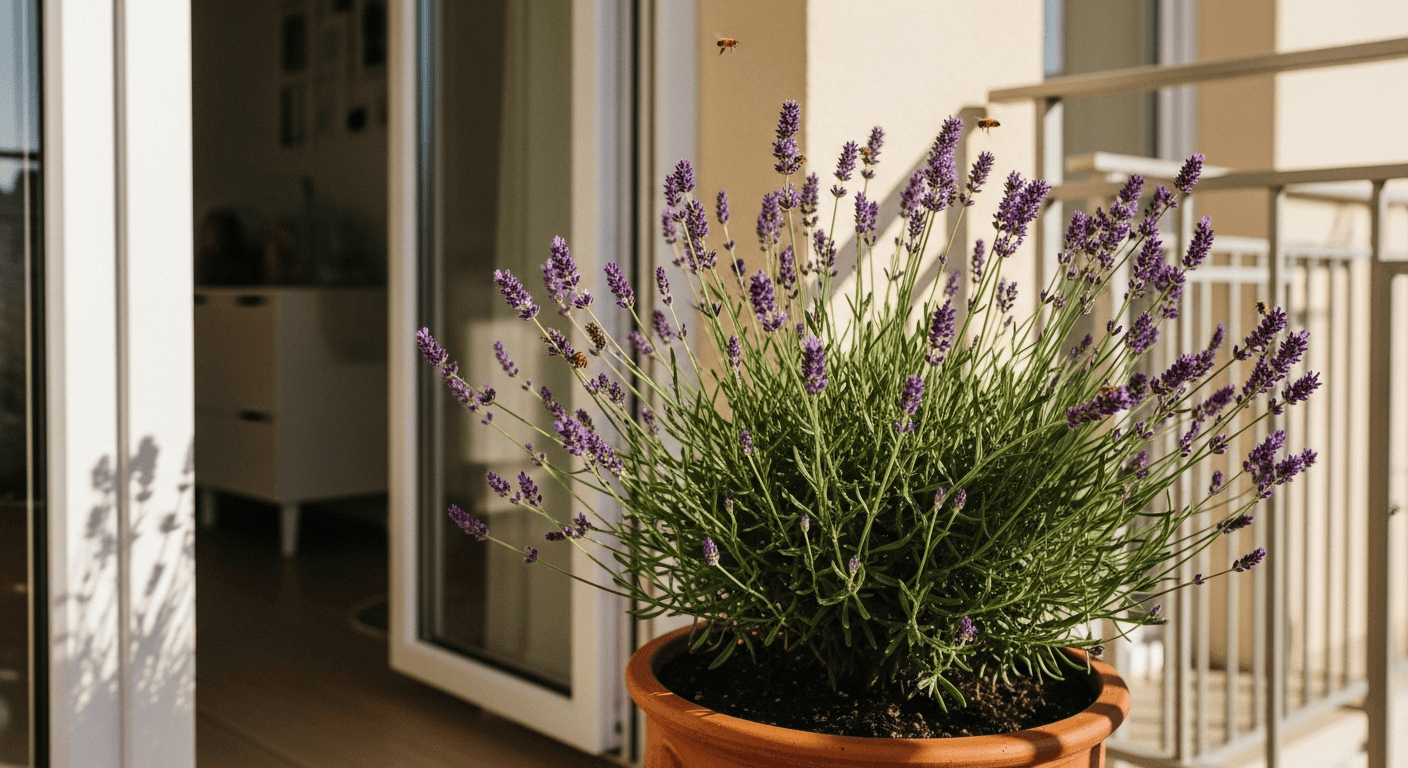
Lavender fills a balcony with purple color, fragrance and bees, and it's far easier to grow in a pot than it looks — as long as you remember one thing: it comes from the dry, sunny Mediterranean, so it hates excess water. This guide shows you how to give it exactly what it needs to last for years.
| Care | Need |
|---|---|
| Light | Full sun, 6-8 hours direct |
| Watering | Sparse; dry out almost fully between |
| Soil | Very free-draining (coarse sand or perlite) |
| Pruning | Twice a year, never into old wood |
| Toxicity | Mildly toxic to pets |
Types of lavender
- English lavender (Lavandula angustifolia): the most cold-hardy and the most fragrant, ideal for temperate climates.
- French or topped lavender (Lavandula stoechas): with showy "ears" on the flower; more frost-sensitive but very decorative.
- Lavandin: a large, vigorous hybrid widely grown for essential oil.
Is your plant looking off and you are not sure why?
Free AI diagnosisBasic care, point by point
Light
Lavender needs full sun, no exceptions.
- Ideal: direct sun at least 6-8 hours a day, in a south-facing spot.
- Tolerates: shade poorly; in dim spots it stretches, won't flower and gets sick easily.
If your balcony is shady, lavender isn't the right plant no matter how well you care for it.
Soil and pot: drainage is everything
More than watering itself, what kills lavender is waterlogging. Go for perfect drainage:
- Mix all-purpose potting soil with a third of coarse sand or perlite.
- Use a terracotta pot with a good hole, rather than plastic.
- Add a layer of grit at the bottom and never leave it sitting in a water tray.
Watering
Water sparingly and infrequently. Let the soil dry out almost completely between waterings.
- Newly planted: water a bit more often for the first month so it establishes.
- Established in summer: once a week or less, depending on the heat.
- Winter: almost nothing if it's outdoors.
Golden rule: when in doubt, don't water. Lavender would rather go thirsty than have wet feet.
Feeding and temperature
Lavender thrives in poor soils, so feed it very little: a light spring feed is plenty. Too much fertilizer gives lots of leaf and few flowers. It handles heat well and, depending on the variety, mild frost; protect French lavender from hard cold.
Pruning: the secret against woody stems
Lavender's great enemy is going woody and bare at the base. To prevent it, prune twice a year:
- After the first flush of bloom, trim off the flower stalks and a third of the plant.
- In late summer or early autumn, shape it into a mound — but never cut into the old, leafless wood, because it won't resprout from there.
Regular pruning keeps the plant compact and extends its life by several years.
Its real enemy isn't cold but excess water: in heavy soil with no drainage it ends in root rot, so cut it with sand or perlite following the potting soil guide. For that same sunny corner, jasmine works beautifully.
Common problems
- Woody base and hollow center: lack of pruning; hard to reverse, so prevent it.
- Gray leaves and a wilting plant despite watering: almost always overwatering or poor drainage rotting the roots.
- Won't flower: not enough sun or too much fertilizer.
- Fungus in humid conditions: improve airflow. If you spot odd marks, upload a photo to our AI diagnosis tool.
Is it toxic?
Lavender is mildly toxic to dogs and cats if eaten in quantity, due to its essential oils. In the garden it's rarely a problem, but it's worth keeping in mind with pets that chew everything.
If you like balcony plants that handle strong sun, pair lavender with a geranium: together they make a low-maintenance Mediterranean balcony. With sun, drainage and pruning, your lavender will perfume the air summer after summer.
Related articles
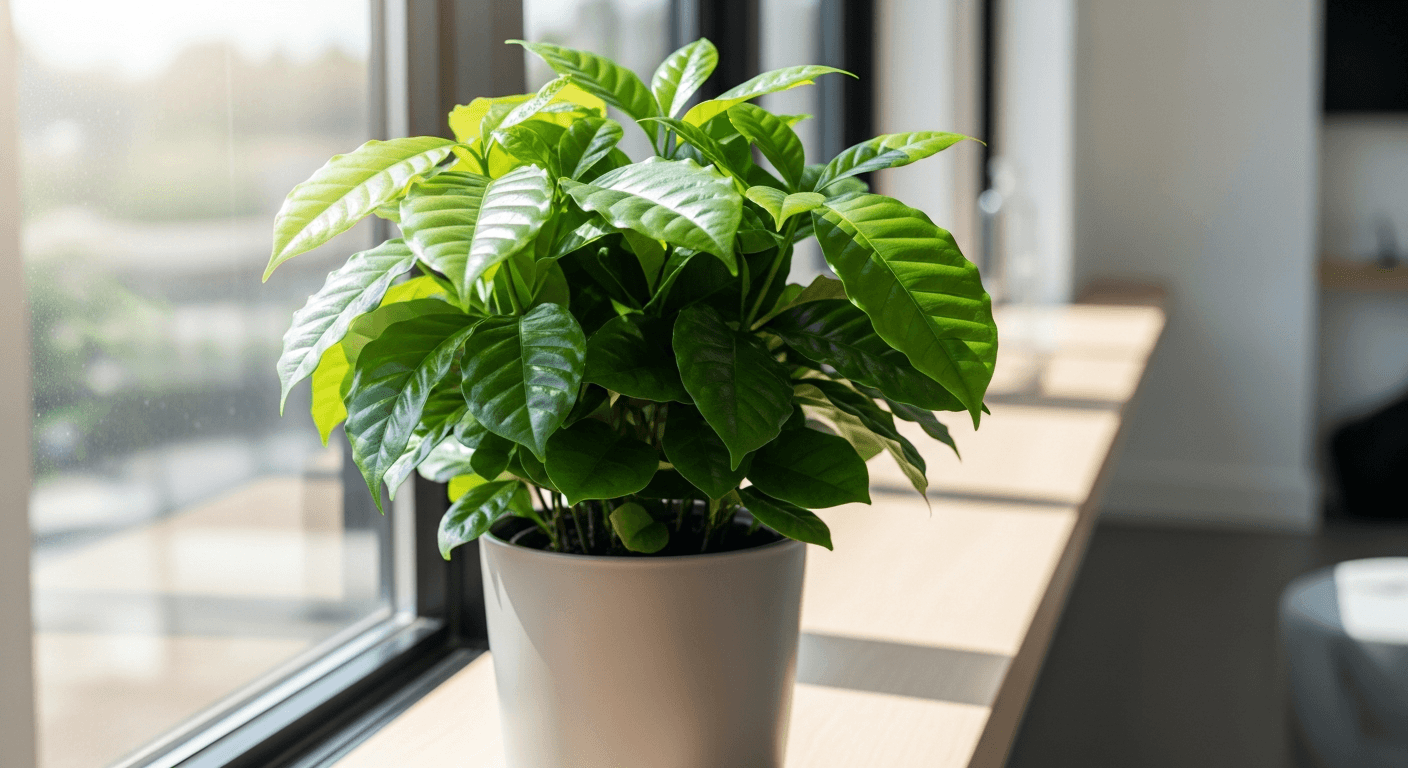
Coffee Plant Care: Growing Coffea at Home
Coffee plant (Coffea arabica) care as a houseplant: bright indirect light, humidity, watering, and whether you can really harvest your own coffee beans.
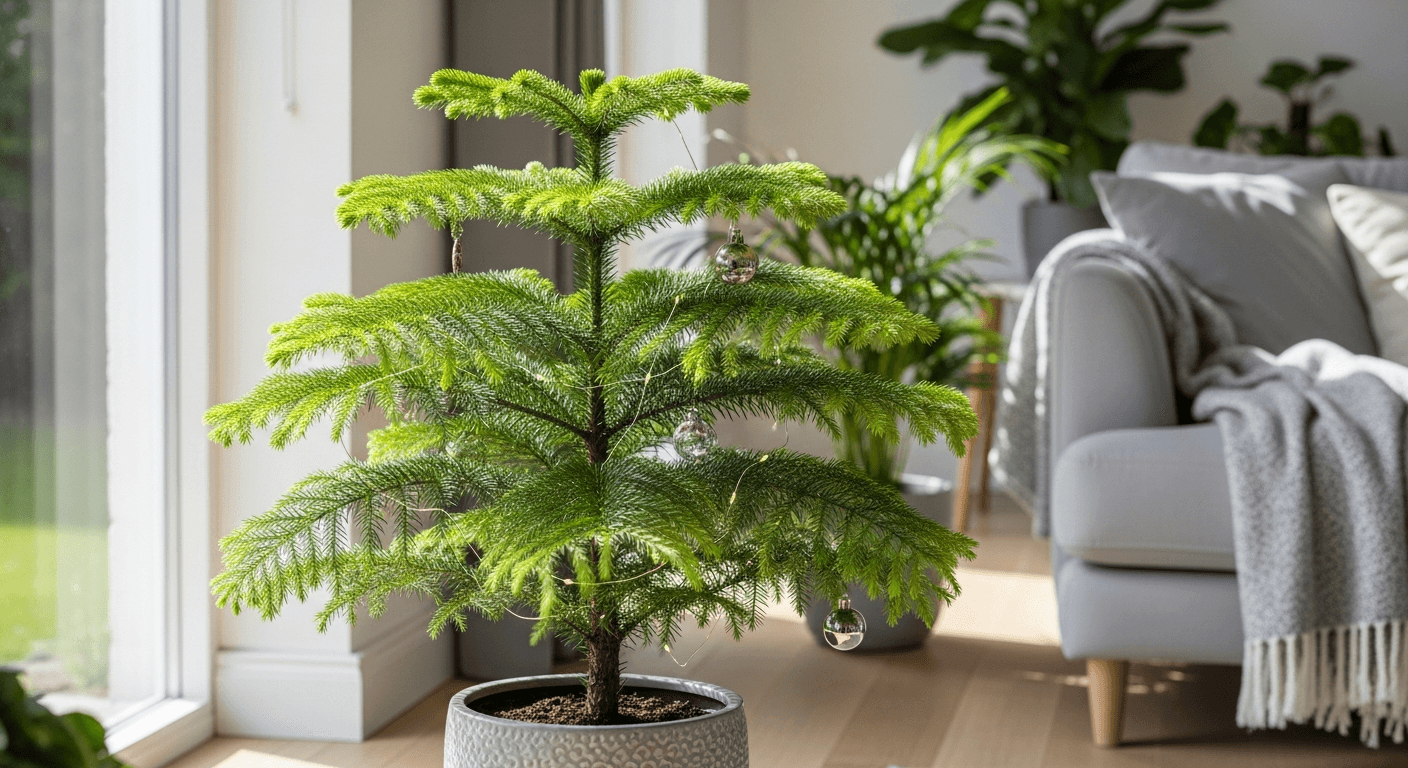
Norfolk Island Pine Care: The Living Christmas Tree
Norfolk Island pine (Araucaria heterophylla) care: light, watering, humidity and why its branches turn brown and drop. The living indoor Christmas tree guide.
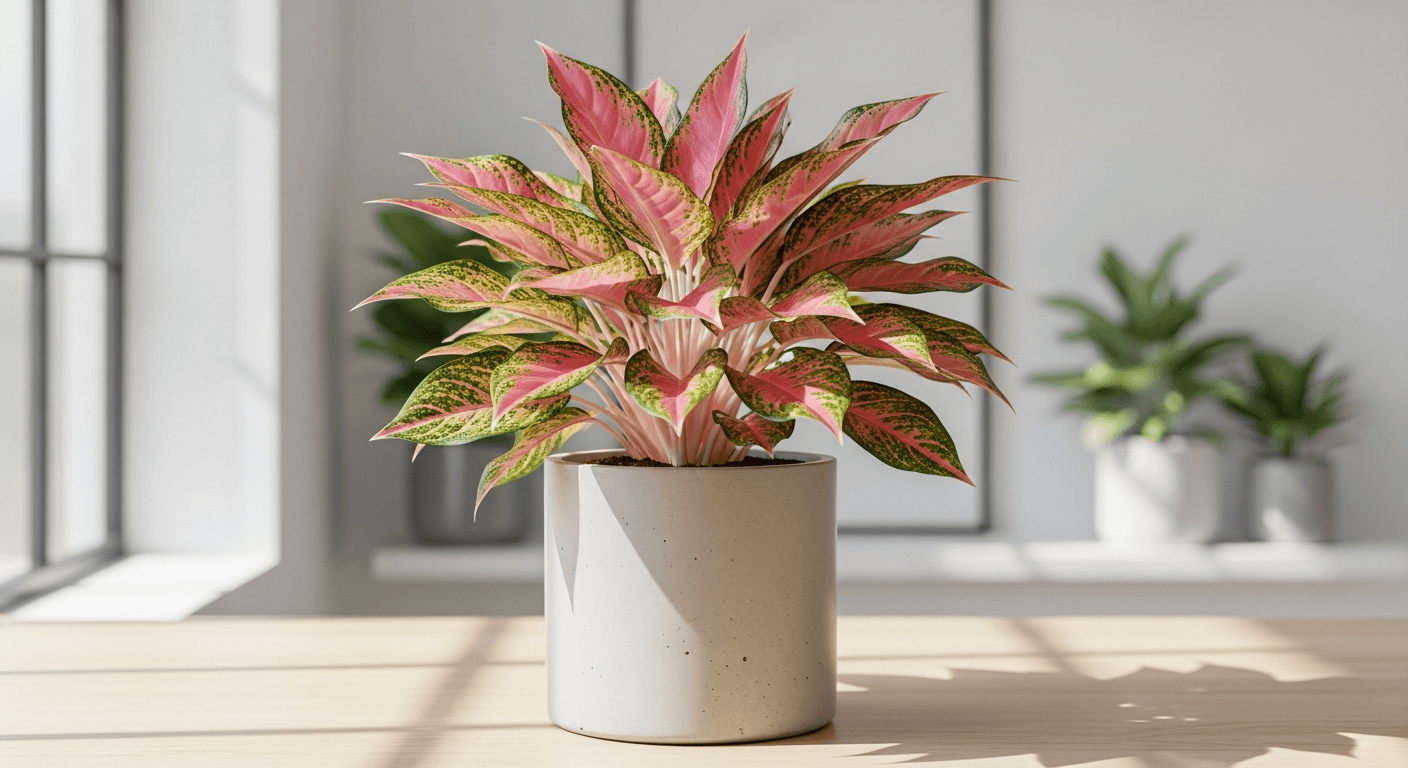
Aglaonema (Chinese Evergreen): The Complete Care Guide
Care guide for the Aglaonema or Chinese evergreen: light for the pink varieties, watering, humidity, propagation by division and its toxicity to pets.
Trouble with your plant?
AI diagnosis