Homemade Fertilisers: What Works and What Is a Myth
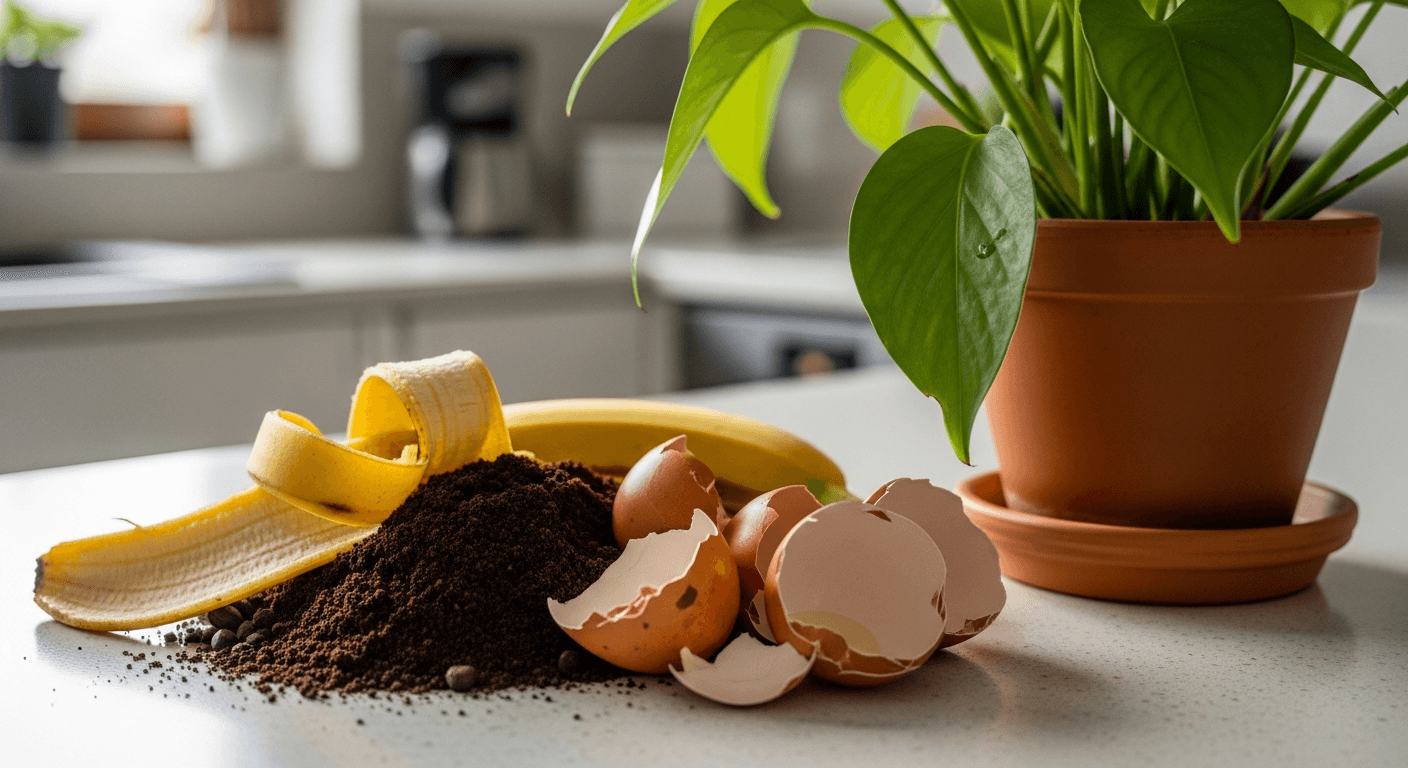
Banana peels, coffee grounds, eggshells, cooking water... The most popular homemade fertilizers: which ones work, which are myths, and how to use them right.
In this article
- First: how a plant actually feeds
- The honest scorecard
- What DOES work
- Compost and worm castings (the real champions)
- Coffee grounds (in moderation)
- Crushed eggshells (calcium, eventually)
- Vegetable cooking water (unsalted, cooled)
- Banana or compost "tea"
- What's a MYTH (or close to it)
- How to use homemade fertilizers without overdoing it
- A simple seasonal rhythm
- And if the plant already shows deficiencies?
The internet is full of "hacks" for feeding plants with kitchen scraps. Some work, some are urban legend, and a few can actively harm your plants. I've tried most of them on my own balcony — feeding tomatoes, peppers and a small jungle of houseplants while keeping two very curious cats out of the watering can — so this guide is about separating what genuinely nourishes plants from what only nourishes headlines. By the end you'll know exactly which scraps to save, how to prepare them, how much to use, and which ones to drop in the bin (or the compost) without guilt.
First: how a plant actually feeds
Before you reach for the banana peel, it helps to know what plants are after. They build themselves mostly from carbon, hydrogen and oxygen, which they pull from air and water for free. From the soil they take three big nutrients — nitrogen (N), phosphorus (P) and potassium (K) — plus secondary nutrients like calcium and magnesium, and tiny amounts of micronutrients (iron, manganese, zinc and others).
Here's the part most "hacks" gloss over: plants can only absorb nutrients in a simple, dissolved, mineral form. A banana peel isn't potassium — it's a chunk of organic matter that has to be broken down by microbes and time before the potassium inside becomes available. That single fact explains why so many viral tips disappoint. The nutrient is in there; it just isn't on the menu yet.
A good homemade fertilizer supplies some of this slowly, so it supplements but rarely fully replaces a balanced fertilizer. To understand NPK in depth, the roles of each nutrient, and how to read a fertilizer label, read our guide on how to fertilize your plants first — it pairs perfectly with this one.
Is your plant looking off and you are not sure why?
Free AI diagnosisThe honest scorecard
If you remember nothing else, remember this table. The "speed" column is the key: most kitchen scraps are slow-release at best, which is fine for a long season but useless if a plant is hungry right now.
| Material | Main nutrient | Speed | Best use |
|---|---|---|---|
| Compost / worm castings | Balanced N-P-K + microbes | Steady, slow | Top-dress everything, 2-4x a year |
| Coffee grounds (dry) | A little nitrogen | Slow | Thin layer mixed into soil or compost |
| Crushed eggshells (powdered) | Calcium | Very slow | Mix into soil for tomatoes, peppers |
| Vegetable cooking water (no salt) | Trace minerals | Fast but weak | Occasional watering, cooled |
| Banana / compost "tea" | Some potassium, micronutrients | Moderate | Diluted liquid feed in growing season |
| Whole banana peel buried | Almost nothing short-term | Glacial | Compost instead |
| Sugar, milk, beer, soda | None for the plant | n/a | Don't — feeds pests and fungi |
What DOES work
Compost and worm castings (the real champions)
The king of homemade fertilizers, full stop. A thin layer — about 1 to 2 cm — of compost or worm castings (vermicompost) spread on top of the soil provides balanced, gentle nutrients and living microbes that keep roots healthy. It's the closest thing to a complete fertilizer you can make at home, it almost never burns roots, and it improves soil structure at the same time.
If you only do one thing from this article, make it this. You can buy worm castings by the bag, or build your own pile from kitchen and garden scraps — our step-by-step on how to make compost walks through the green/brown balance and what to avoid. Apply a fresh top-dressing at the start of the growing season and again midway through, scratching it lightly into the surface before you water.
Coffee grounds (in moderation)
Used coffee grounds add a small amount of nitrogen and some organic matter that improves soil structure and feeds microbes. The catch is moderation. Use them dry and in small amounts — a thin scattering worked into the top of the soil, or better yet tossed into the compost where they break down properly. A thick wet layer does the opposite of what you want: it compacts, holds excess moisture and can grow mold on the surface.
One myth to retire while we're here: used grounds are close to pH neutral after brewing, so they won't meaningfully acidify your soil. Treat them as a mild soil conditioner, not as a way to feed acid-lovers like blueberries.
Crushed eggshells (calcium, eventually)
Eggshells are essentially calcium carbonate. The keyword is eventually — they break down very slowly. To get any use out of them, dry them and grind them to a near-powder (a coffee grinder or mortar works) before mixing into the soil. Powdered, they release calcium gradually and can help plants that are prone to calcium-related issues, like blossom-end rot in tomatoes and peppers.
In big jagged pieces, though, they're basically gravel — they'll still be sitting there next season. If you grow fruiting vegetables in containers, working a spoonful of fine eggshell powder into the mix at planting time is a reasonable habit. For more on getting tomatoes off to a strong start, see tomatoes in pots.
Vegetable cooking water (unsalted, cooled)
The water you boiled or steamed vegetables in — cooled and completely unsalted — holds a small amount of dissolved minerals that leached out of the veg. It's weak, but it's free and immediately available, so use it occasionally in place of plain water. Two non-negotiables: it must be at room temperature (never pour hot water on roots), and it must have no added salt. Salted water will damage roots faster than any fertilizer will help them. Pasta water counts here too — only if it's unsalted.
Banana or compost "tea"
Steeping a banana peel, or a handful of finished compost, in water for 24 to 48 hours creates a mild liquid that carries some potassium and micronutrients into a form the plant can drink. Strain out the solids (compost the peel afterward), then water with it. I dilute compost tea to roughly the color of weak tea before using it. Make it fresh in small batches — left to sit for a week it turns anaerobic, smells like a swamp, and can do more harm than good. This is a nice occasional boost during the active growing season, not a daily routine.
What's a MYTH (or close to it)
- Burying a whole banana peel: it rots slowly underground, can attract fruit flies and fungus gnats, and releases almost nothing useful in the short term. The potassium is real but locked up for months. Compost it instead.
- Whole eggshells in the pot: decorative and great for drainage gossip, but the calcium won't release without grinding very fine first.
- Sugar to "give the plant energy": plants make their own sugars through photosynthesis. Adding sugar to soil mostly feeds fungi, bacteria and ants — none of which you invited.
- Milk, beer or soda: these ferment, sour, attract pests and stink. (Diluted milk is sometimes sprayed on leaves as a folk anti-mildew treatment, but that's a foliar spray, not a fertilizer — don't pour it on roots.)
- Aquarium water: the one honorable exception in the "weird liquids" pile. Old freshwater tank water (never salt or treated water) does carry a little nitrogen and is fine to use, in moderation.
How to use homemade fertilizers without overdoing it
The single biggest mistake I see is treating "natural" as a synonym for "can't hurt." It can. Over-applied compost tea or a thick mat of coffee grounds will stress a plant just like an overdose of synthetic feed.
- Less is more. Excess salts and nutrients pull water out of roots and burn them. When in doubt, use half of what you think you need.
- Feed during active growth. Apply mostly in spring and summer. In autumn and winter most plants slow down and aren't using much, so feeding then just builds up unused salts.
- Don't feed plants that are stressed. Skip feeding for at least 2-4 weeks after repotting, and never feed a sick or wilting plant — diagnose the problem first.
- Build a base, then top it up. Use compost or worm castings as your steady "background" feed, and add the occasional mild liquid boost (tea or cooking water) on top. That mirrors how nutrients actually arrive in healthy soil.
- Mind the medium. Container plants live in a closed system, so good potting soil and proper drainage matter more than any single fertilizer. Nutrients in a soggy, airless pot can't be absorbed anyway.
A simple seasonal rhythm
- Early spring: top-dress with 1-2 cm of compost or worm castings.
- Late spring through summer: liquid boost (diluted tea or unsalted cooking water) every 2-3 weeks for heavy feeders like tomatoes; monthly for houseplants.
- Midsummer: a second light top-dressing for long-season crops.
- Autumn/winter: ease off almost completely; let plants rest.
And if the plant already shows deficiencies?
This is where people reach for fertilizer too fast. Yellowing leaves, pale new growth or stalled development can mean a missing nutrient — but they can just as easily mean overwatering, poor light, root rot or pests. The pattern matters: yellowing between green veins on new leaves often points to iron, which a banana peel won't fix; see iron chlorosis for how to read that symptom. Across-the-board yellowing with soggy soil is usually a water problem, not a food problem — our guide on overwatering vs underwatering untangles the two, which look almost identical at a glance.
Before you dump anything in the pot, it's worth confirming the real cause. If you're not sure what you're looking at, snap a photo of the affected leaves and run it through our AI diagnosis tool — it'll help you tell a hunger problem from a watering or pest problem before you act.
Homemade fertilizers are a genuinely great way to recycle kitchen scraps and give your plants a steady, natural boost. Use them sensibly, lead with compost, don't expect miracles from a banana peel, and treat the rest as a complement to good soil and proper watering. Do that, and your plants — and your compost bin — will thank you.
Related articles
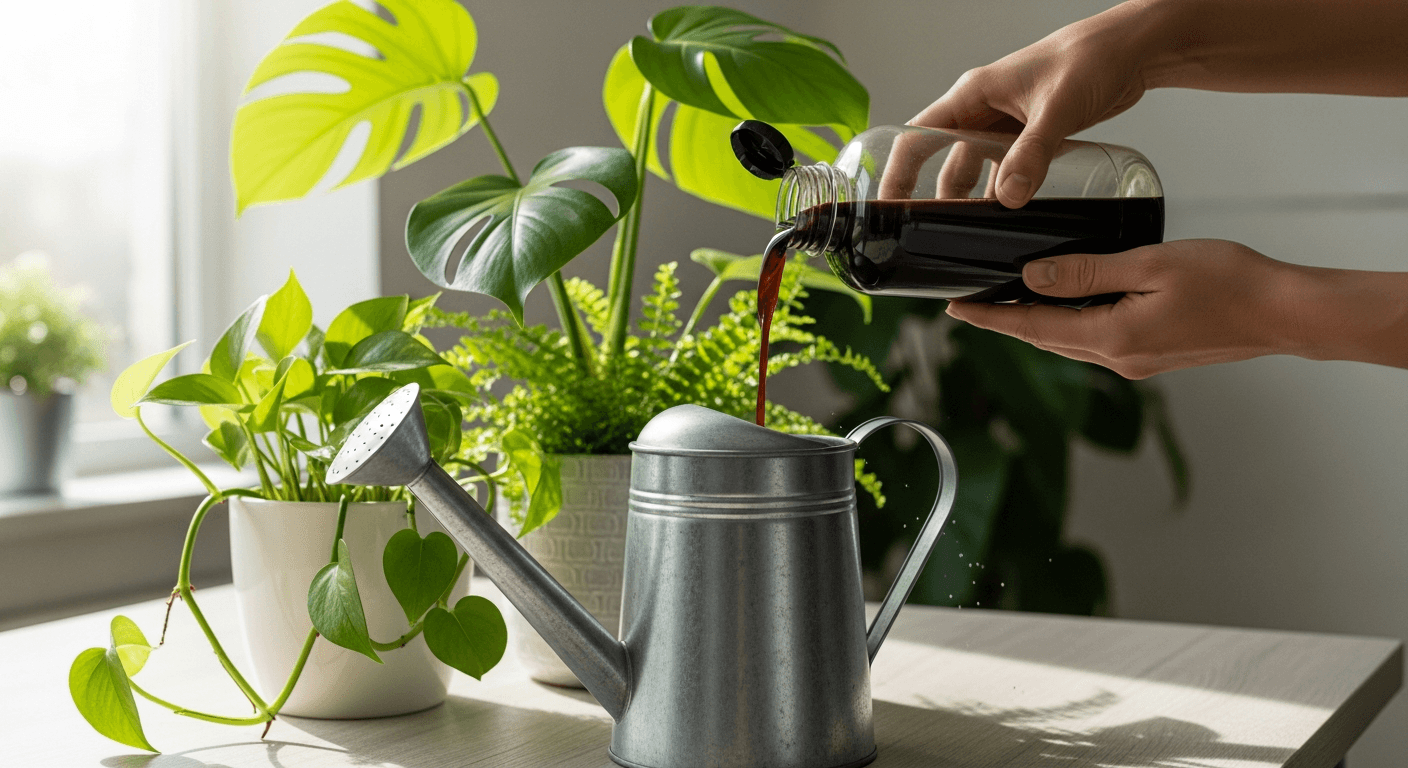
How to Fertilize Your Plants (Without Burning Them)
Which fertilizer to use, how often and how much. Learn to read NPK, when NOT to fertilize, and the signs of overfeeding. So your plants grow strong.
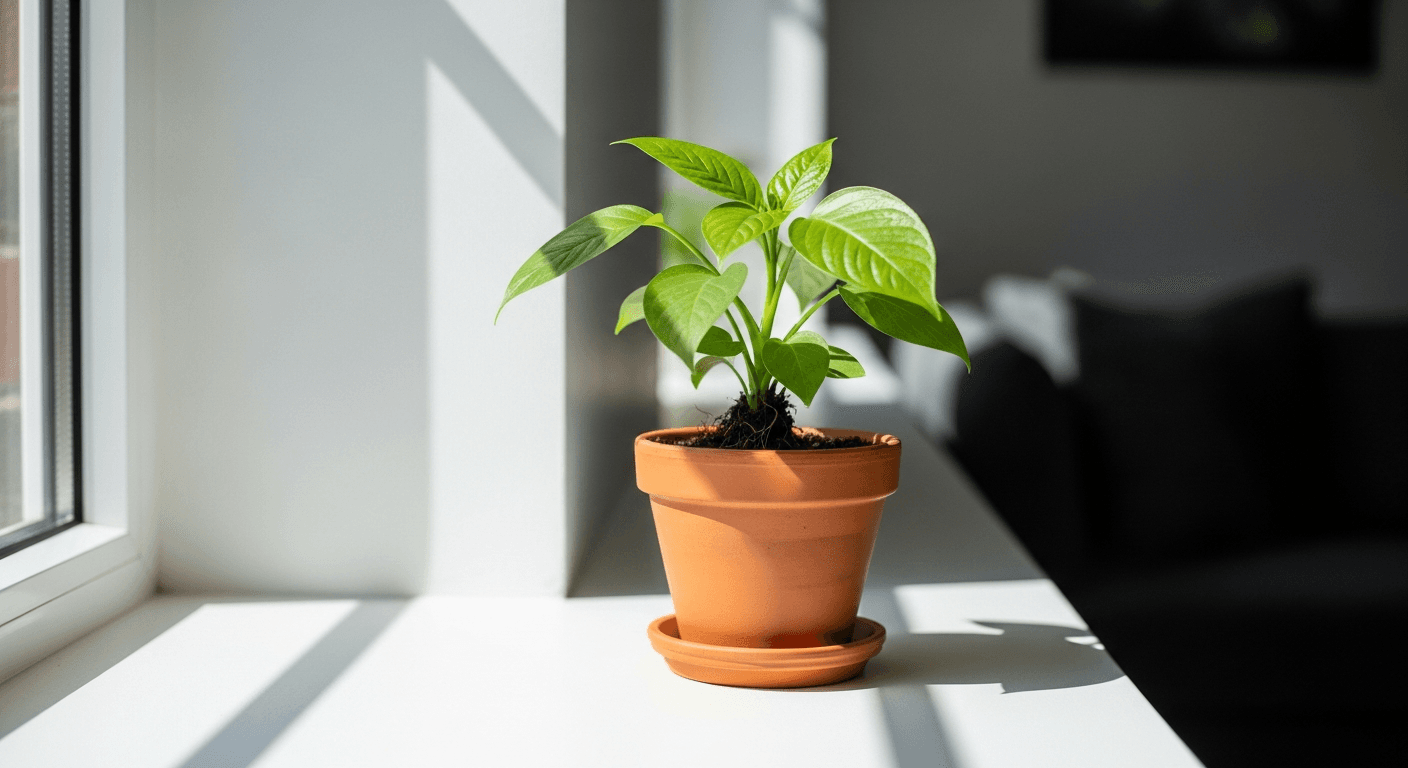
Why Your Plant Isn't Growing: 5 Causes and How to Fix Them
Has your plant stopped growing? Discover the 5 most common causes (not enough light, root-bound, winter dormancy, lack of nutrients) and how to diagnose each one.
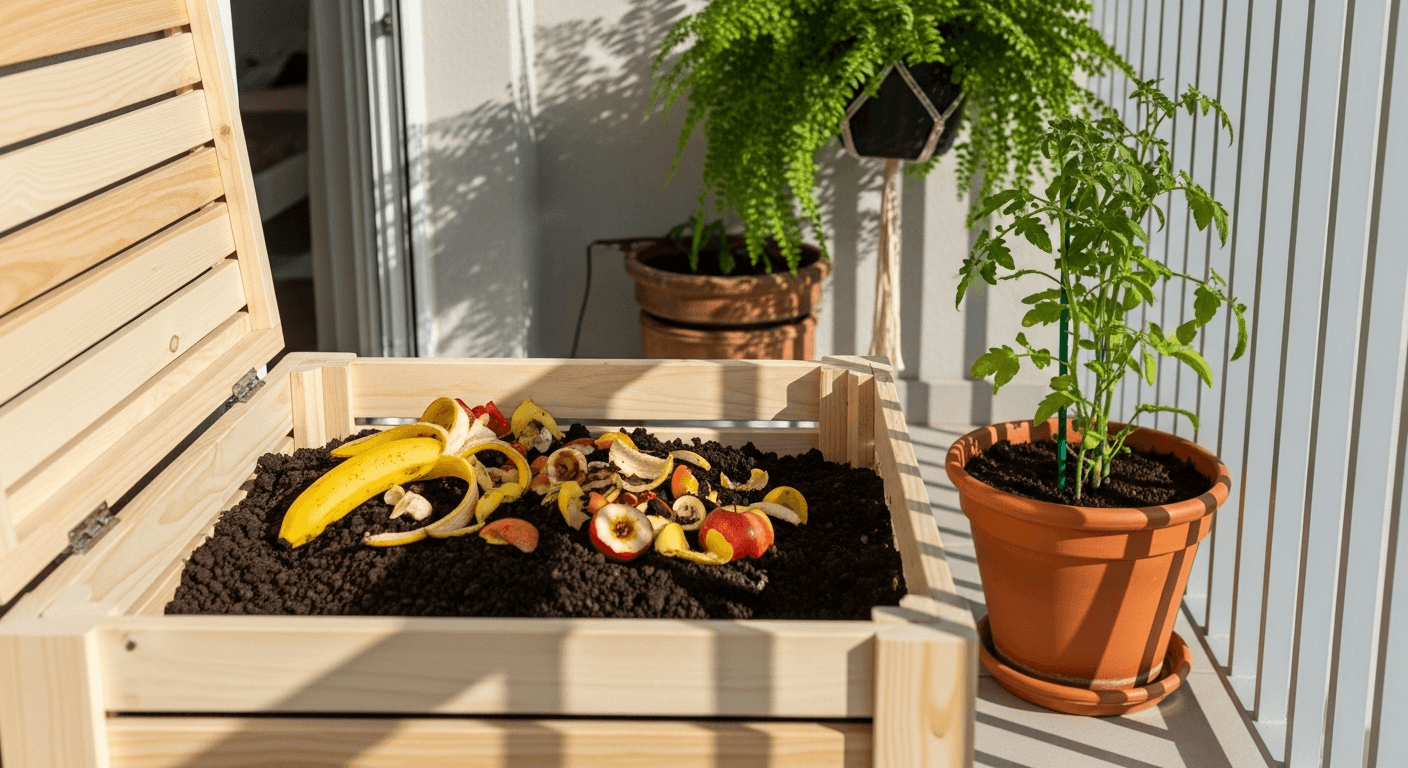
How to Make Compost at Home (Even on a Balcony)
Turn your kitchen scraps into free fertilizer. Learn what to add and what not to, the 'green and brown' mix, and how to compost on a balcony with a worm bin.
Trouble with your plant?
AI diagnosis