Your Plant Has Not Changed in Months: The Five Reasons Why
Has your plant stopped growing? Discover the 5 most common causes (not enough light, root-bound, winter dormancy, lack of nutrients) and how to diagnose each one.
In this article
If it is autumn or winter, the most likely answer is that nothing is wrong: most houseplants go dormant as the days shorten and simply stop growing until spring. If it is mid growing season and the plant is still stalled, the causes in order of frequency are not enough light, roots bound in a pot that is too small, spent soil with no nutrients left, or overwatering in a pot that is too big. This is the order in which to rule them out.
The five causes of a stalled plant
1. Not enough light (the number-one cause)
Light is the fuel for growth. Without enough of it, the plant goes into power-saving mode and stops growing, no matter how much you water or feed it.
How to spot it: the plant is far from a window, the stems stretch toward the light (etiolation), or new leaves come out smaller and paler.
Fix: move it closer to a bright window or one with more hours of sun. If your home is dark, consider a grow light. Our guide on indoor plant light will help.
Is your plant looking off and you are not sure why?
Free AI diagnosis2. Root-bound (no room to grow)
When a plant spends years in the same pot, the roots fill all the space and have nowhere left to grow. The plant "suffocates" in its own root ball.
How to spot it: roots poking out of the drainage holes or appearing on the surface, water that runs straight through without soaking in, and the pot drying out very fast.
Fix: repot into a pot an inch or two larger with fresh soil. Do it in spring to minimize stress.
3. Winter dormancy (it's normal)
Many plants stop growing in autumn and winter naturally. With less light and lower temperatures, they slow their metabolism. It's not a problem: it's their cycle.
How to spot it: the plant is healthy but at a standstill, and it's the cold months.
Fix: none. Cut back on watering, don't fertilize and wait for spring. It will grow again on its own when the days get longer.
4. Lack of nutrients
Potting soil doesn't last forever. After months or years, the plant uses up the available nutrients and, even with light, finds no "raw material" to grow.
How to spot it: it's been a long time without repotting or feeding, and the older leaves yellow evenly while growth stalls.
Fix: feed during the growing season (spring-summer) with a balanced fertilizer, following the dosage on the label. Or refresh the top layer of soil.
5. Pot too big or overwatering
It sounds contradictory, but a huge pot or too much water also stall growth: the soil stays wet, the roots can't breathe and they stop working.
How to spot it: soil that's always wet, a possible musty smell and sometimes fungus gnats.
Fix: water only when the top layer dries out and use a pot in proportion to the plant, always with drainage.
How to diagnose yours step by step
- Check the season: is it winter? It's probably normal dormancy.
- Check the light: is it far from the window? Move it closer and watch.
- Check the roots: are they poking out the drainage holes? Time to repot.
- Check the history: has it been over a year without feeding or repotting? It's short on nutrients.
- Check the watering: is the soil always wet? Cut back on water.
How long you should wait before acting
Before you change anything, watch the plant for a week or two in the middle of the growing season. A good trick is to tag the newest leaf with a label: if after a few weeks no leaf has appeared above it, the standstill is real. If instead a small shoot pushes out at the center or the tip of a stem, the plant is growing, just slowly. Keep in mind that many plants pour their energy into the roots before showing any growth up top: an apparent standstill can be invisible work under the soil.
Keep your expectations realistic
Some plants, like the snake plant or ZZ plant, are naturally very slow growers: two or three new leaves a year is normal. Before you worry, learn the natural pace of your particular species.
Still not sure why your plant is stuck? Upload a photo to our AI diagnosis and we'll help you find the cause. With the right light, pot and feeding, it'll be putting out new leaves again before long.
Related articles
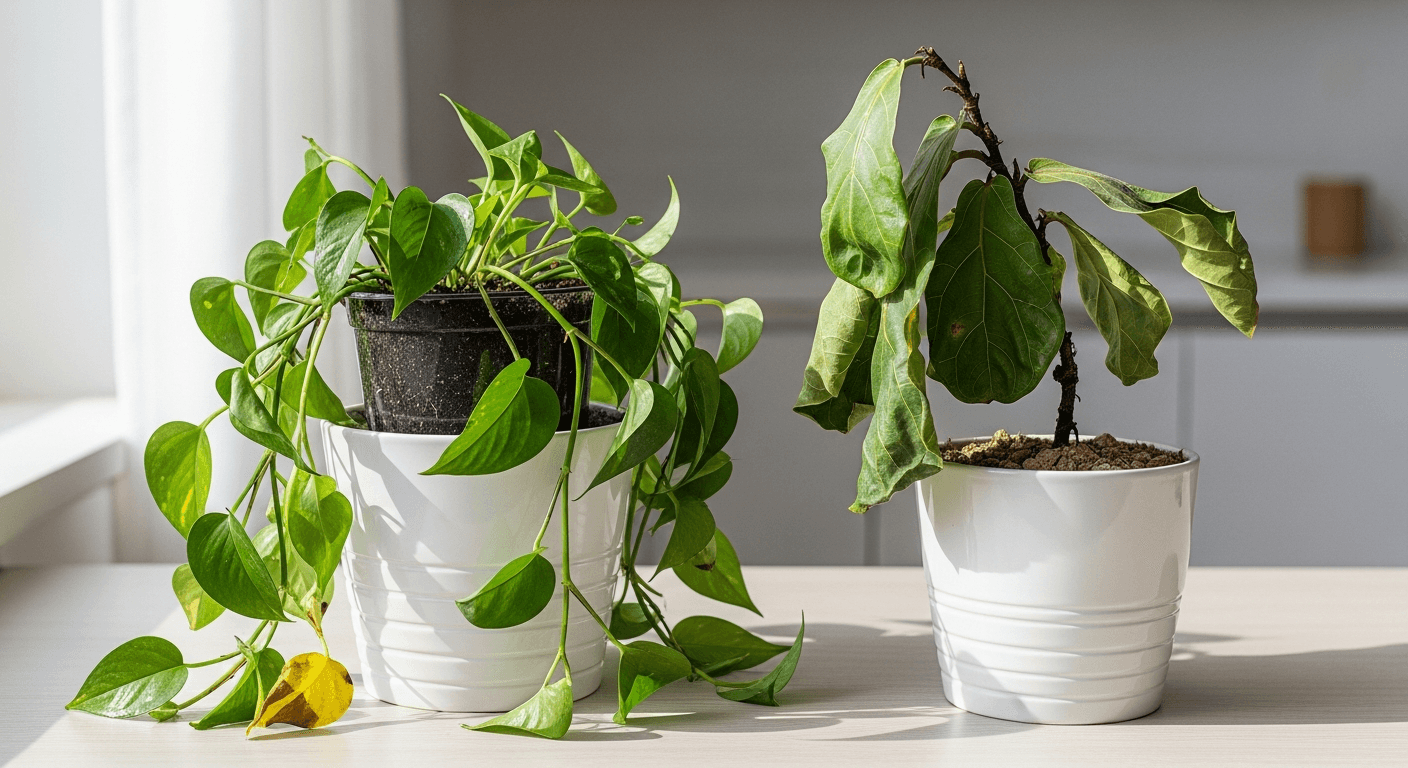
Overwatering vs Underwatering: How to Tell Them Apart
Droopy, yellowing leaves can mean too much OR too little water. Tell them apart by the soil, the roots and how the leaves feel, and learn how to fix each one.
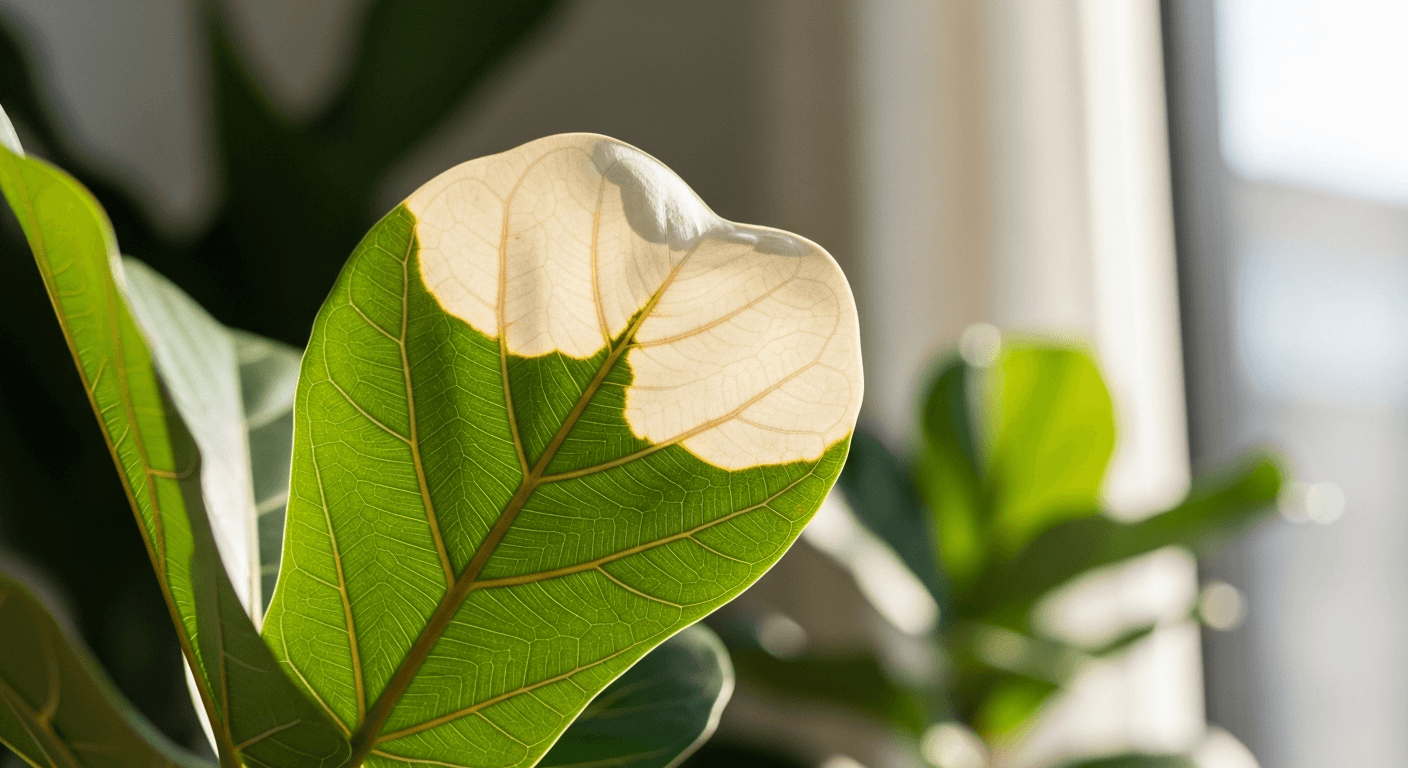
Plant Sunburn: How to Spot It and Prevent It
Pale, dry or brown patches from too much direct sun. Learn to recognize leaf sunburn, acclimate your plants gradually, and what to do with scorched leaves.
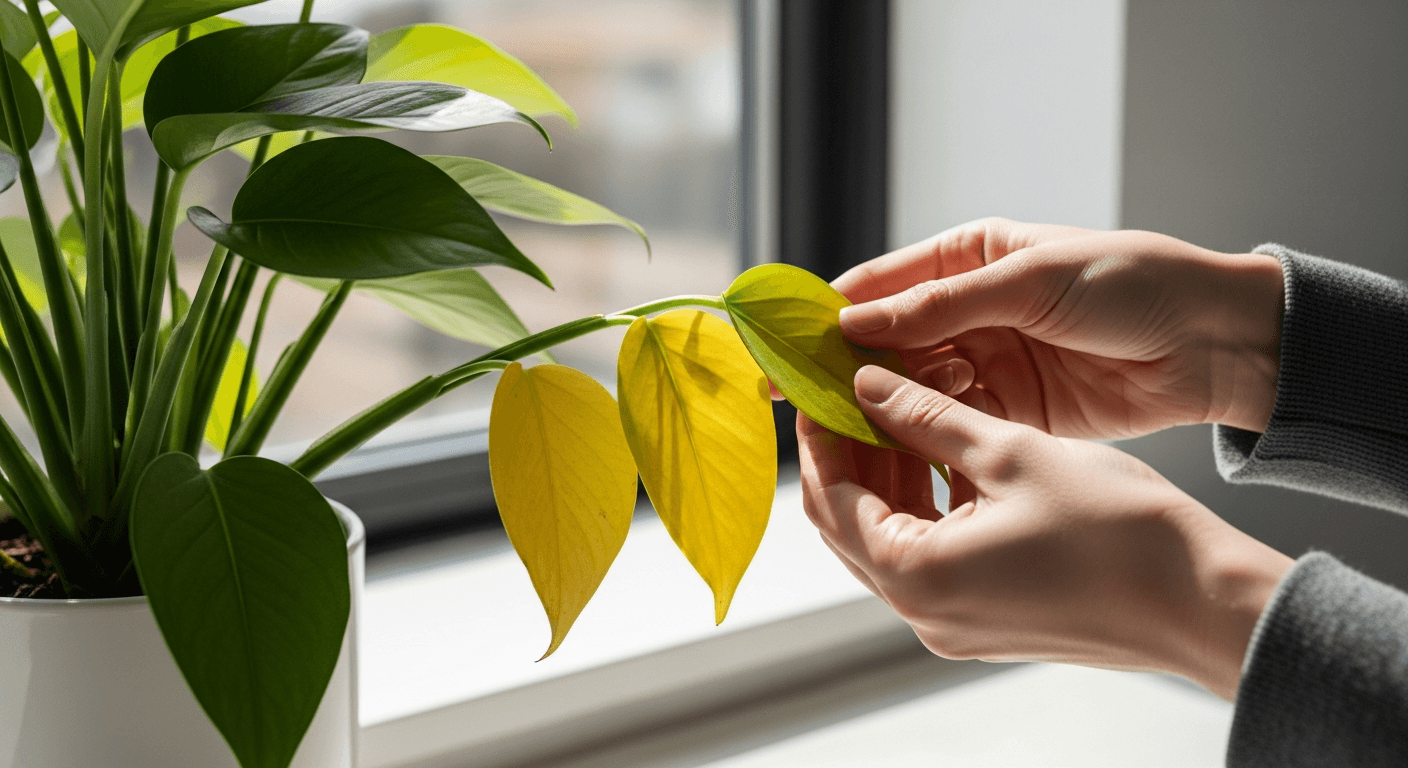
Why Your Plant Has Yellow Leaves (and How to Fix It)
Yellow leaves are the most common houseplant symptom. Learn to diagnose the exact cause —watering, light, nutrients or pests— and fix it step by step.
Trouble with your plant?
AI diagnosis