Little Black Flies Around Your Pots: How to Cut Them Off at the Source
Tiny black flies around your plants? They're fungus gnats. Learn why they appear and how to eliminate them with traps, letting the soil dry and other proven tricks.
In this article
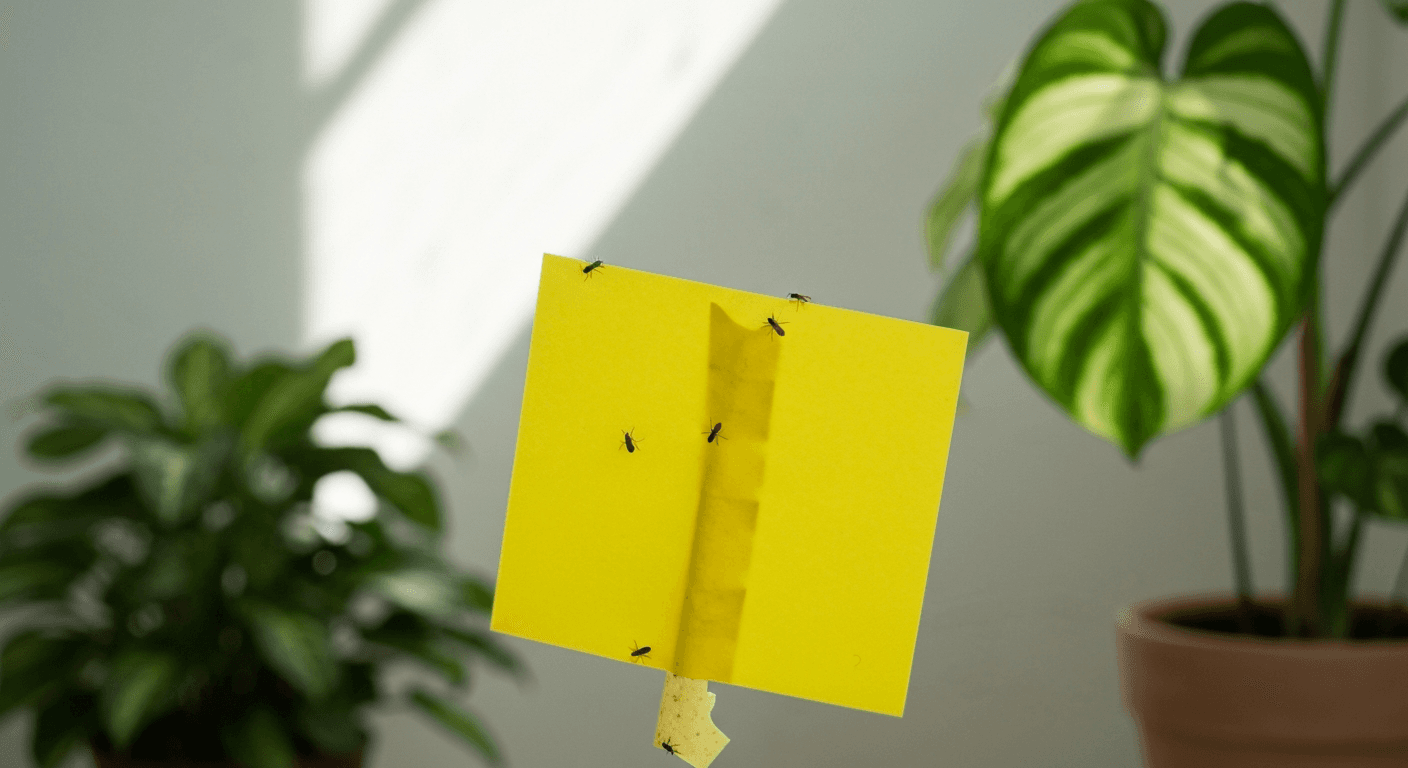
Fungus gnats are not beaten by swatting at the air: they are beaten by drying out the top inch or two of soil, which is where the eggs are laid and the larvae live. Let the surface dry between waterings, add a layer of sand or grit on top and hang yellow sticky traps for the adults, and the infestation is gone in two or three weeks. They are annoying but rarely dangerous to a healthy adult plant.
Why they appear
Females lay eggs in the top inch of moist soil. Out of them come larvae (translucent maggots with a black head) that feed on fungus and decaying organic matter. In 3-4 weeks they complete the cycle and lay again. That's why they almost always show up with overwatering or soil that never fully dries: permanently wet soil is their paradise.
Is your plant looking off and you are not sure why?
Free AI diagnosisAre they dangerous?
On a healthy adult plant, the adults are just a nuisance. But on seedlings, cuttings and seed trays, the larvae can nibble the finest roots and weaken them. And their presence is a warning sign: if you have a lot, you're probably overwatering, which also leads to root rot.
How to clear them: the three fronts
The main weapon: let the soil dry
Cut the surface moisture and you cut their breeding cycle:
- Space out watering and let the top 1-2 inches dry completely between waterings (see the watering guide).
- Water from below (via the saucer) when you can, to keep the surface dry.
- Cover the soil with half an inch of coarse sand, grit or perlite: it stops females laying eggs and larvae surfacing.
Trap the adults
- Yellow sticky traps: fungus gnats are drawn to yellow and get stuck. They cut the population fast and show you if it's still active.
- DIY trap: a cup of apple cider vinegar with a drop of soap; the soap breaks the surface tension so they fall in.
Kill the larvae
Targeting only the adults isn't enough: you have to kill the larvae in the soil.
- Bacillus thuringiensis israelensis (BTI): a biological control (the "mosquito bits") you dilute in the watering can; it kills larvae without harming the plant or pets. Most effective and safe.
- Diluted hydrogen peroxide: 1 part 3% peroxide to 3-4 parts water, watered in once, kills larvae on contact and aerates the soil.
A complete 3-front plan
| Front | Action |
|---|---|
| Breeding (the root of the problem) | Let the soil dry + sand on the surface |
| Adults | Yellow traps + vinegar trap |
| Larvae | BTI in the watering (or diluted peroxide) |
How to prevent a comeback
- Don't overwater: it's the source of 90% of cases.
- Use an airy soil mix that dries well.
- Quarantine new plants and check the nursery soil, which often comes infested.
- Remove fallen leaves from the surface (organic matter = larva food).
Fungus gnats or whitefly?
Don't confuse them: fungus gnats come from the soil and hover around the pot; whitefly is white, lives on the undersides of leaves and lifts off in a cloud when you touch the plant. They're treated very differently.
Combine letting the soil dry + yellow traps + BTI and they vanish in 2-3 weeks. Not sure which pest it is? Upload a photo to the AI diagnosis tool.
Related articles
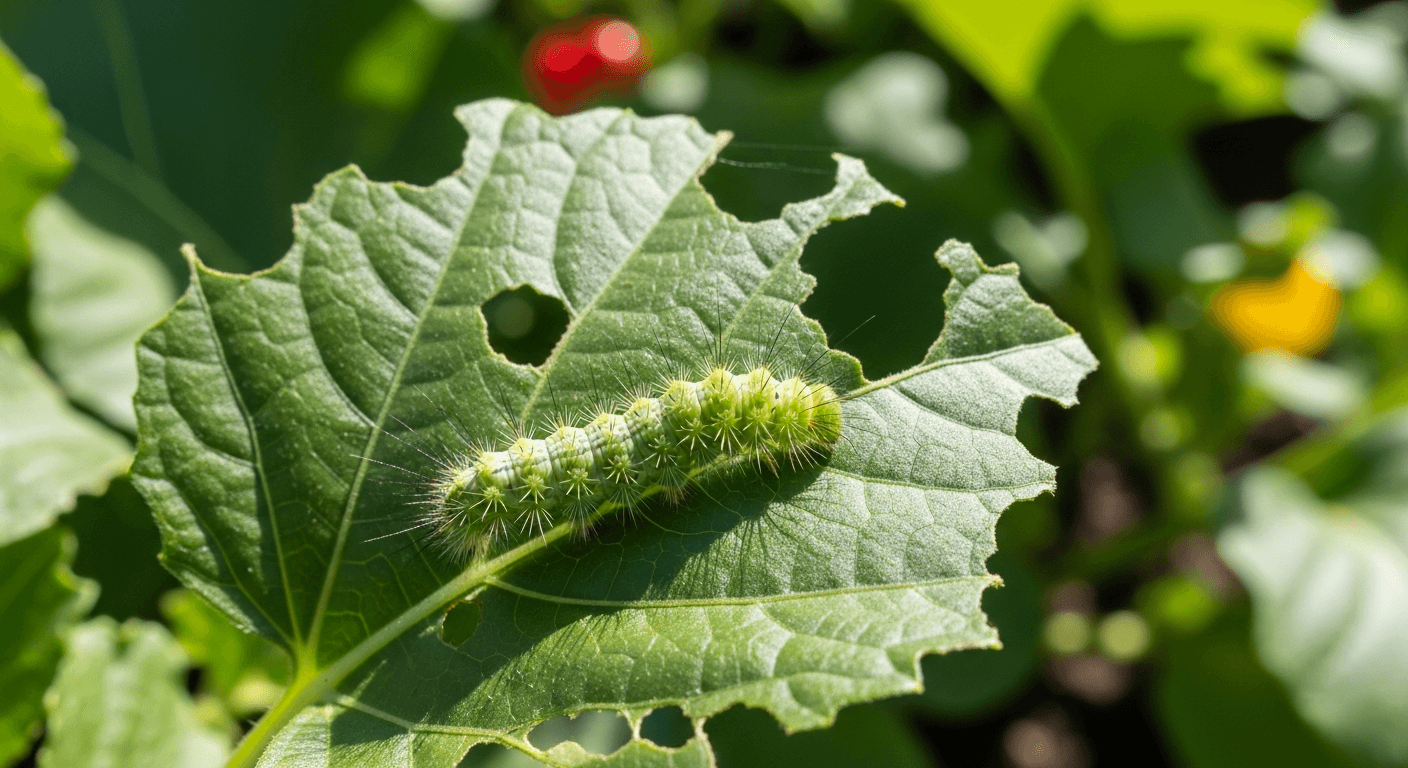
Caterpillars on Plants: How to Identify and Get Rid of Them
Caterpillars eating garden leaves: how to spot the holes and droppings, handpick them, and treat with Bacillus thuringiensis (Bt) without harsh chemicals.
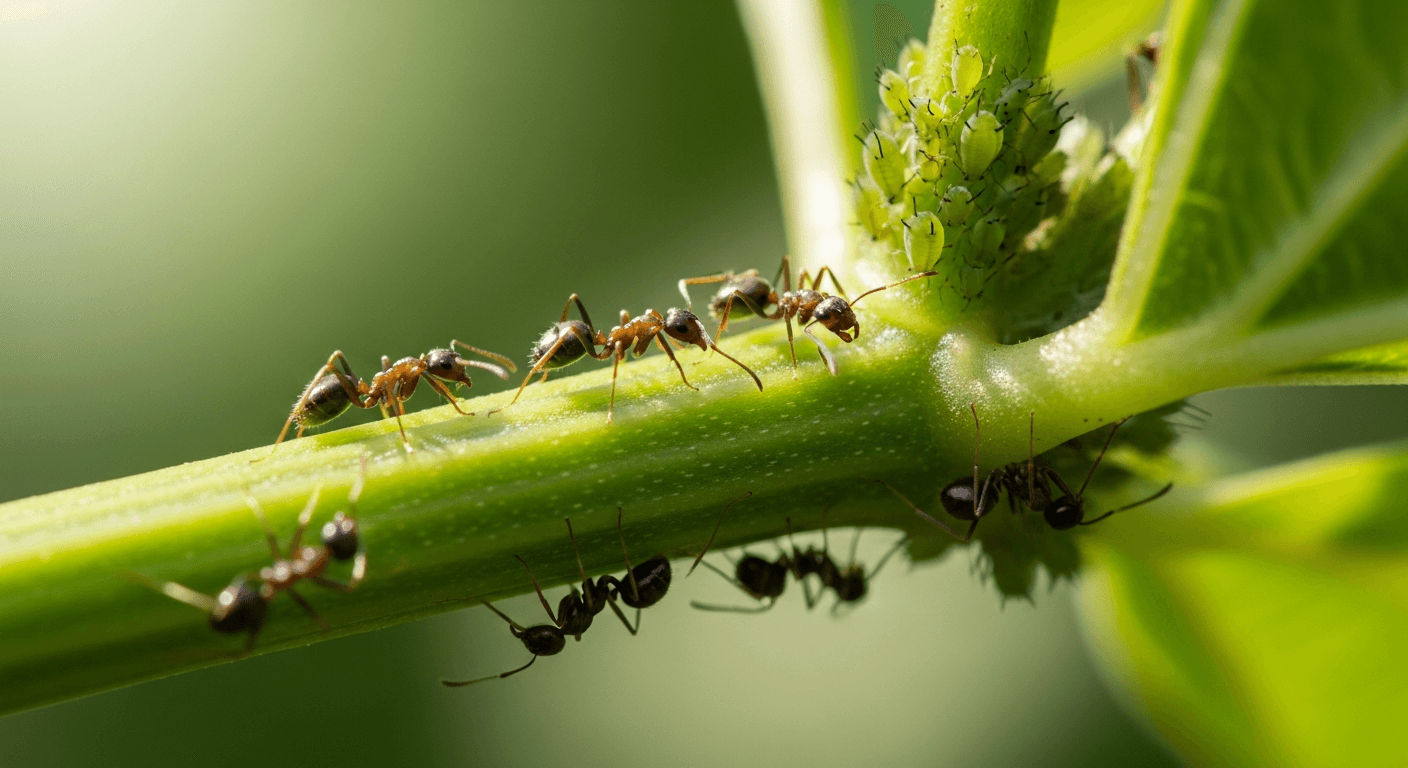
Ants on Your Plants: What They Want and How to Get Rid of Them
Ants on your plants are almost always farming aphids or scale for honeydew. Learn how to remove the ants and, above all, treat the real pest behind them.
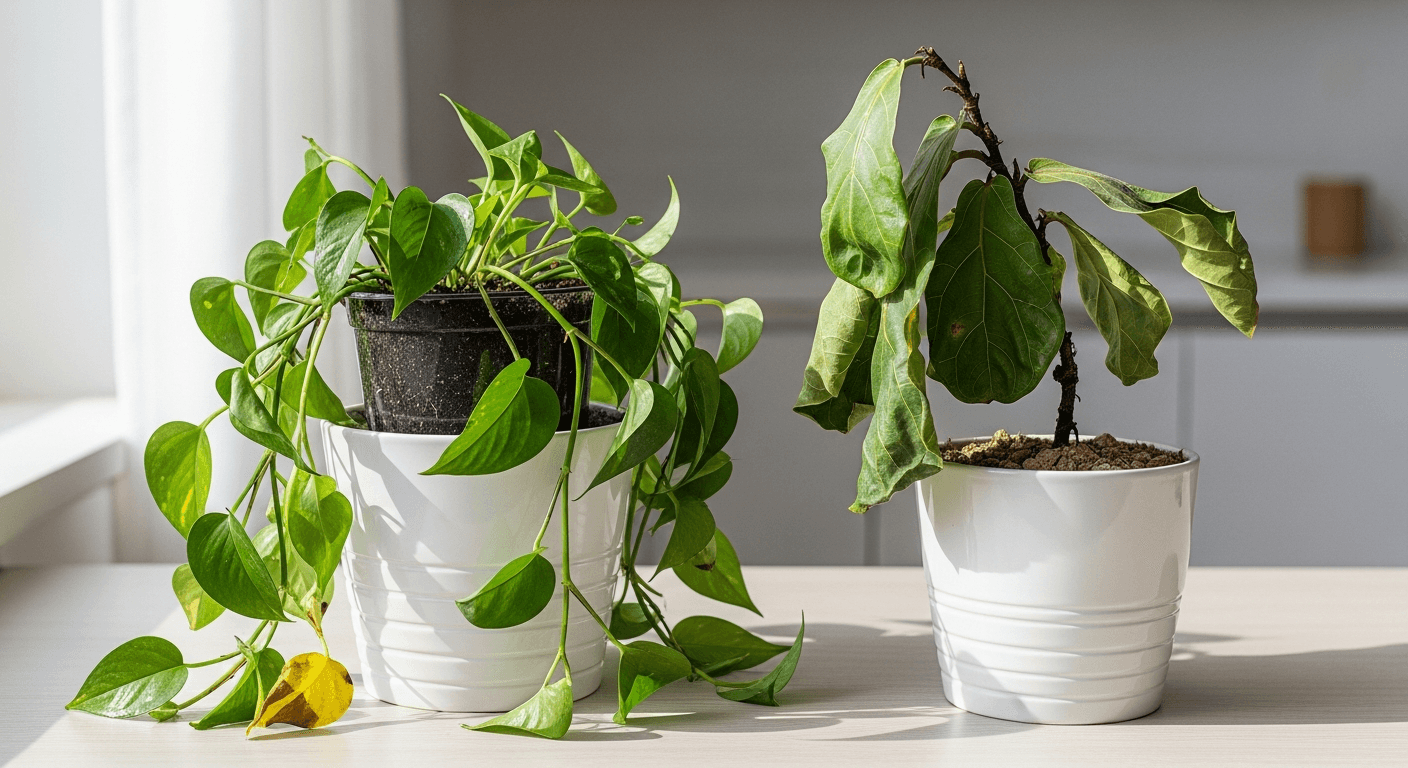
Overwatering vs Underwatering: How to Tell Them Apart
Droopy, yellowing leaves can mean too much OR too little water. Tell them apart by the soil, the roots and how the leaves feel, and learn how to fix each one.
Trouble with your plant?
AI diagnosis