How to Know When a Houseplant Actually Needs Water
The definitive watering guide: why overwatering kills, how to read soil moisture, the right technique, what water to use and how much each plant type needs.
In this article
- Why overwatering kills (and looks like underwatering)
- Forget the schedule: water by moisture
- The finger method (your best tool)
- The weight method
- A moisture meter (optional)
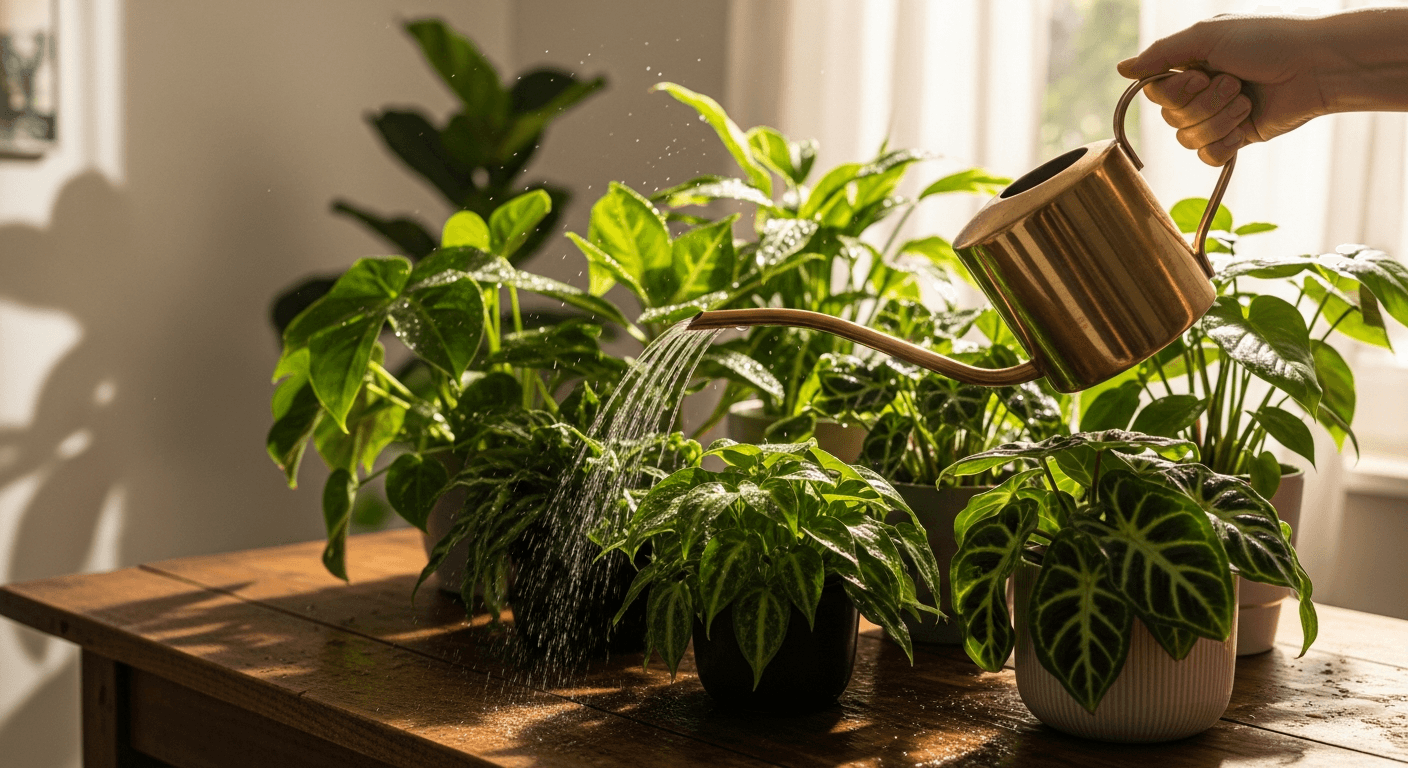
- The right technique: deep watering
- Bottom watering
- How much water by plant type
- Adjust watering to the season
- What water to use
- Soil and pot change everything
- Signs you're overwatering
- Signs you're underwatering
- When you go on holiday
Watering is the number-one cause of dead houseplants, and it's almost always from overwatering, not neglect. I learned this the hard way: I lost several plants "loving" them with water before I understood that watering well isn't about following a schedule, but about reading your plant and your soil. This guide gives you a method that works for nearly any houseplant, explains why excess water is so deadly, and leaves you a table by plant type.
Why overwatering kills (and looks like underwatering)
Roots don't just drink water: they also breathe. Between the soil particles are air pockets holding the oxygen roots need. When you overwater and the soil stays waterlogged, water pushes that air out and the roots suffocate. Without healthy roots, the plant stops absorbing water… and wilts.
Here's the trap that kills so many plants: a drowning plant looks limp and sad, exactly like a thirsty one. If you read that droop as thirst and water more, you finish it off. That's why your first reflex should never be to water, but to check the moisture. To tell the two cases apart, read overwatering vs underwatering.
Is your plant looking off and you are not sure why?
Free AI diagnosisForget the schedule: water by moisture
Watering on fixed days ("Mondays") ignores the only thing that matters: how much moisture the soil has left. The same plant needs twice as much water in July as in January. These three ways to measure moisture replace the calendar.
The finger method (your best tool)
Before every watering, push your finger into the soil to the second knuckle (3-5 cm / 1.5-2 in):
- Moist at 3-5 cm: wait, don't water.
- Dry at 3-5 cm: time to water most tropical plants.
- Bone-dry and light: water now (cacti and succulents go this far).
The weight method
Lift the pot right after watering and memorize that weight. When it's dry, it'll weigh noticeably less. After a couple of weeks of practice, heft alone tells you whether it needs water — no dirty finger required. It's especially handy for hanging or large pots.
A moisture meter (optional)
A cheap meter stuck in the soil gives a 1-to-10 reading. They aren't foolproof, but they help beginners calibrate their eye, especially in big pots where the surface is misleading.
The right technique: deep watering
How you water matters as much as when:
- Water slowly and thoroughly until it runs out of the drainage holes.
- Let it drain completely.
- Empty the saucer after 10 minutes: roots must not sit in water.
This "deep watering" hydrates the whole root ball and encourages roots to grow down, strong. It's far better than many shallow waterings, which only wet the top 2 cm and leave the deep roots dry.
Bottom watering
For plants with leaves sensitive to getting wet (African violets, calatheas) or very dry soil that repels water, bottom watering works beautifully:
- Place the pot (with drainage) in a container with 3-5 cm of water.
- Leave it 15-30 minutes so it drinks from below by capillary action.
- Lift it out and let the excess drain.
It hydrates the root ball evenly and keeps the leaves and crown dry.
How much water by plant type
| Plant type | Rough frequency | Cue to water |
|---|---|---|
| Succulents and cacti | Every 2-3 weeks | Soil bone-dry |
| Water-storers (snake plant, ZZ) | Every 2-3 weeks | Almost fully dry |
| Tropicals (Monstera, pothos) | ~Once a week | Top dry to 3-5 cm |
| Ferns and calatheas | Twice a week | Keep barely moist |
These are guidelines: always adjust to the finger test, the light and the season. A plant in full sun drinks more than the same plant in a dim corner.
Adjust watering to the season
In spring and summer the plant grows and drinks more; water more often. In autumn and winter, with less light and cooler temperatures, many plants almost go dormant: cut watering by half or more. Watering in winter as if it were summer is one of the most common ways to rot a plant. More in summer plant care and winter plant care.
What water to use
- Temperature: use room-temperature water. Very cold water shocks tropical roots.
- Chlorine and hardness: if your tap water is heavily chlorinated or hard, let it sit 24 hours in a jug or use filtered or rainwater. Sensitive plants like calatheas appreciate it and stop forming brown tips.
Soil and pot change everything
Your watering routine depends on the container:
- Terracotta pot: porous, breathes and dries faster; you'll water more.
- Plastic or glazed ceramic pot: holds moisture longer.
- Soil: an airy, well-draining mix (with perlite) forgives excess far better than compact dirt. Review the right potting soil and how to choose a pot.
And the golden rule: no watering routine saves a plant in a pot with no holes. If you love a decorative cover pot, keep the plant inside its plastic nursery pot with drainage and empty it after watering.
Signs you're overwatering
- Yellow, soft leaves starting from the bottom (see yellow leaves).
- Soil that takes many days to dry.
- Fungus gnats flying around.
- A stagnant, swampy smell or mold on the surface.
Signs you're underwatering
- Crispy leaves with dry, brown edges.
- Soil pulling away from the sides of the pot.
- The plant "faints" and revives within hours of watering.
- The pot weighs very little.
When you go on holiday
For short trips, water well before leaving and move plants away from the window to slow evaporation. For longer absences, use wicking systems, self-watering bottles or group plants together to raise humidity; full details in watering while away.
Master these signs and you'll stop watering "out of habit" and start watering when your plant actually asks for it. Unsure about a specific plant, or whether it's too much or too little? Upload a photo to our AI diagnosis tool and we'll point you the right way.
Related articles
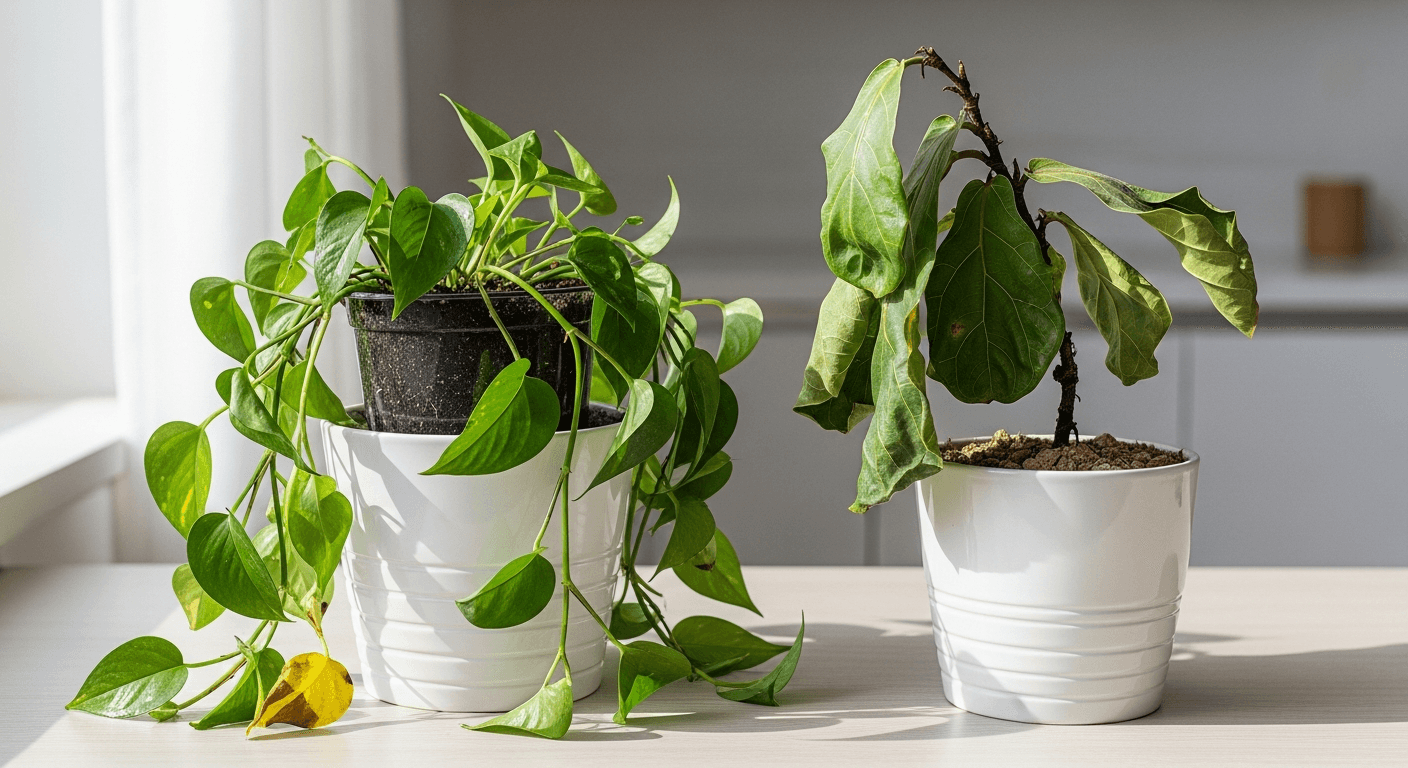
Overwatering vs Underwatering: How to Tell Them Apart
Droopy, yellowing leaves can mean too much OR too little water. Tell them apart by the soil, the roots and how the leaves feel, and learn how to fix each one.
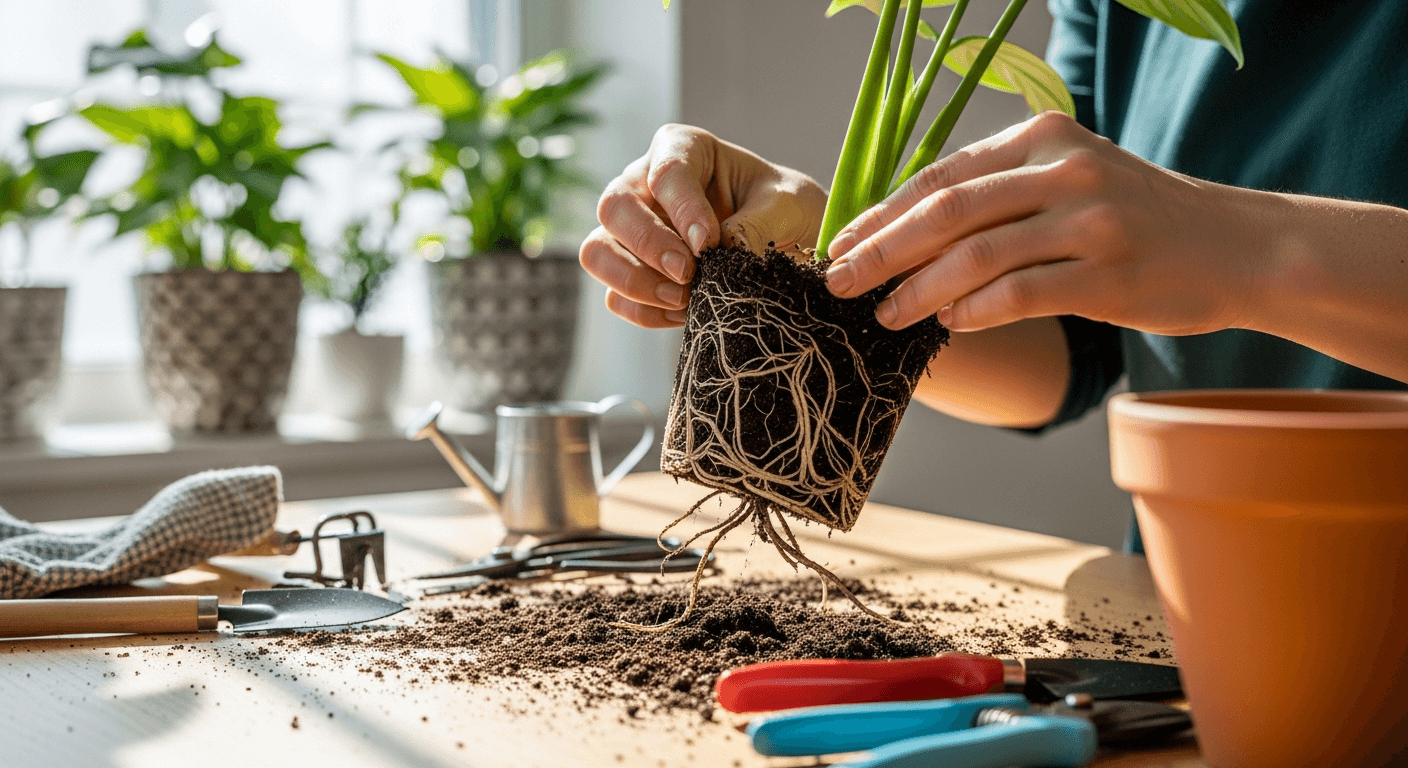
How to Revive a Dying Plant Step by Step
Your plant is dying and you don't know why. A guide to diagnosing and reviving a dying plant: watering, roots, light, pests and when it is simply too late.
Summer Care for Indoor Plants
Summer houseplant care guide: water more often, shield plants from harsh midday sun, raise humidity, feed during growth and avoid heat stress on hot days.
Trouble with your plant?
AI diagnosis