What Each Kind of Yellow Leaf Is Telling You
Yellow leaves are the most common houseplant symptom. Learn to diagnose the exact cause —watering, light, nutrients or pests— and fix it step by step.
In this article
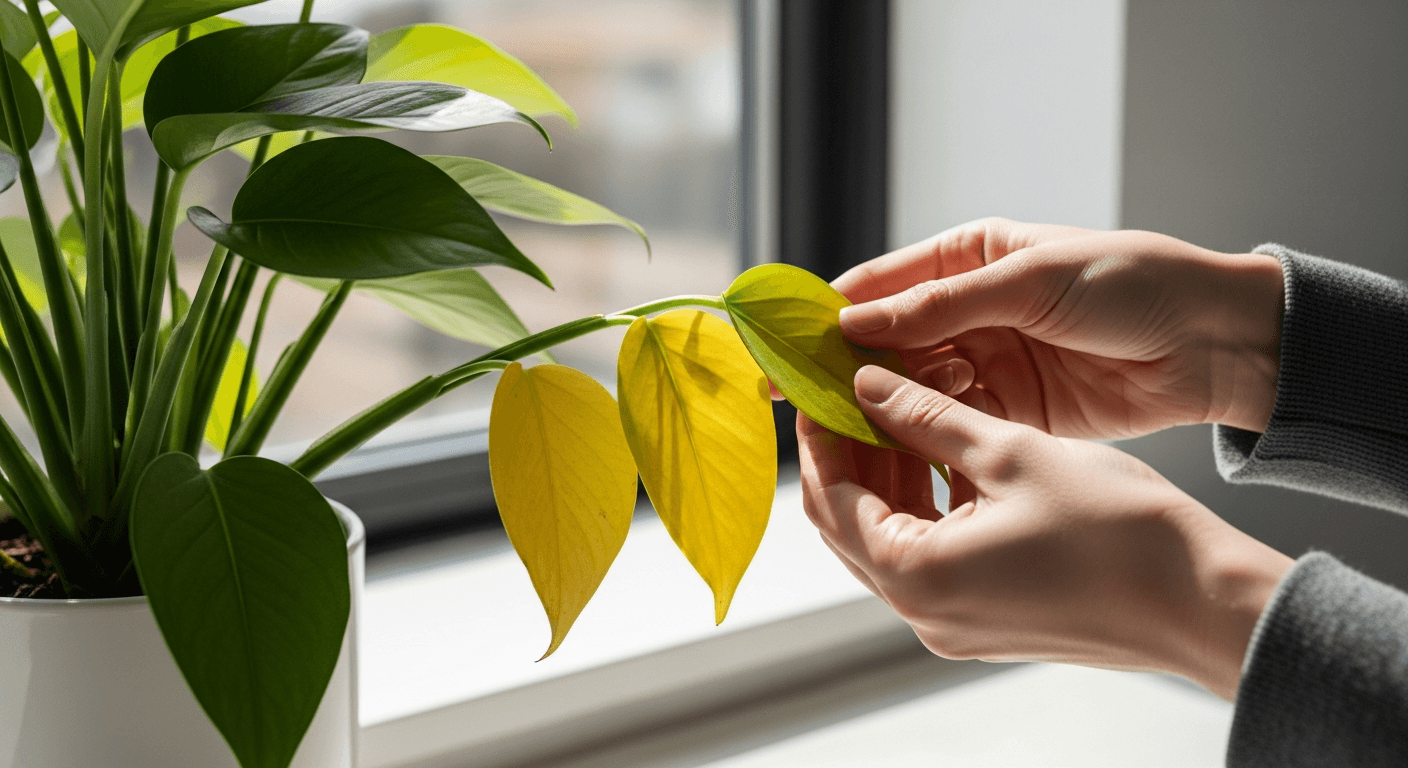
If the yellow leaves are the lower ones and the soil is damp, it is almost certainly overwatering — the most common cause by a distance. If the upper, newer leaves yellow while the veins stay green, that points to an iron shortage; and if the yellowing is even and slow, it is usually low light or spent soil. The leaf itself is never the clue: what matters is reading the pattern — which leaves yellow, where, and how fast. This guide walks you through diagnosing it before you change anything.
Identify the pattern before you act
Before changing anything, observe for a minute and answer three questions:
- Lower or upper leaves? Lower ones usually mean watering or nutrients; upper or new ones point to light or a recent problem.
- Uniform yellow or green veins? If the veins stay green while the rest yellows, suspect an iron or magnesium shortage.
- Soft or crispy? Soft and dark: overwatering. Dry and brittle: underwatering or very dry air.
Write down what you see. That pattern is 80% of the diagnosis.
Is your plant looking off and you are not sure why?
Free AI diagnosisQuick diagnostic table
| Pattern | Likely cause |
|---|---|
| Lower leaves, soft; moist, smelly soil | Overwatering / root rot |
| Yellow and crispy from the edges; very dry soil | Underwatering |
| Old leaves yellowing and dropping slowly | Low light (or natural cycle) |
| Yellow/whitish patches on the sun-facing side | Too much direct sun |
| Green veins, yellow tissue (interveinal) | Iron/magnesium shortage |
| Yellow stippling + webbing or specks | Pests |
The six causes of yellowing, one by one
Cause 1: Overwatering (the most common)
Waterlogged soil suffocates roots and is by far the number-one reason. Leaves yellow from the bottom up, feel soft, and the soil smells damp or stagnant.
Fix:
- Push a finger 1-2 inches into the soil. If it's wet, don't water.
- Make sure the pot has drainage holes.
- Always empty the saucer 10 minutes after watering.
- Water only when the top couple of inches are dry (see the watering guide).
If the soil won't dry for days and the base is soft, go straight to the root rot guide.
Cause 2: Underwatering
Less common, but it happens. Here leaves yellow and quickly turn brown and crispy, starting at the edges. The soil pulls away from the pot and weighs very little.
Fix: soak the pot in water for 10-15 minutes to rehydrate the root ball, then switch to watering by dryness, not by calendar. If you're unsure which it is, read overwatering vs underwatering.
Cause 3: Wrong light
Too little light makes older leaves yellow and drop because the plant "sacrifices" what it can't sustain. Too much direct sun scorches yellow or whitish patches on the exposed side.
Fix: move the plant to bright, indirect light (near a window, out of harsh midday sun). See the light guide.
Cause 4: Nutrient deficiency
If the veins stay green while the tissue yellows (interveinal chlorosis), the plant is usually short on iron or magnesium — especially plants in the same soil for over a year or watered with very hard water.
Fix: feed in spring-summer with a balanced fertilizer at half strength (see how to fertilize); for clear iron chlorosis, use an iron chelate. If it's been a long time, refresh the soil. More in iron chlorosis.
Cause 5: Pests
Spider mites, mealybugs or aphids suck sap and leave a yellow stippling. Check the undersides of leaves and the leaf joints: fine webbing, white cottony specks or tiny insects.
Fix: wipe with a cloth and insecticidal soap, isolate the plant, and repeat every 5-7 days until cleared.
Cause 6: Stress and natural causes
Not every yellowing is a problem:
- Acclimation: a newly bought or repotted plant drops a leaf or two while adjusting. Normal for 2-3 weeks.
- Old leaf: plants retire their oldest leaves to invest in new ones. The odd yellow lower leaf isn't a worry.
- Cold or draft: a cold snap can yellow leaves suddenly; move it away from windows and doors in winter.
Should I cut the yellow leaf off?
A fully yellow leaf won't turn green again — the plant is already reabsorbing its nutrients. You can remove it so energy goes to healthy leaves, but fix the cause first; otherwise more will follow. If a leaf is only half yellow, leave it: it still provides some energy.
Plantcaria tip: take a photo every week. Comparing images tells you whether the yellowing slowed after your change.
Not sure of the cause? Upload a photo to our AI diagnosis tool and we'll point you in the right direction in seconds.
Related articles
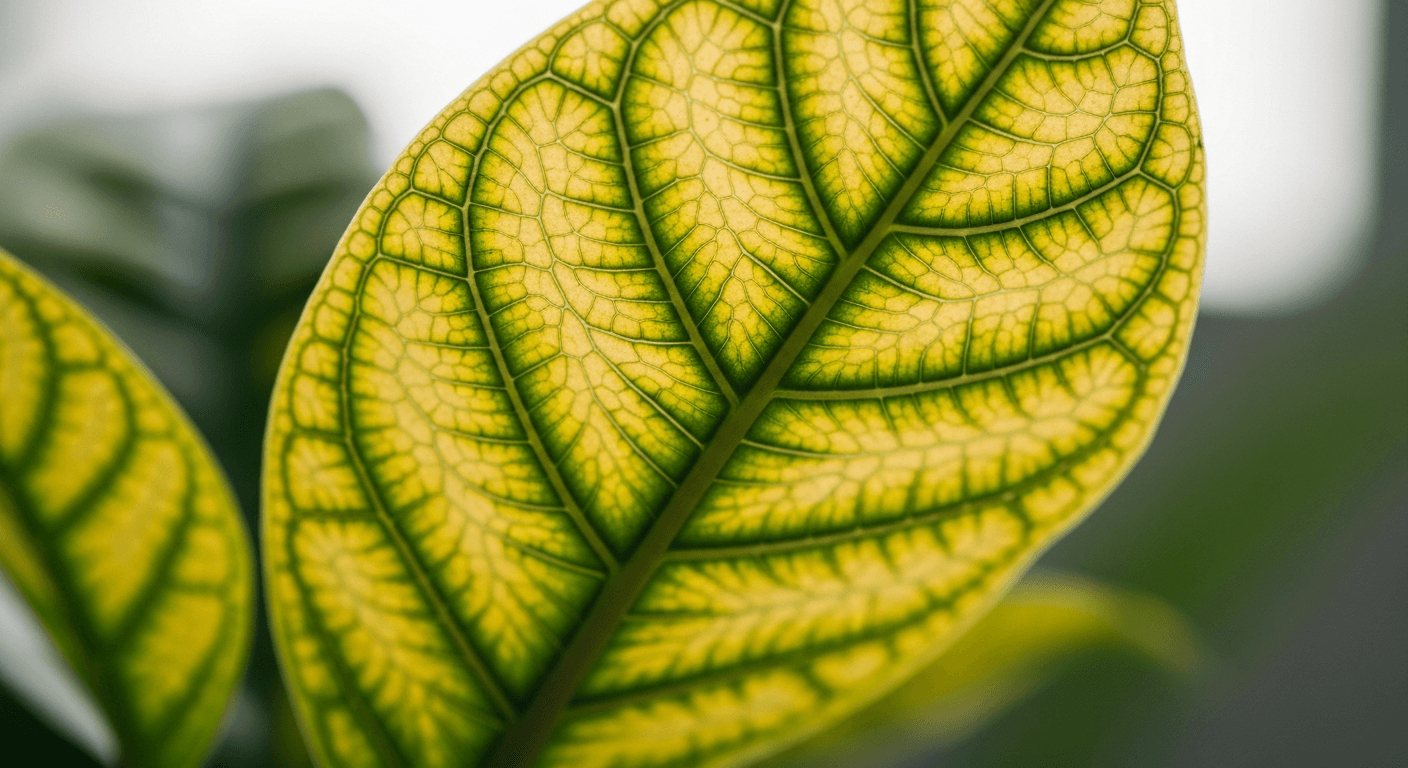
Iron Chlorosis: Yellow Leaves With Green Veins
Iron chlorosis turns the leaf yellow while the veins stay green. Learn why it happens (iron, pH, watering), how to tell it apart, and how to fix it.
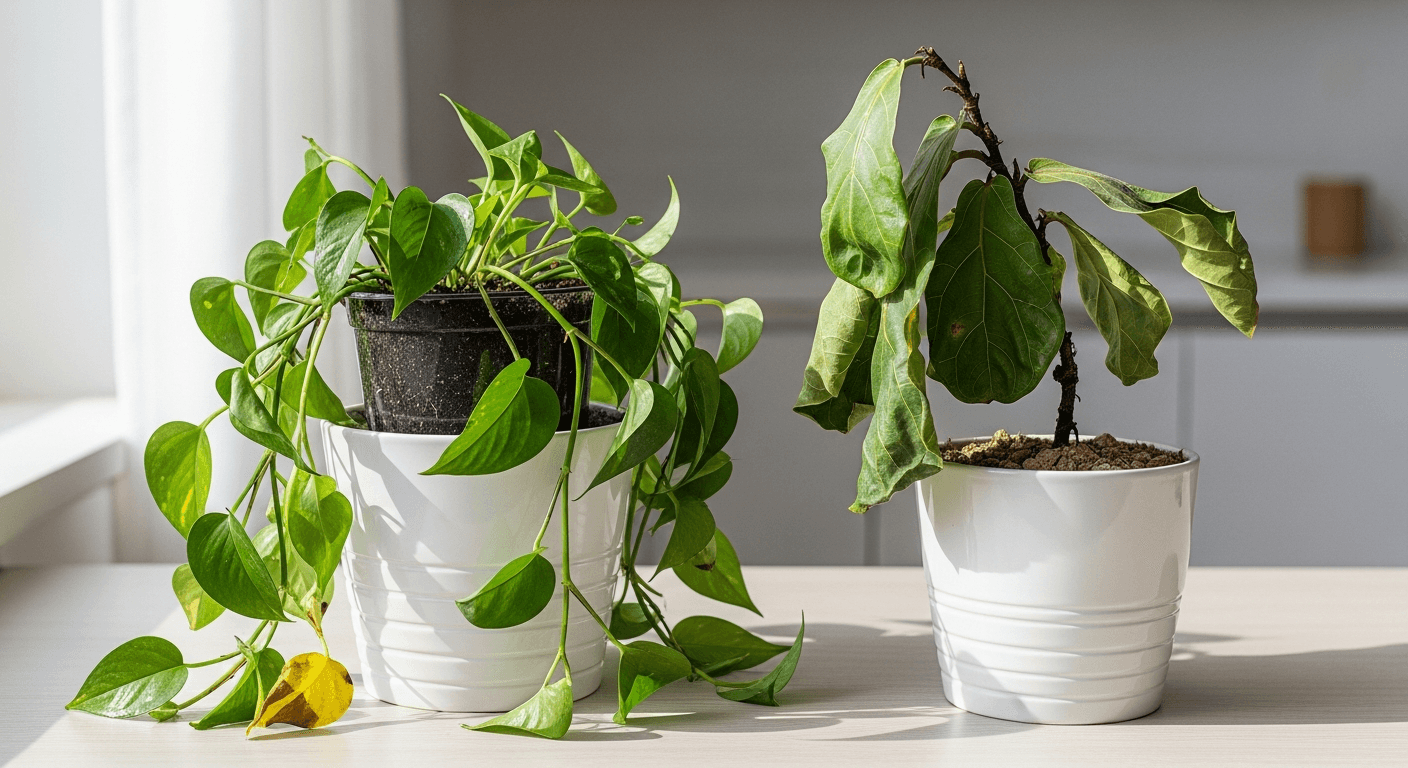
Overwatering vs Underwatering: How to Tell Them Apart
Droopy, yellowing leaves can mean too much OR too little water. Tell them apart by the soil, the roots and how the leaves feel, and learn how to fix each one.
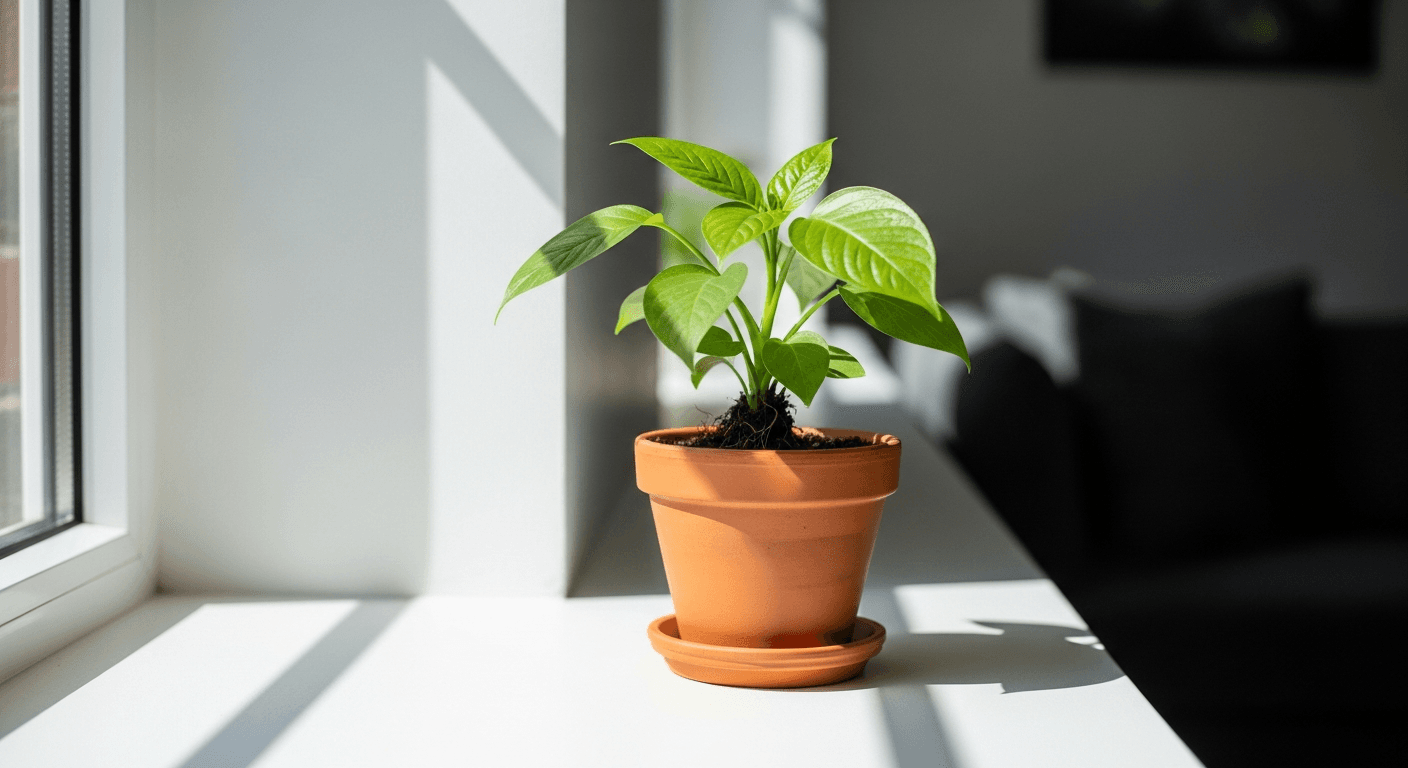
Why Your Plant Isn't Growing: 5 Causes and How to Fix Them
Has your plant stopped growing? Discover the 5 most common causes (not enough light, root-bound, winter dormancy, lack of nutrients) and how to diagnose each one.
Trouble with your plant?
AI diagnosis