How Much Light Does Each Houseplant Actually Need?
Direct, indirect, low light... Learn to read the light in your home and place each plant in its ideal spot so it grows healthy and compact.
In this article
- The types of light (in plain English)
- Table: window orientation → what to put there
- How to measure light without gadgets
- The shadow test
- The window rule
- Signs of too little light
- Signs of too much light
- Grow lights: when the sun won't reach
- Not just any bulb will do
- Distance and hours
- Light changes with the season
- Tricks to spread light better
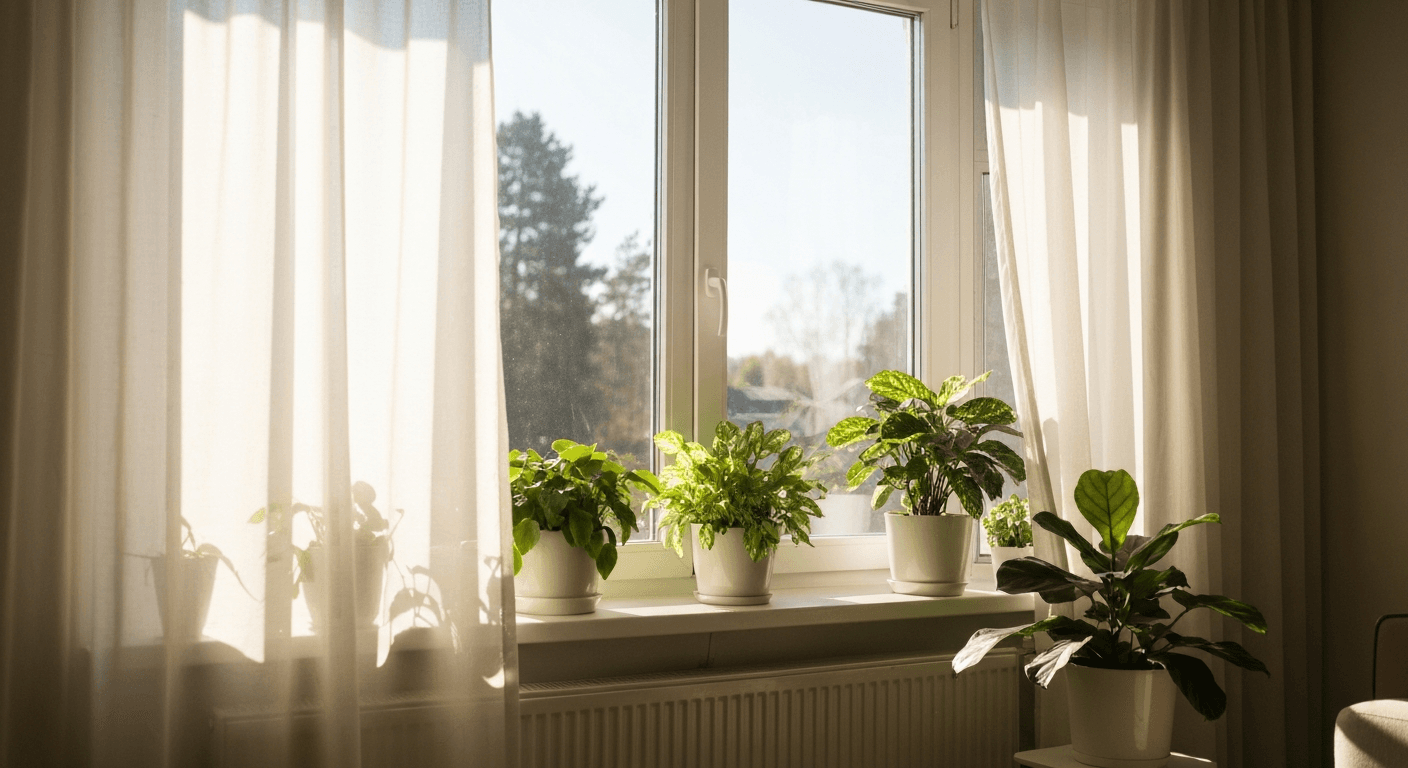
Most houseplants want bright indirect light: a bright room where the sun never actually lands on the leaf, usually within the first three to five feet of an east-facing window. Only cacti and succulents ask for direct sun, and so-called low-light plants will cope with a north window but grow far more slowly. Light is your plants' food: without the right amount, not even the best watering or fertilizer will save them. I lost several plants by putting them "where they looked nice" instead of where they needed to be, so here's how to read the light in your home before you decide.
The types of light (in plain English)
- Direct light: the sun hits the leaf for hours (south-facing sill, no curtain). Ideal for cacti, succulents and Mediterranean plants.
- Bright indirect light: the room is bright but the sun doesn't land directly on the leaf. This is the sweet spot for most houseplants, like the Monstera, pothos or ficus.
- Medium/low light: far from the window or north-facing windows. Snake plant, ZZ and pothos tolerate it, but grow more slowly (see low-light plants).
Get one plant-care guide a week, no spam.
Subscribe freeTable: window orientation → what to put there
| Orientation | Light | Ideal plants |
|---|---|---|
| South | Very bright, direct sun | Cacti, succulents, flowering plants (sheer for the sensitive ones) |
| East | Gentle morning sun | Almost everything; the sweet spot |
| West | Strong afternoon sun | Tough tropicals, succulents |
| North | Constant but soft | Low-light plants (snake plant, ZZ, ferns) |
How to measure light without gadgets
Two home tricks I always use, and neither costs a penny.
The shadow test
Hold your hand 12 inches from the wall at midday and look at the shadow it casts. A sharp shadow with crisp edges means bright light. A soft but still readable shadow means medium light, which is where most houseplants are happiest. Almost no shadow means low light, and only the toughest plants will hold on there.
The window rule
The farther from the window, the less light — and it drops off fast: at 6 feet a plant may get a fraction of what it would right beside the glass. Light doesn't "fill" the room the way it looks to you; your eyes adapt in seconds, but plants don't. That's why a plant that looks well placed in the middle of the living room can be, as far as it's concerned, nearly in the dark.
Signs of too little light
- Long, stretched stems reaching for the window (etiolation).
- Smaller, paler new leaves.
- Loss of variegation (marbled leaves turn solid green).
- Soil that takes forever to dry (the plant barely drinks).
Signs of too much light
- Bleached, whitish or brown patches (sunburn).
- Leaves curling or turning crispy.
- The plant "shuts down" during peak sun hours.
Grow lights: when the sun won't reach
If your home is dark, a full-spectrum LED grow light solves the problem, and it's the difference between surviving and thriving in a dim interior.
Not just any bulb will do
Ordinary household bulbs put out neither the spectrum nor the intensity a leaf needs to photosynthesize; they're built for your eyes, not for the plant. Look for a lamp sold explicitly as a grow light with full spectrum, and be wary of anything that only promises "powerful white light". The options are compared in the guide to LED grow lights.
Distance and hours
Place it 8-16 inches from the plant: closer can scorch soft new leaves, farther adds almost nothing. Run it 8-12 hours a day on a cheap timer, always on the same schedule, and leave the rest of the day dark — plants need their night cycle too.
Light changes with the season
A very common mistake: in winter, light is much weaker and the days shorter. A plant that was perfect 3 feet from the window in summer may need to be right against the glass in winter. Move plants closer to the window in the dark months and back again in spring — it's just one piece of winter care for indoor plants, which also changes how you water and feed.
Tricks to spread light better
- Rotate the pot a quarter turn each week for even growth and so it doesn't lean.
- Clean the leaves with a damp cloth: dust blocks the light it so badly needs (see cleaning leaves).
- Move closer to the window in winter and use pale surfaces (white walls) that reflect light.
Place each plant according to its light needs and you'll solve half your problems before they appear. It's actually the first step to getting plants right from the start. Stuck on a specific plant? Try the AI diagnosis tool.
Related articles
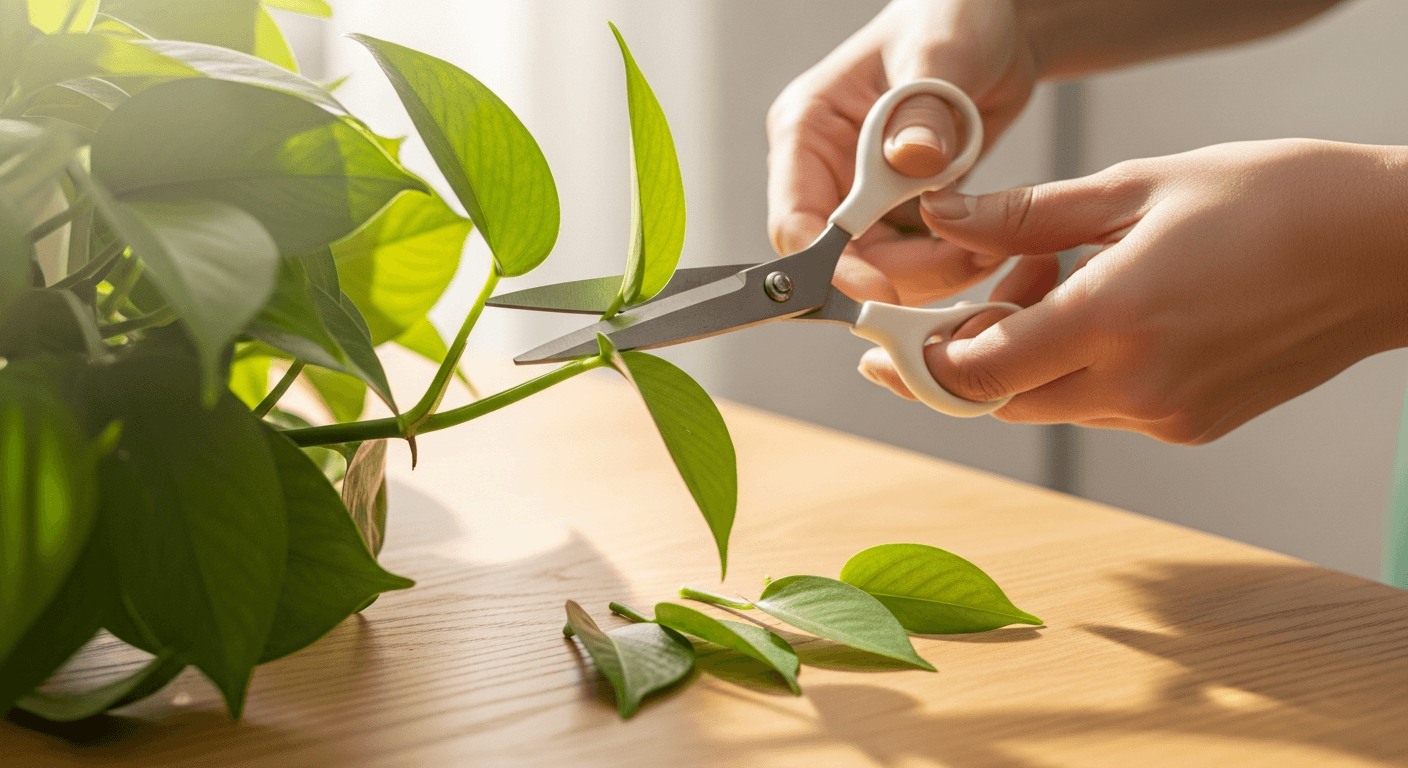
How to Prune Houseplants Step by Step
Learn how to prune houseplants: when and where to cut, the right tools to use, pinching for bushier growth and the common mistakes to avoid when pruning.
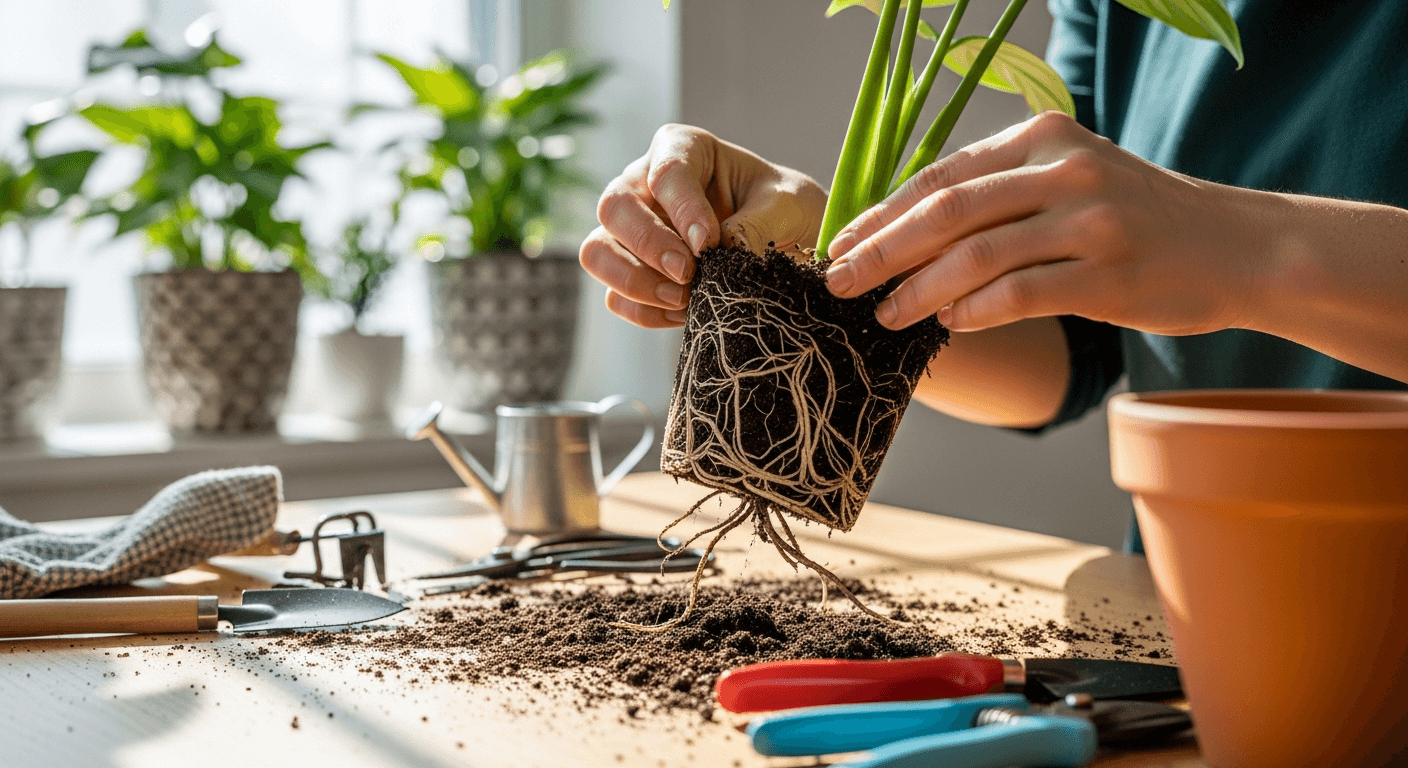
How to Revive a Dying Plant Step by Step
Your plant is dying and you don't know why. A guide to diagnosing and reviving a dying plant: watering, roots, light, pests and when it is simply too late.
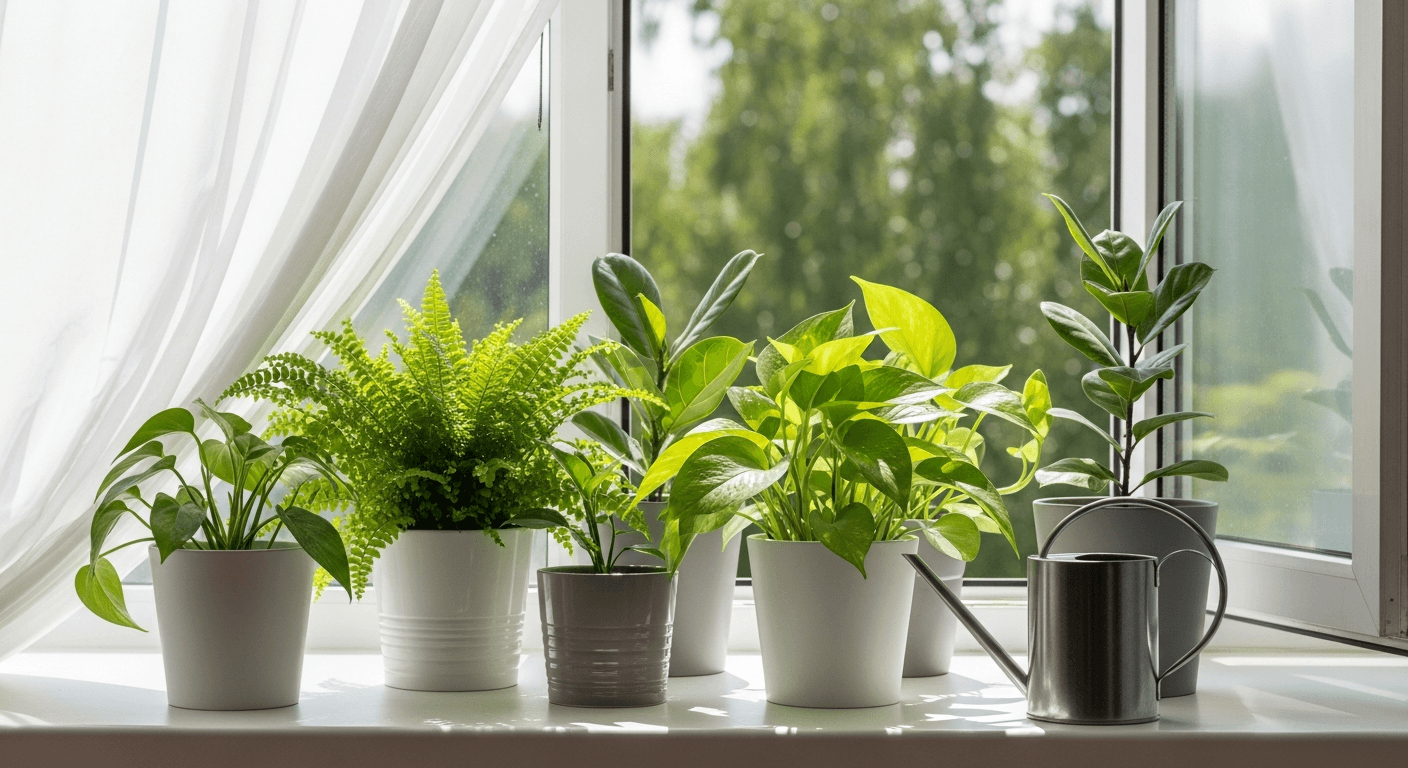
Summer Care for Indoor Plants
Summer houseplant care guide: water more often, shield plants from harsh midday sun, raise humidity, feed during growth and avoid heat stress on hot days.
Trouble with your plant?
AI diagnosis