Too Much or Too Little Water? How to Tell in a Minute
Droopy, yellowing leaves can mean too much OR too little water. Tell them apart by the soil, the roots and how the leaves feel, and learn how to fix each one.
In this article
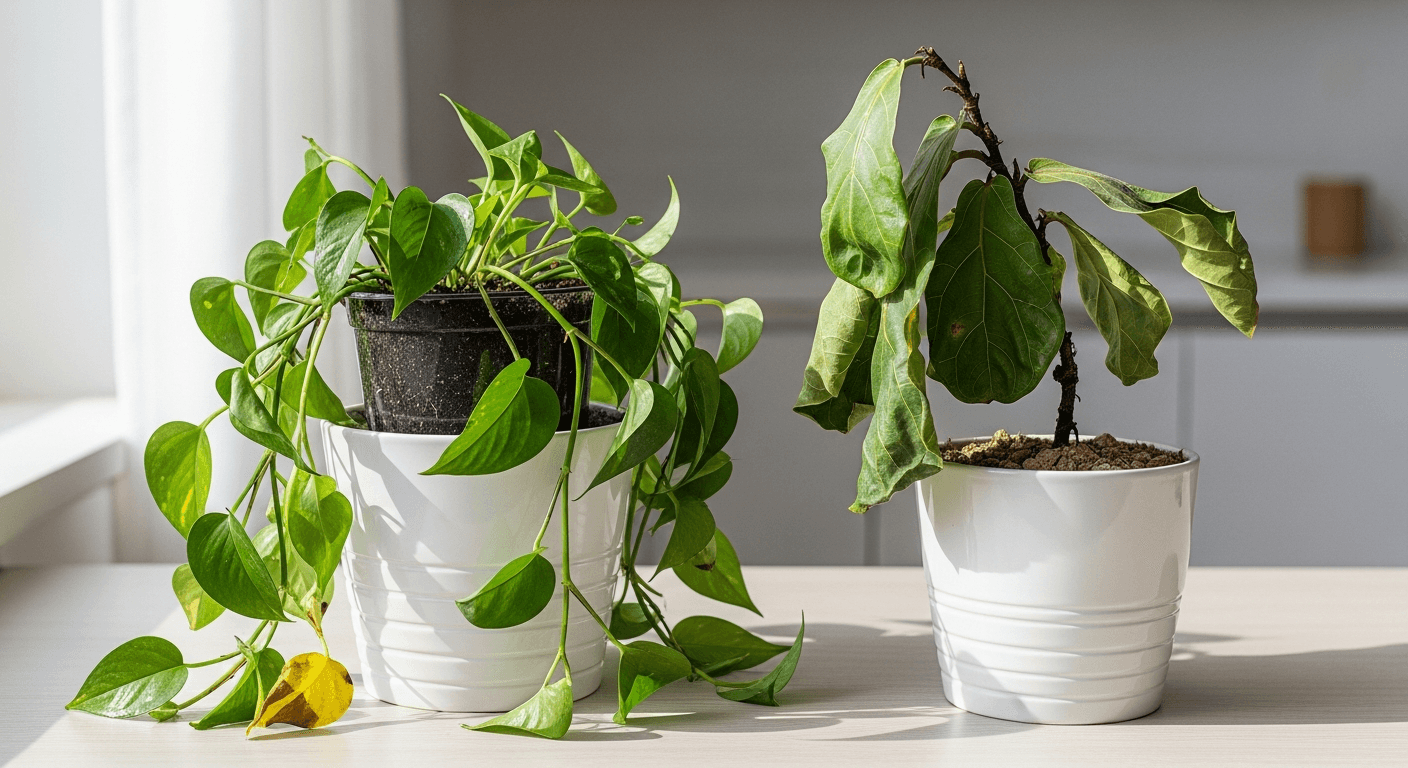
The quick way to tell them apart: push a finger 1-2 inches into the soil and touch a leaf. Dry soil and a crispy leaf = it's thirsty; wet soil and a soft, translucent leaf = it's drowning. It's the paradox that drives every beginner crazy, because both problems leave the plant droopy, limp and yellowing, and the instinctive reaction —adding more water— can be exactly what kills it. Here are all the clues you need to read the situation before you reach for the watering can.
Why they look so similar
In both cases the roots stop delivering water to the leaves. With underwatering it's obvious: there's no water to absorb. With overwatering it's sneakier: waterlogged roots suffocate and rot, so even with plenty of water, the plant can't drink it. The visible result is the same: a sad, collapsing plant.
Is your plant looking off and you are not sure why?
Free AI diagnosisHow to tell them apart, step by step
The finger test: your best tool
Before anything else, push a finger about 1-1.5 inches into the soil:
- Dry, dusty soil → it's probably thirsty.
- Wet, cold or compacted soil → it's probably drowning.
This single check solves 80% of cases. If unsure, use a wooden skewer: it comes out clean and dry from dry soil, with soil stuck to it from wet soil.
Signs of underwatering
- Leaves that are wilted but crispy, drying at tips and edges.
- Soil that pulls away from the sides of the pot.
- The pot feels very light when you lift it.
- Older leaves turn yellow or brown and fall off dry.
- The plant perks up noticeably a few hours after watering.
Signs of overwatering
- Yellow, soft, translucent leaves —not crispy.
- Soil that stays wet days after watering.
- A rotten or musty smell at the soil surface.
- A soft or darkened base of the stem.
- The arrival of fungus gnats, which love permanently moist soil.
- Widespread yellowing: it's the number-one cause of yellow leaves indoors.
Quick rule: a crispy leaf = thirst; a soft, mushy leaf = drowning.
Side-by-side comparison
| Clue | Underwatering | Overwatering |
|---|---|---|
| Leaf feel | Crispy, dry | Soft, translucent |
| Color | Dry yellow or brown | Soft yellow |
| Soil | Dry, pulling away, light | Wet days later, heavy |
| Soil smell | Normal | Rotten or musty |
| Roots | Dry and brittle | Brown, mushy, smelly |
| After watering | Perks up in hours | No change or worse |
Check the roots if in doubt
If the symptoms aren't clear, gently slide the plant out of its pot:
- Firm, white or pale roots → healthy, the problem is mild.
- Brown, mushy, foul-smelling roots → rot from too much water.
- Dry, brittle roots → prolonged drought.
Roots never lie: they are the definitive diagnosis.
How to fix each case
If it's underwatered
- Water slowly and thoroughly until water drains from the bottom.
- If the soil is so dry it repels water, soak the pot in a basin for 15-20 minutes to rehydrate it.
- Resume regular watering and check the soil every few days.
If it's overwatered
- Stop watering immediately.
- Remove the plant and clear away the soggy soil; trim rotten roots with clean scissors.
- Repot into fresh, airy soil in a pot with drainage holes.
- Place in indirect light and don't water until the top layer dries out.
Prevent the problem for good
- Water based on the soil, not the calendar: always check first. Our guide on how to water indoor plants breaks the technique down plant by plant.
- Always use pots with drainage and empty the saucer after 10 minutes; material and size matter more than people think, as we explain in how to choose the right pot.
- Use an airy soil mix suited to each plant.
- Cut back watering in winter, when most growth slows down.
Still not sure what's wrong with your plant? Upload a photo to our AI diagnosis and we'll point you in the right direction in seconds. And if you suspect the water already did damage below, don't miss our guide to root rot.
Mastering watering is the single skill that saves the most plant lives. Observe, check the soil, and let the plant —not the routine— tell you when to drink.
Related articles
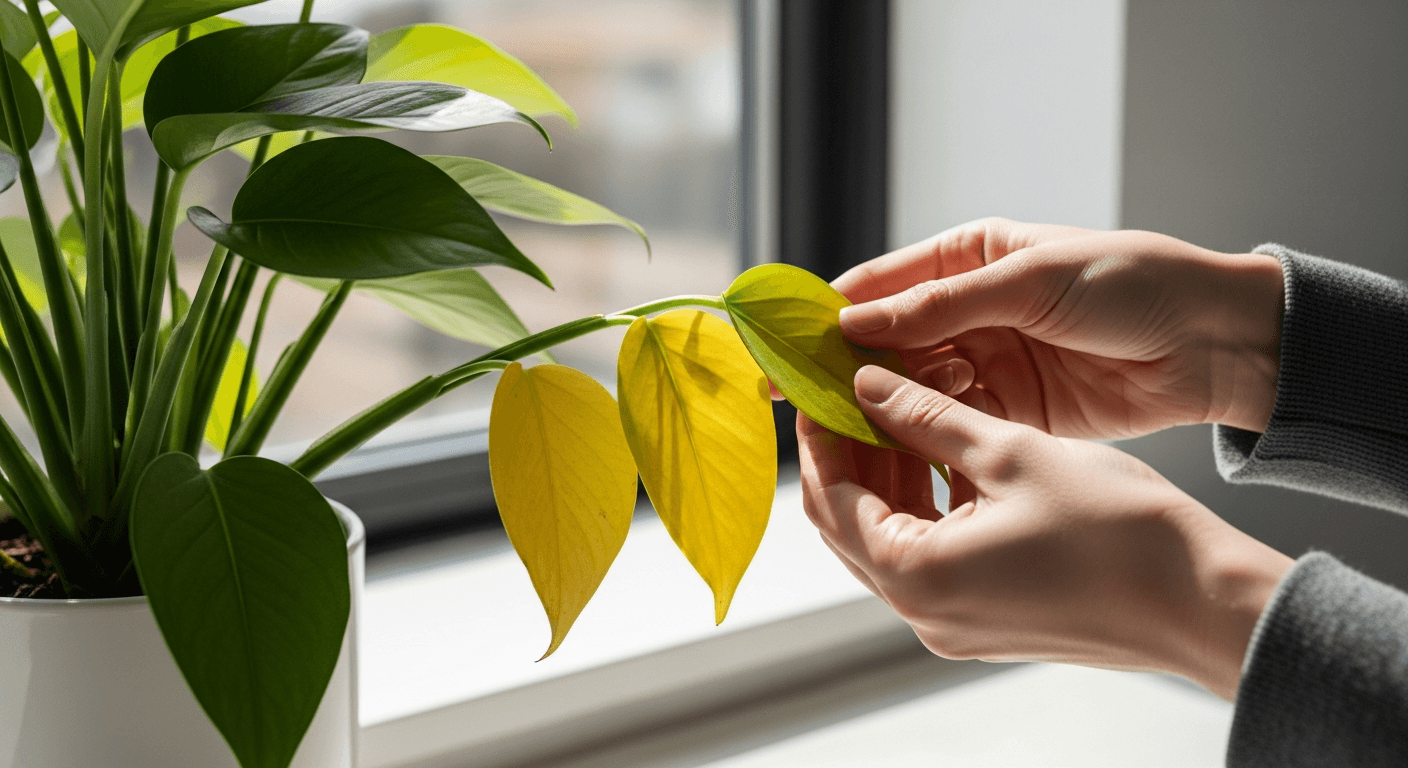
Why Your Plant Has Yellow Leaves (and How to Fix It)
Yellow leaves are the most common houseplant symptom. Learn to diagnose the exact cause —watering, light, nutrients or pests— and fix it step by step.
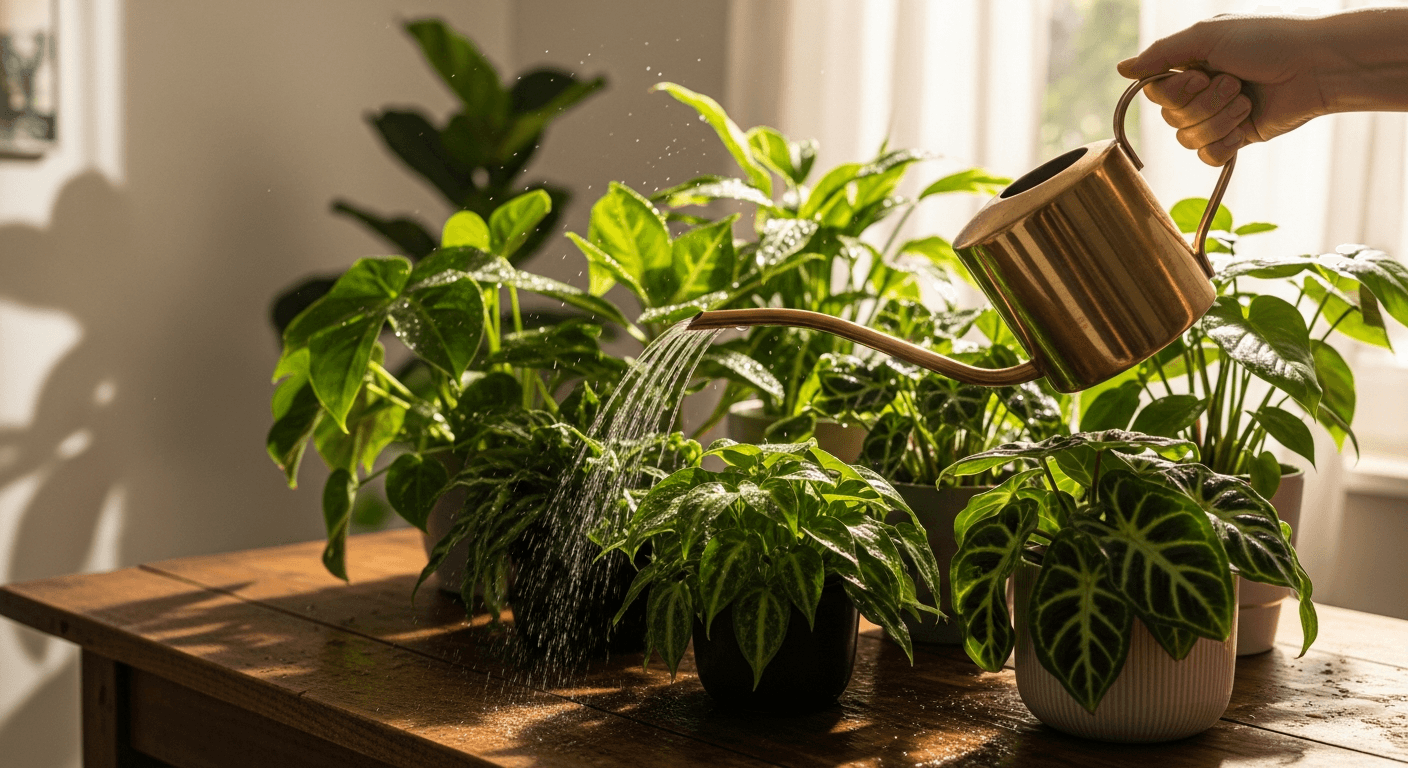
How to Water Indoor Plants Without Killing Them
The definitive watering guide: why overwatering kills, how to read soil moisture, the right technique, what water to use and how much each plant type needs.
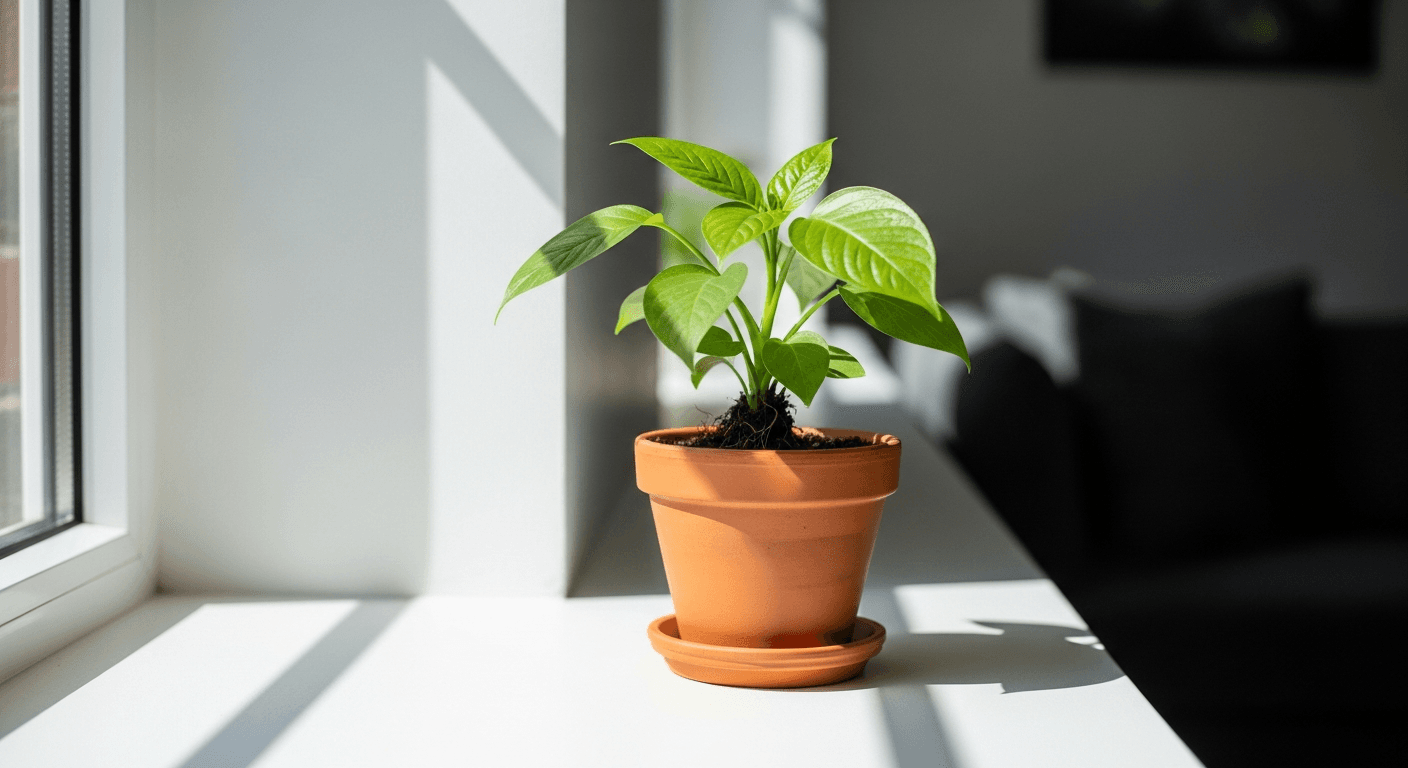
Why Your Plant Isn't Growing: 5 Causes and How to Fix Them
Has your plant stopped growing? Discover the 5 most common causes (not enough light, root-bound, winter dormancy, lack of nutrients) and how to diagnose each one.
Trouble with your plant?
AI diagnosis