Snake Plant: The One That Survives Almost Any Neglect
Snake plant (Sansevieria) care: minimal watering, light, why it's perfect for beginners, how to propagate it, and the only mistakes that actually kill it.
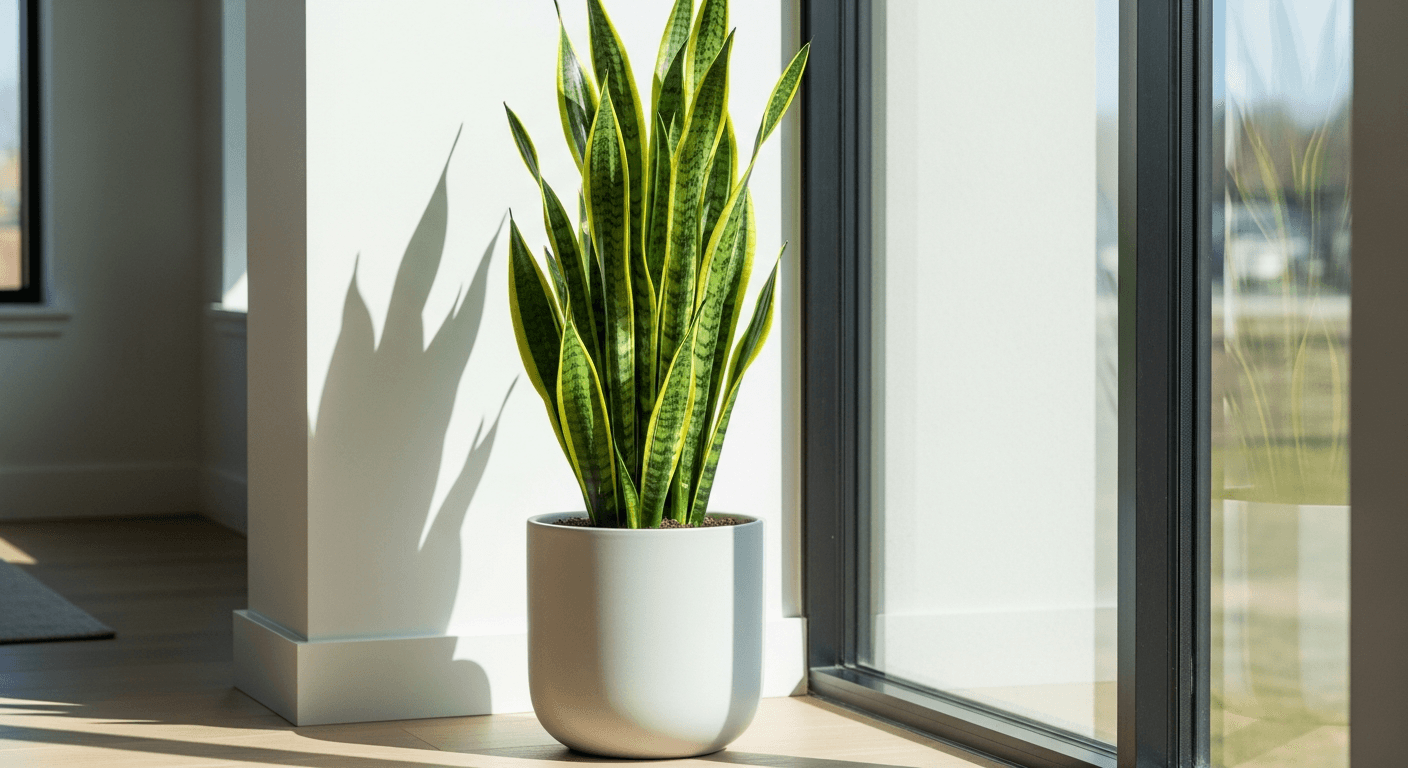
In this article
If you've killed plants before, the snake plant (Sansevieria or Dracaena trifasciata) is your comeback. It handles low light, weeks without water and the most complete neglect. It's arguably the toughest houseplant out there — which is why it's the first one I recommend to anyone starting out, even people who travel a lot. Here's how to care for it properly… and the few mistakes that do kill it.
Why it's so tough
It comes from arid regions of West Africa, so it evolved to store water in its thick, stiff leaves. It also uses CAM photosynthesis: it opens its pores at night to lose less water, a desert-plant adaptation. All of this lets it survive long droughts. Its enemy, therefore, isn't a lack of water — it's too much: waterlogged, its rhizome rots within days.
Is your plant looking off and you are not sure why?
Free AI diagnosisBasic care, point by point
Light
| Light level | Result |
|---|---|
| Medium-bright indirect | Best growth and bold patterning ✅ |
| Low light | Survives well; grows more slowly |
| Some gentle direct sun | Tolerated (acclimate it gradually) |
| Intense midday sun | Can yellow or scorch |
It's one of the very few plants that thrive far from a window, which makes it perfect for low-light corners, offices and bedrooms.
Watering: less is more
This is 90% of success. Water only when the soil is completely dry, top to bottom:
- In summer: every 2-3 weeks.
- In winter: every 4-6 weeks (sometimes less!).
- When in doubt, don't water. A dry snake plant bounces back; a soggy one rots.
When you do water, water deeply, let it drain, and empty the saucer. For a method to avoid overdoing it, see the watering guide.
Humidity, temperature and feeding
It doesn't care about humidity: it does fine in the dry air of a heated home, unlike tropicals. Keep it above 55 °F (13 °C) — it won't tolerate hard cold. Feed very little: once a month in spring-summer at half strength is plenty. It's a low-maintenance plant by design.
Soil and pot
Use a very free-draining mix (cactus soil + perlite) and a pot with drainage holes, ideally terracotta because it breathes and dries faster. The roots and rhizome rot easily if water sits. Don't repot often: it likes to be a bit snug and actually flowers more readily when pot-bound.
Popular varieties
- Laurentii: the classic, with yellow margins.
- Zeylanica / Robusta: green with silvery bands, very tough.
- Moonshine: pale silvery green, elegant.
- Cylindrica: cylindrical leaves that are sometimes braided.
- Hahnii (bird's nest): dwarf, rosette-shaped, great for desks.
They're all cared for the same way; variegated ones (yellow margins) want a bit more light to keep their color.
How to propagate it
Two easy methods:
- Division (the best): lift the plant, separate rhizomes with pups and replant them. Fast and reliable, and it keeps the pattern of variegated types.
- Leaf in water or soil: cut a leaf into 3-inch sections (keep them right-side up: the end that pointed down goes in the water) and root them. It's slower, and yellow-edged varieties lose that edge this way (they come back plain green). Details in how to propagate plants.
Does it really release oxygen at night?
It's the most-repeated claim. Thanks to CAM photosynthesis, it does release a little oxygen at night, unlike most plants. Enough to "purify" your bedroom? Not measurably — you'd need a great many. But it's a perfect bedroom plant for another reason: it tolerates low light and needs almost no care.
Quick care table
| Care | Snake plant |
|---|---|
| Light | Medium indirect; tolerates low |
| Water | Only when soil is bone dry |
| Humidity | Doesn't care |
| Difficulty | Very easy |
| Pets | Mildly toxic |
Common problems
| Symptom | Likely cause | Fix |
|---|---|---|
| Soft, yellow leaves at the base | Overwatering | Let it dry; check the rhizome |
| Dark, mushy base | Root rot | Save healthy leaves and replant |
| Wrinkled or floppy leaves | Underwatering (rare) | Water and wait |
| Brown tips | Hard, calcium-rich water | Use rested or filtered water |
| Yellow leaves generally | Water or light | Adjust both |
| No growth | Too little light | Move closer to a window |
Is it toxic to pets?
Yes, it's mildly toxic to dogs and cats if chewed (causes drooling and digestive upset). It's rarely serious, but if you have curious pets, keep it up high or choose a pet-friendly option like the spider plant. To start off right, see also the best plants for beginners.
With decent light and sparse watering, the snake plant will last you years with zero drama. Looking off? Upload it to our AI diagnosis tool and we'll tell you what's wrong.
Related articles
ZZ Plant (Zamioculcas): Care for the Toughest Houseplant
ZZ plant (Zamioculcas) care: it handles low light and missed waterings. Learn light, watering, propagation and why it's the ideal plant for offices.
Pothos: Care for the Easiest Plant in the World
Pothos is the perfect plant to start with: tough, fast-growing and forgiving. Learn how to water it, light it, propagate it and keep it lush.
The Best Plants for Low-Light Indoor Spaces
Got a dark flat or a room with no sun? These plants thrive in low light. A list with their care and the tricks to keep them alive where others die.
Trouble with your plant?
AI diagnosis