Seedlings Collapsing at the Base: How to Prevent Damping Off
Your seedlings flop over at the base. Learn about damping off, the fungus behind it, and how to prevent it with clean soil, airflow and careful watering.
In this article
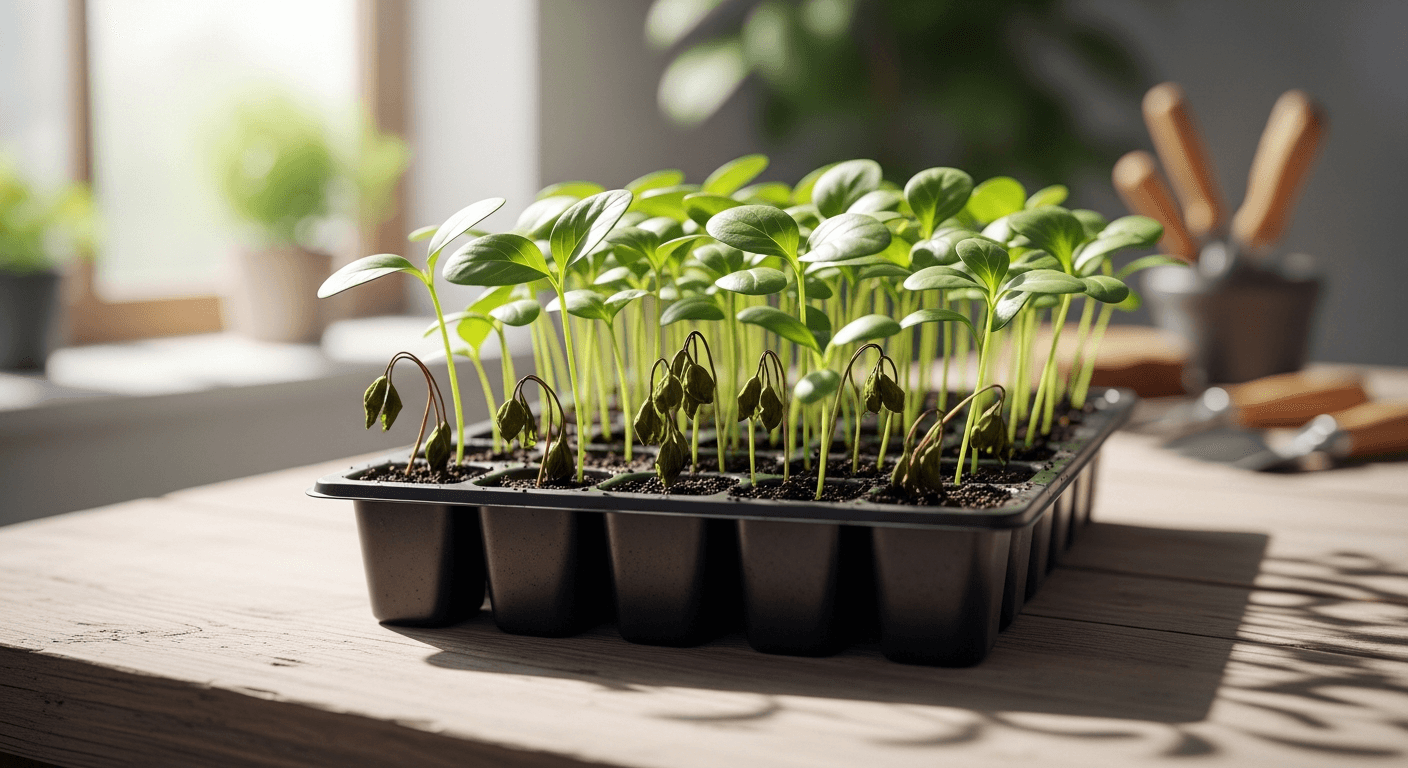
Damping off cannot be cured once it sets in: the affected seedling never recovers. Everything rides on prevention, and it is concrete: fresh seed-starting mix, clean containers, sowing thinly, watering from below and taking the lid off as soon as they germinate. The unmistakable sign is a watery pinch at the base of the stem, as if someone had squeezed it, and the seedling topples even though the leaves still look healthy.
What it is and why it appears
What damping off is
It's a disease caused by soil-borne fungi (genera like Pythium, Fusarium or Rhizoctonia) that attack seeds and tender seedlings. It can act in two ways:
- Before germination: the seed rots and never sprouts.
- After germination: the stem is pinched at soil level, turns thin and dark, and the seedling topples even though its leaves still look healthy.
The telltale sign is that watery narrowing at the base of the stem, as if someone had pinched it.
Is your plant looking off and you are not sure why?
Free AI diagnosisWhy it appears
These fungi are almost always present; the problem is that the conditions in many seed trays are perfect for them:
- Excess moisture and constantly waterlogged soil.
- Poor ventilation and stagnant air under a lid or dome.
- Sowing too densely, with seedlings crowded together.
- Reused or unsterilized soil and dirty tools.
- Cold and low light, which slow the seedling down and leave it vulnerable.
It's the same logic as the overwatering that fuels root rot in adult plants: the fungus thrives where there's standing water and little oxygen.
How to prevent it (the only real option)
Since there's no effective treatment, everything rides on prevention:
- Clean soil: use fresh seed-starting mix, light and well-draining. Avoid reusing soil from other pots.
- Clean containers and tools: wash trays and pots with soapy water before sowing.
- Don't sow too densely: leave air between seedlings so the foliage can dry.
- Water from below: put water in the saucer and let the soil wick it up, so the surface doesn't stay soaked.
- Ventilate: remove the lid or dome as soon as they germinate and give air circulation.
- Gentle light and warmth: good light (or a grow light) and the right temperature for fast, sturdy growth.
Tricks that help
- A thin layer of vermiculite or sand over the surface keeps the seedling's neck drier.
- Let the surface dry slightly between waterings; constant moisture at the base is the trigger.
- A gentle fan for a few hours a day mimics a breeze and lowers the risk.
- A dusting of cinnamon on the soil is a popular home antifungal, though its effect is limited.
The most vulnerable sowings
Not all seedlings run the same risk. More prone to damping off are:
- Small, slow-germinating seeds, which spend more time exposed in damp soil.
- Very dense sowings, where the foliage can't dry and air can't circulate.
- Seed trays kept covered with a lid for too many days after germination.
- Seedlings growing in cold and low light, which take longer to toughen up.
That's why microgreens and sprouts, sown very tightly packed, can suffer it too: watch the moisture and airflow just like in a regular seed tray.
It's the classic risk of dense sowings under cover, so it shows up a lot in microgreens and in early sowings of tomatoes or peppers. Sowing thinner and using fresh soil is half the battle won.
What to do if it's already started
If you see fallen seedlings, act fast to save the rest:
- Remove the affected ones right away; they won't recover.
- Stop overwatering and improve ventilation immediately.
- If the whole tray is affected, the sensible move is to start over with clean soil and a clean container.
Damping off is almost always a problem of too much moisture and too little air, not bad luck. With clean soil, airy sowing and bottom watering, you'll avoid it in most cases. Not sure if your seedlings are collapsing from fungus or something else? Upload a photo to the AI diagnosis for guidance.
Related articles
Brown Spots on Leaves: Causes and Fixes
Brown spots on your plant's leaves? Learn to tell apart fungal, bacterial, overwatering, sunburn and hard-water causes, and how to treat and prevent each.
Caterpillars on Plants: How to Identify and Get Rid of Them
Caterpillars eating garden leaves: how to spot the holes and droppings, handpick them, and treat with Bacillus thuringiensis (Bt) without harsh chemicals.
Ants on Your Plants: What They Want and How to Get Rid of Them
Ants on your plants are almost always farming aphids or scale for honeydew. Learn how to remove the ants and, above all, treat the real pest behind them.
Trouble with your plant?
AI diagnosis