Schefflera: The Annual Prune That Keeps It Full
Schefflera or umbrella plant care: bright light, watering, pruning to keep it bushy, and why it drops leaves. Full guide with practical tips for beginners.
In this article
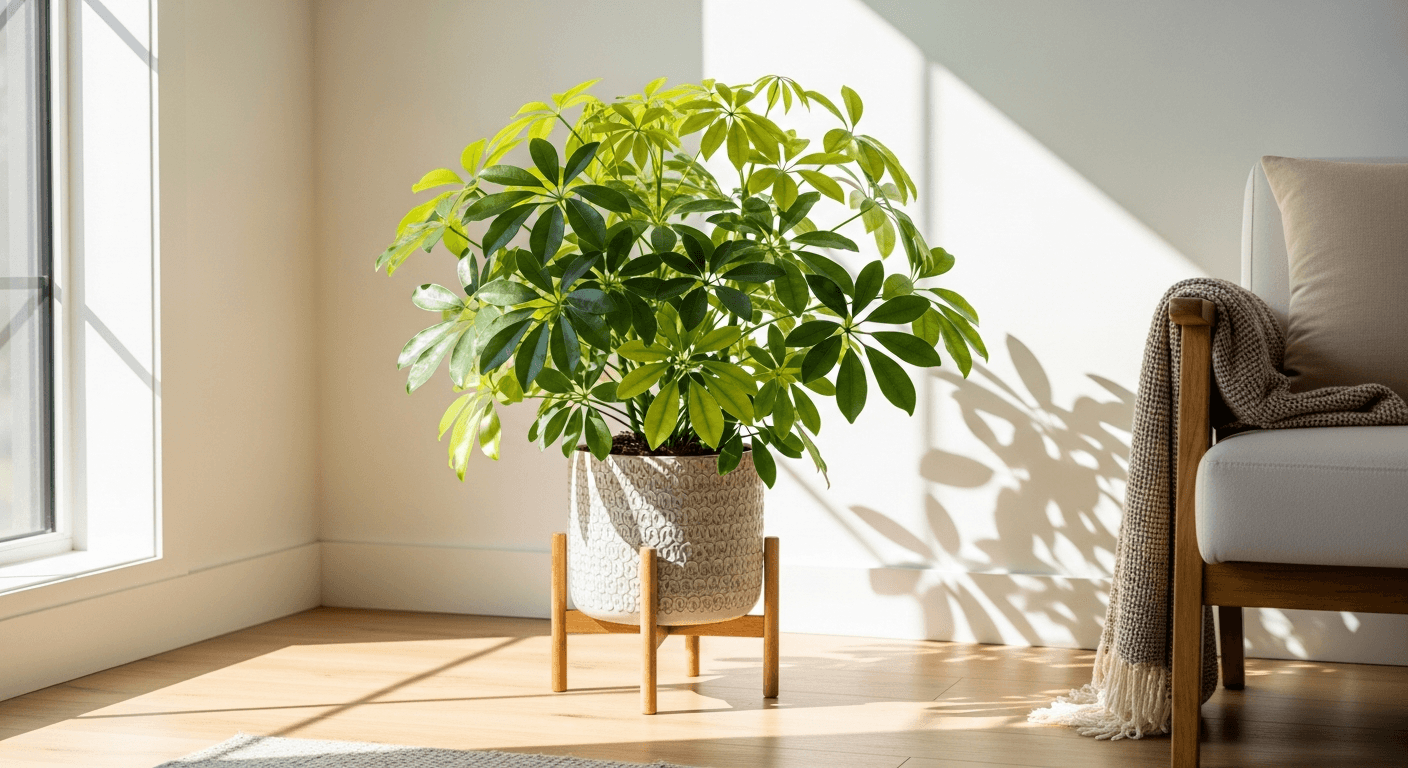
The schefflera, better known as the umbrella plant, is one of those indoor shrubs that give a lot back for very little effort. Its glossy leaves, split into leaflets that radiate from a single point like the ribs of an umbrella, give it a lush, tropical look. Two types are common at home: Schefflera arboricola, more compact and forgiving, and Schefflera actinophylla, with bigger leaves and a tree-like habit.
| Care | Need |
|---|---|
| Light | Bright indirect |
| Watering | When top 1-2 inches are dry |
| Humidity | Moderate |
| Temperature | 60-75 °F |
| Toxicity | Toxic to pets and children |
A plant for beginners
The schefflera forgives the occasional slip-up and grows fast when it's happy. It's ideal if you want a good-sized plant to fill a corner without fuss. With enough light and careful watering, it can live for years and grow well over five feet tall.
Is your plant looking off and you are not sure why?
Free AI diagnosisBasic care, point by point
Light
This is the secret to a good-looking schefflera:
- Ideal: bright, indirect light near a clear window.
- Tolerates: some shade, but it'll grow slower and leggier.
- Avoid: harsh direct midday sun, which yellows and scorches the leaves.
If the stems stretch out with big gaps between leaves (going "leggy"), that's a clear sign of not enough light. Move it closer to the window and rotate it every couple of weeks so it grows evenly.
Watering
Water when the top 1-2 inches of soil are dry. In spring and summer that's usually once a week; in winter, every 10-15 days. The schefflera is very sensitive to overwatering: keep it soggy and the roots rot, and it starts dropping leaves by the handful.
Rule of thumb: when in doubt, wait one more day before watering. It tolerates a brief dry spell far better than soggy roots.
Humidity and temperature
It appreciates moderate ambient humidity. If your home air is very dry from heating, group plants together or use a humidifier to avoid brown tips. Keep it between 60 and 75 °F and away from cold drafts and radiators — both make it shed leaves.
Pruning: the key to a bushy plant
Schefflera tends to grow upward and go bare at the bottom. The good news is that it responds beautifully to pruning:
- In spring, cut back the tips of the longest stems just above a node.
- The plant will branch out below the cut, growing fuller and bushier.
- Use the cuttings to propagate: they root in water or in damp soil.
Don't be afraid to prune decisively — it's the only way to keep a compact, leaf-packed shape.
Soil and repotting
Use a quality all-purpose mix with a handful of perlite added for better drainage. Repot every 2-3 years into a slightly larger pot, ideally in spring, when you see roots poking out of the drainage holes.
For how little it asks, the schefflera fits on any list of best beginner plants. Its typical flaw is stretching toward the light: if you see long stems with widely spaced leaves, the diagnosis is in leggy plants and the fix in the pruning guide.
Common problems
- Massive leaf drop: usually a sudden change (cold draft, a move, over- or underwatering). Stabilize its conditions and be patient.
- Yellow leaves: almost always overwatering. Check that the pot drains well.
- Brown tips: air too dry or hard, calcium-rich water.
- Leggy stems: not enough light.
- Sticky leaves: can mean scale or aphids; check the undersides.
If your schefflera looks off and you're not sure why, try the AI diagnosis tool to narrow down the cause before you act.
Is it toxic?
Yes. The schefflera contains calcium oxalates, which irritate the mouth and digestive system of dogs, cats and children if the leaves are chewed. Keep it out of reach. If you have curious pets, take a look at our pet-safe plants guide for alternatives.
With good light, careful watering and an annual prune, the schefflera will give you a lush green presence for years with very little effort.
Related articles
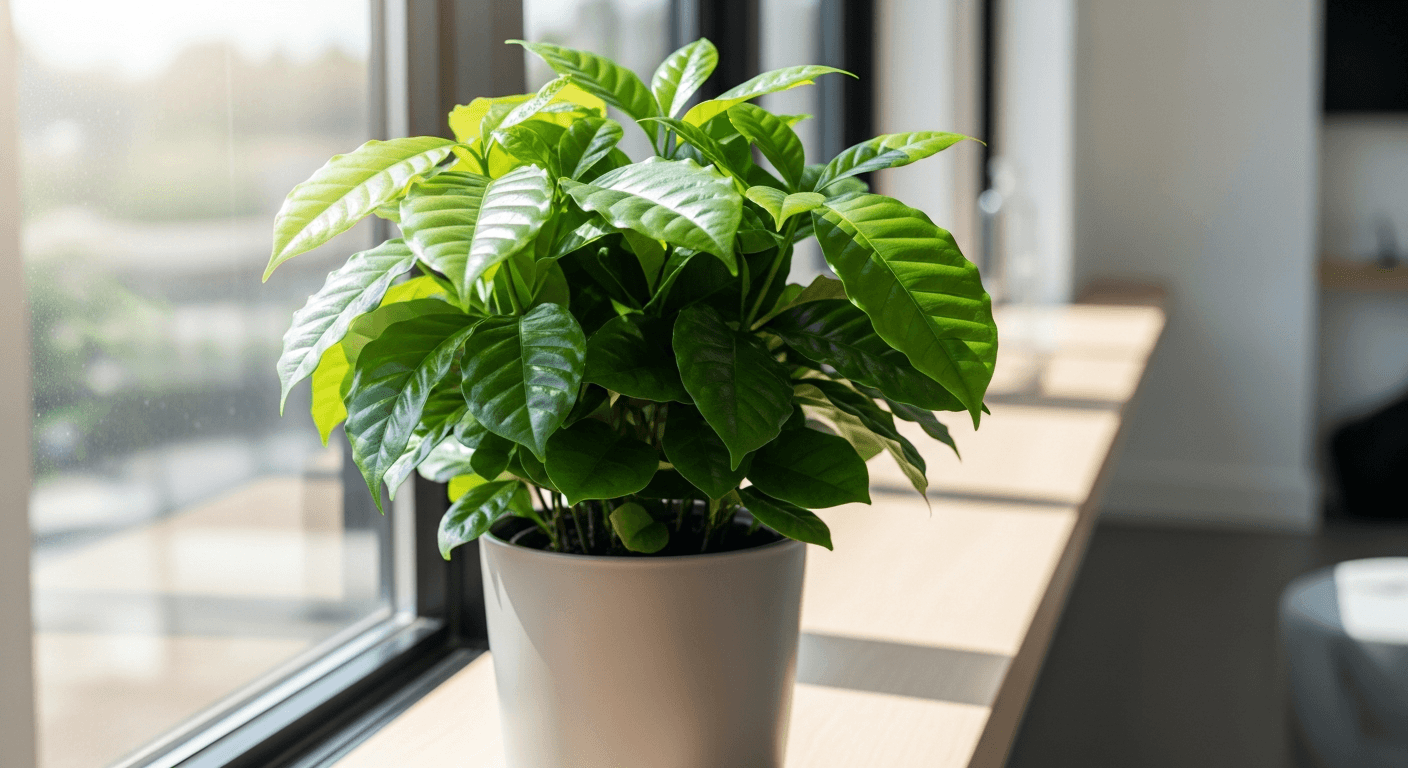
Coffee Plant Care: Growing Coffea at Home
Coffee plant (Coffea arabica) care as a houseplant: bright indirect light, humidity, watering, and whether you can really harvest your own coffee beans.
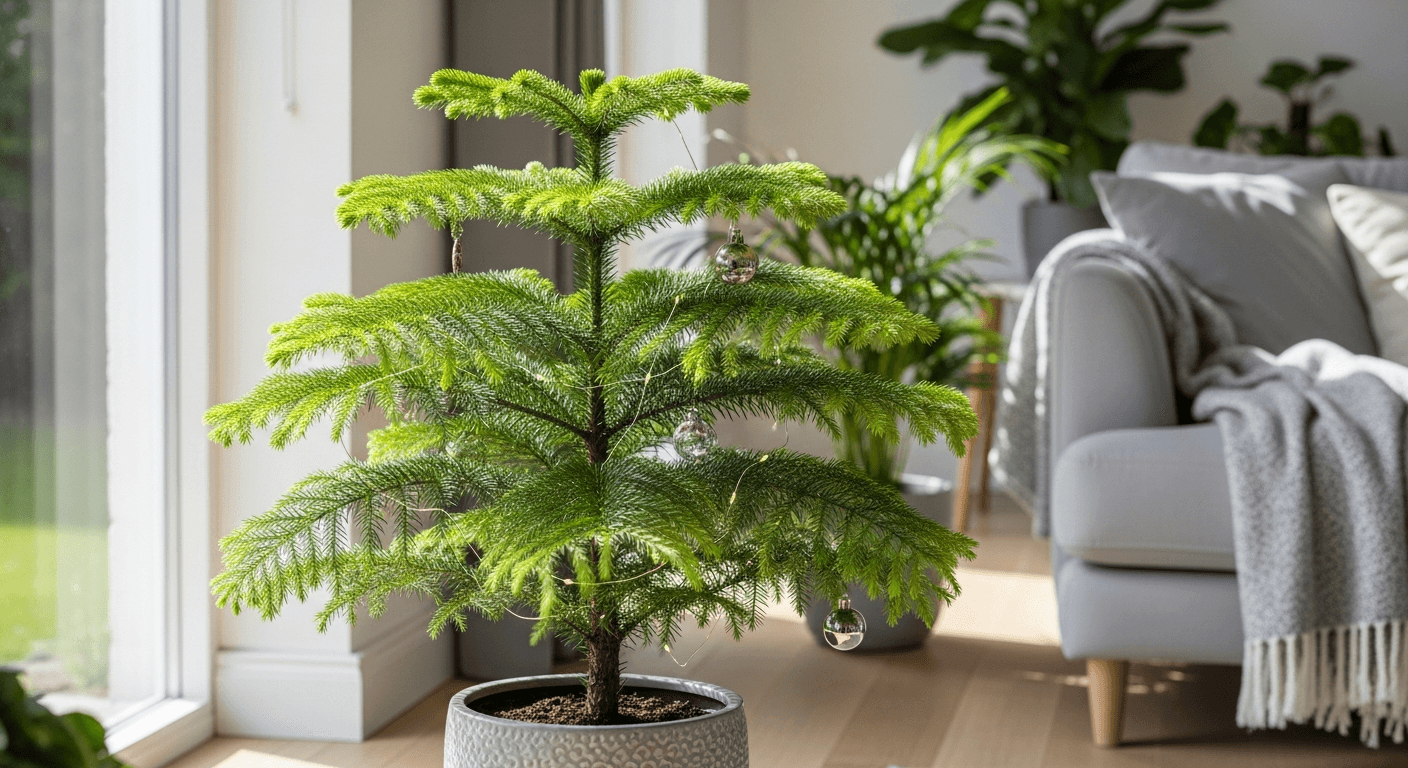
Norfolk Island Pine Care: The Living Christmas Tree
Norfolk Island pine (Araucaria heterophylla) care: light, watering, humidity and why its branches turn brown and drop. The living indoor Christmas tree guide.
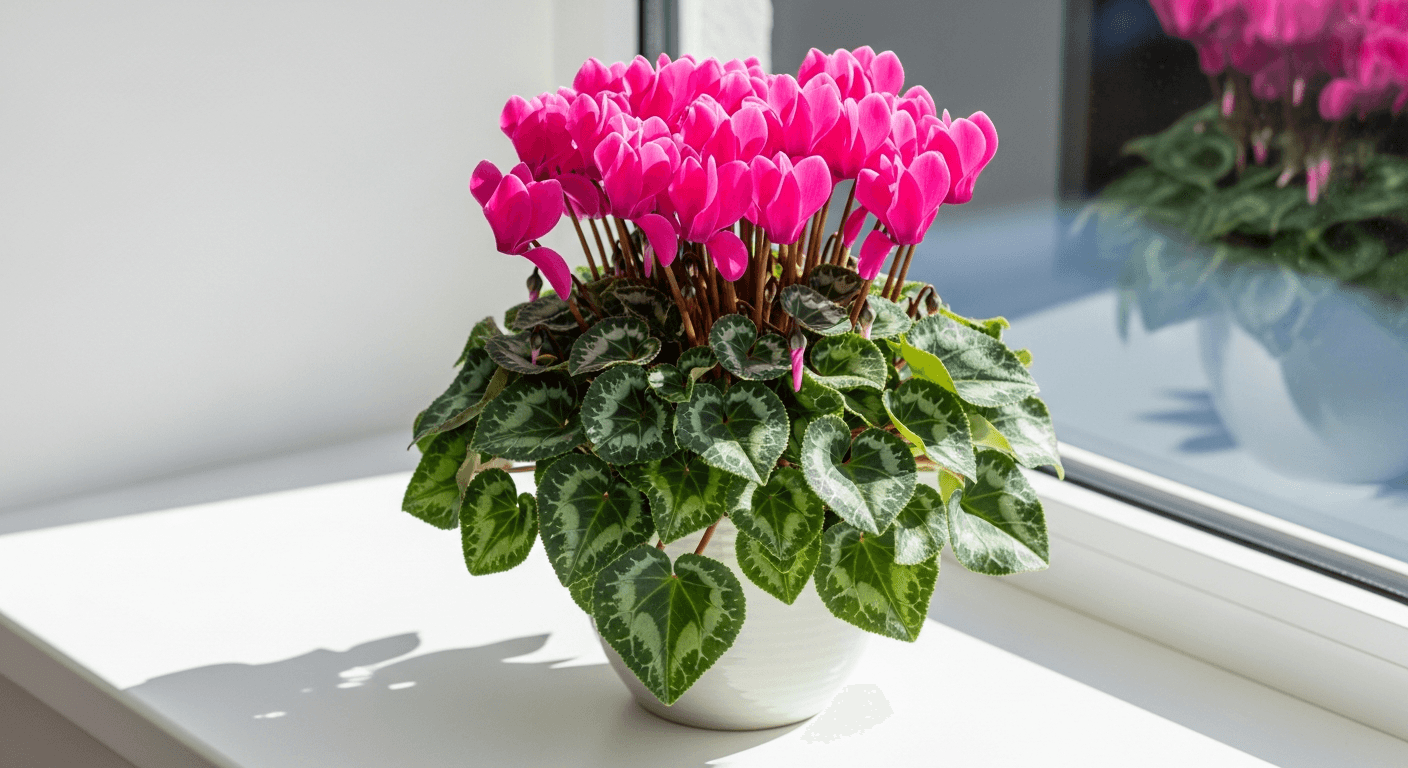
Cyclamen Care: Keep It Blooming All Winter
Cyclamen care so it blooms all winter: cool temperatures, light, watering from below to avoid crown rot, and how to handle its summer dormancy.
Trouble with your plant?
AI diagnosis