Venus Flytrap: The Water and Rest That Keep It Alive
Venus flytrap (Dionaea muscipula) care guide: which water to use, light, watering, feeding, winter dormancy, and the mistakes that kill it in weeks.
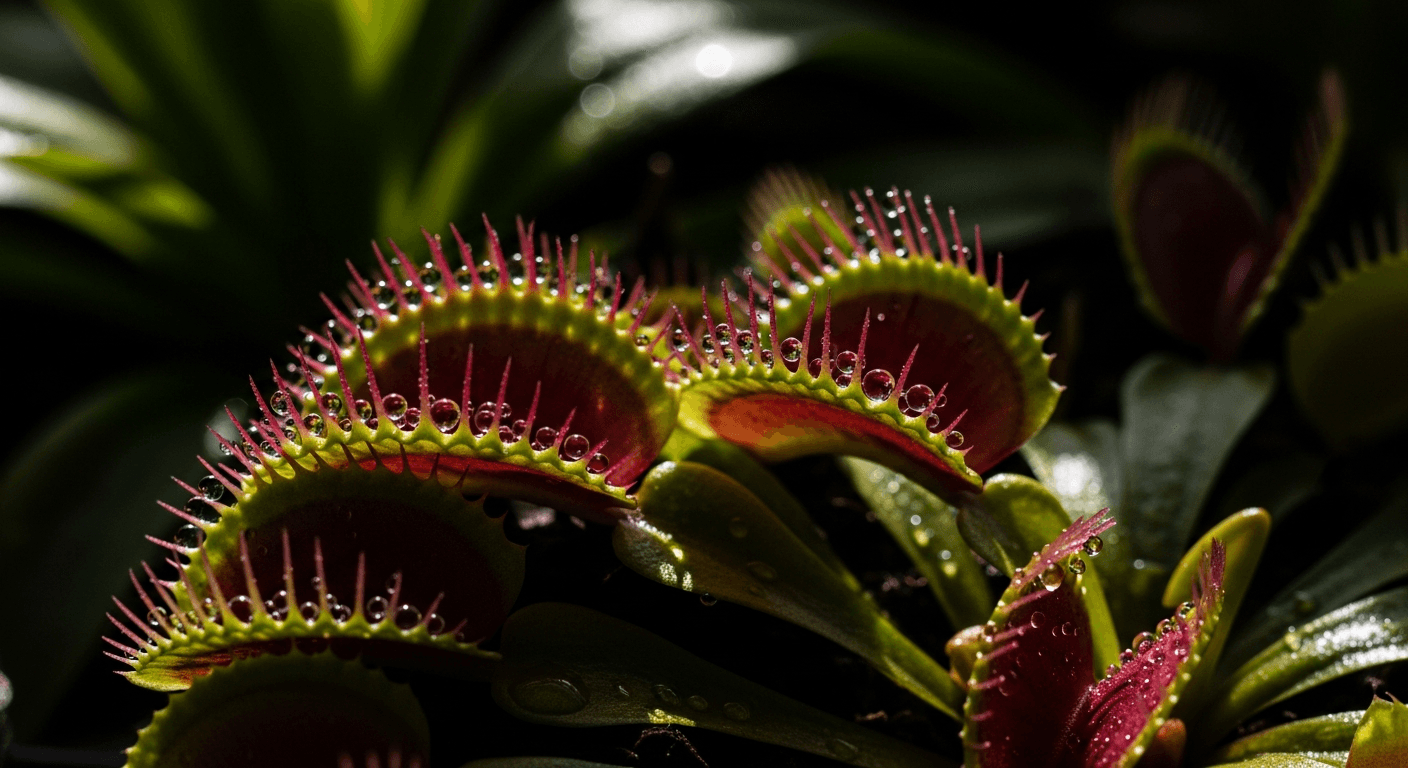
In this article
Few plants fascinate like the Venus flytrap (Dionaea muscipula), able to snap its traps shut on an insect in a tenth of a second. But its "hard to grow" reputation almost always comes from giving it what it does NOT need. Follow these rules and it'll live for years.
| Care | What it needs |
|---|---|
| Water | Only distilled, rain or reverse-osmosis |
| Light | Several hours of direct sun a day |
| Soil | Unfertilized sphagnum peat + perlite, equal parts |
| Watering | Tray method, half an inch of water below the pot |
| Rest | Cold dormancy (32-50 °F) for 3-4 months |
| Toxicity | Non-toxic to pets |
The golden rule: water
This is mistake number one. Carnivorous plants can't tolerate the minerals in tap water, which burn their roots. Use only:
- Distilled, rain or reverse-osmosis water.
- Never tap water or bottled mineral water.
Keep the pot in a tray with half an inch of water (tray watering): it loves wet feet.
Is your plant looking off and you are not sure why?
Free AI diagnosisLight
It needs lots of light: several hours of direct sun a day. With low light, traps come out pale and weak and the plant declines. A very bright sill — or outdoors in spring and summer — is ideal.
Soil
Never use regular soil (its nutrients kill the plant). Use a mix of sphagnum peat moss (unfertilized) + perlite (or silica sand) in roughly equal parts.
How the traps work
Each trap has trigger hairs on the inside. The trap only closes if they're touched twice within about 20 seconds (that way it doesn't snap shut on a raindrop). If it has caught prey, it seals and digests it over 5-12 days; if you closed it for nothing, it reopens within a couple of days. The key detail: each trap can only close about 3-5 times in its whole life before it dies and is replaced by another. That's why triggering them for fun is so harmful: you spend their energy for nothing.
Do you have to feed it?
Not required: it catches its own insects if it's outside. If you want to feed it:
- Give one live or dried insect (fly, small spider) to a single trap every 2-3 weeks.
- Don't feed it meat or your fingers. Human or kitchen meat rots it; and each closure costs energy, as we just saw.
- If the insect is dried, once the trap closes gently massage the outside for a few seconds to mimic struggling prey: that's what triggers digestion.
- A plant with good light makes almost all its energy by photosynthesis; insects are a nitrogen bonus, not its main "food."
Its cycle: what is normal and what is not
Winter: it needs to sleep
This surprises almost everyone: the Venus flytrap needs a winter dormancy of 3-4 months with cold (32-50 °F) and less light. The leaves look ugly and that's normal. Without that rest, it exhausts itself and dies after a year or two. A cold garage or windowsill, or even the crisper drawer of the fridge inside a bag, will see it through winter.
The flower: usually better to cut it
In spring, a healthy flytrap sends up a tall flower stalk with white flowers. It's pretty, but flowering costs a huge amount of energy and weakens the plant for months. Unless you want to collect seeds (which take years to grow into adult plants), it's best to cut the flower stalk when it's about 2 inches tall, so the plant puts that energy into strong traps and into fattening its bulb. You can try to root the cut stalk as a cutting.
Why traps turn black
An old trap turning black and dying is normal: each trap lives a few months and the plant replaces it with a new one. Traps also blacken after digesting a big meal or if they've closed many times. Only worry if they all blacken at once and very fast: that points to tap water, the wrong soil, or too little light.
Being carnivorous, almost nothing that works for the rest of your houseplants applies here: not the usual potting soil, not fertilizer, not tap water. If you want something just as striking but far more forgiving, take a look at succulents or at the best beginner plants list.
Mistakes that kill it
- 💧 Watering with tap water (the most common).
- 🪴 Planting it in potting soil.
- ☀️ Too little light.
- 🖐️ Triggering the traps for fun.
- ❄️ Skipping winter dormancy.
Respect the water, the light and its rest, and you'll have a healthy carnivore for years. Unsure about how it looks? Upload a photo to our AI diagnosis.
Related articles
Coffee Plant Care: Growing Coffea at Home
Coffee plant (Coffea arabica) care as a houseplant: bright indirect light, humidity, watering, and whether you can really harvest your own coffee beans.
Hibiscus in Pots: Care for Spectacular Blooms
Hibiscus (Hibiscus rosa-sinensis) care in pots: full sun, watering and feeding for big blooms, pruning, and how to overwinter it indoors. Full guide.
Indoor Jasmine Care: White, Fragrant Flowers
Indoor jasmine care: lots of bright light, a support to climb, watering, and the tricks to get those fragrant white blooms. Full houseplant guide.
Trouble with your plant?
AI diagnosis