Kalanchoe: How to Make It Flower Again
Kalanchoe care: light, watering and the darkness trick to make it rebloom. A bright-flowering succulent that's easy and tough, ideal for beginners.
In this article
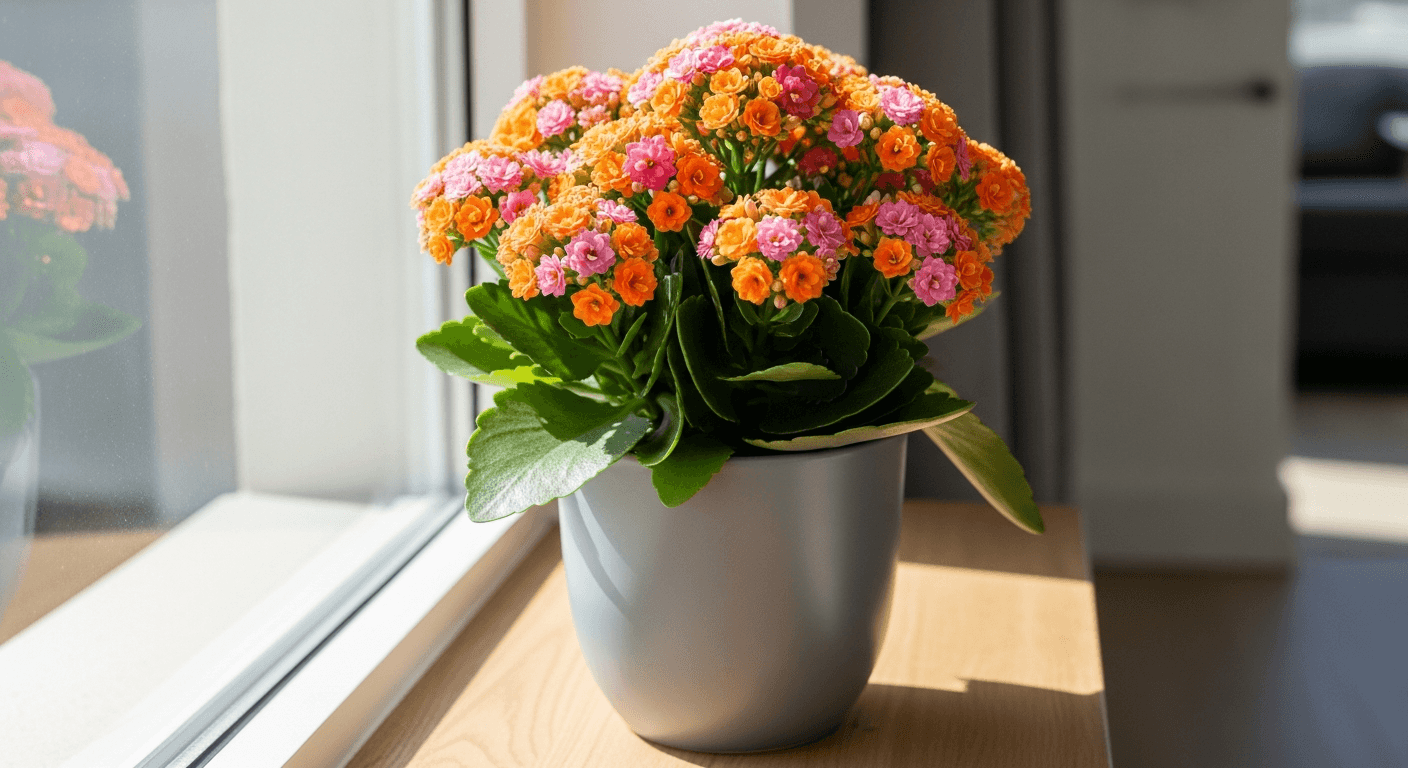
The Kalanchoe is that succulent with bright little flowers (red, orange, pink or yellow) sold in every supermarket. It's tough, easy and very rewarding, and best of all: with one simple trick you can make it rebloom again and again instead of tossing it when the flowers fade, which is what almost everyone does. As a flowering succulent that takes the sun, it's one of my favorite recommendations for a bright windowsill.
Basic care, point by point
Light
| Light level | Result |
|---|---|
| Lots of light / gentle direct sun | Compact and abundant blooms ✅ |
| Bright indirect | Grows, blooms a bit less |
| Low light | Stretches, few flowers, scruffy |
It wants lots of light: a very bright sill or some gentle morning sun. Good light keeps the plant compact and the blooms generous (see the light guide).
Is your plant looking off and you are not sure why?
Free AI diagnosisWatering
Like a good succulent, water only when the soil is dry: every 1-2 weeks in summer, much less in winter. Water the base, not the flowers or the center of the rosette, to avoid rot. Overwatering, which softens and darkens the stems, is its only serious enemy (root rot).
Soil, temperature and feeding
Cactus and succulent soil (free-draining) and a pot with holes. Keep it above 50 °F (10 °C) — no frost. Feed with a bloom fertilizer at half strength every 3-4 weeks in spring-summer for more flowers.
The trick to make it rebloom
Here's the key almost no one knows. The Kalanchoe is a short-day plant: it flowers when nights are long. At home, with artificial light at night, it "thinks" it's always summer and won't rebloom. To force a new bloom:
- Give it 14 hours of total darkness each night for about 6 weeks (put it in a closet or cover it with a box; any chink of light spoils it).
- During the day, bright light.
- After that period, flower buds appear. Good as new!
Deadheading and upkeep
When a flower fades, remove it (deadhead): cutting spent flowers encourages more and keeps the plant tidy. After the whole bloom, pinch the stems so it resprouts compact.
Varieties
- Blossfeldiana: the classic single-flowered type, the most sold.
- 'Calandiva': double, miniature-rose-style flowers.
- Tomentosa (panda plant): velvety gray leaves with brown edges, grown for the foliage.
- Daigremontiana ("mother of thousands"): sprouts plantlets along the leaf edges; curious but invasive.
Propagation
Super easy, like any succulent: cut a stem cutting or a leaf, let the cut callus for 1-2 days and plant in barely-moist soil. The "mother of thousands" doesn't even need that: its babies drop and root on their own. More in how to propagate plants.
Quick care table
| Care | Kalanchoe |
|---|---|
| Light | Lots; gentle direct sun |
| Water | Only when soil is dry |
| Soil | Cactus/free-draining |
| Difficulty | Very easy |
| Pets | Toxic (careful!) |
Common problems
| Symptom | Likely cause | Fix |
|---|---|---|
| Stretching and no blooms | Too little light (and lit nights) | More light + darkness trick |
| Soft, dark stems | Overwatering | Let it dry; water the base |
| Drying flowers | Normal | Remove them to encourage more |
| Wrinkled leaves | Thirst (rare) | A drink revives it |
| Won't rebloom | No short-day period | 14 h darkness for 6 weeks |
Is it toxic?
Important: yes, the Kalanchoe is toxic to dogs and cats, more than many plants: it contains cardiac glycosides that can affect the heart if eaten. Keep it out of reach; if you have pets that chew plants, consider pet-friendly options or place it up high. If you like tough succulents, the jade plant is another great option.
Give it sun, sparse watering and the darkness trick, and your Kalanchoe will bloom over and over for years. Yours looking off? Try the AI diagnosis tool.
Related articles
Phalaenopsis Orchid Care: How to Make It Bloom Again
Moth orchid (Phalaenopsis) care: how to water it without rot, light, what to do when the flowers fall, and how to get it to rebloom year after year.
Coffee Plant Care: Growing Coffea at Home
Coffee plant (Coffea arabica) care as a houseplant: bright indirect light, humidity, watering, and whether you can really harvest your own coffee beans.
Indoor Jasmine Care: White, Fragrant Flowers
Indoor jasmine care: lots of bright light, a support to climb, watering, and the tricks to get those fragrant white blooms. Full houseplant guide.
Trouble with your plant?
AI diagnosis