Dracaena: Brown Tips and the Tap Water Problem
Dracaena care (marginata, fragrans, lemon lime): light, watering, why it gets brown tips and how to prune it. Tough, elegant and low-water.
In this article
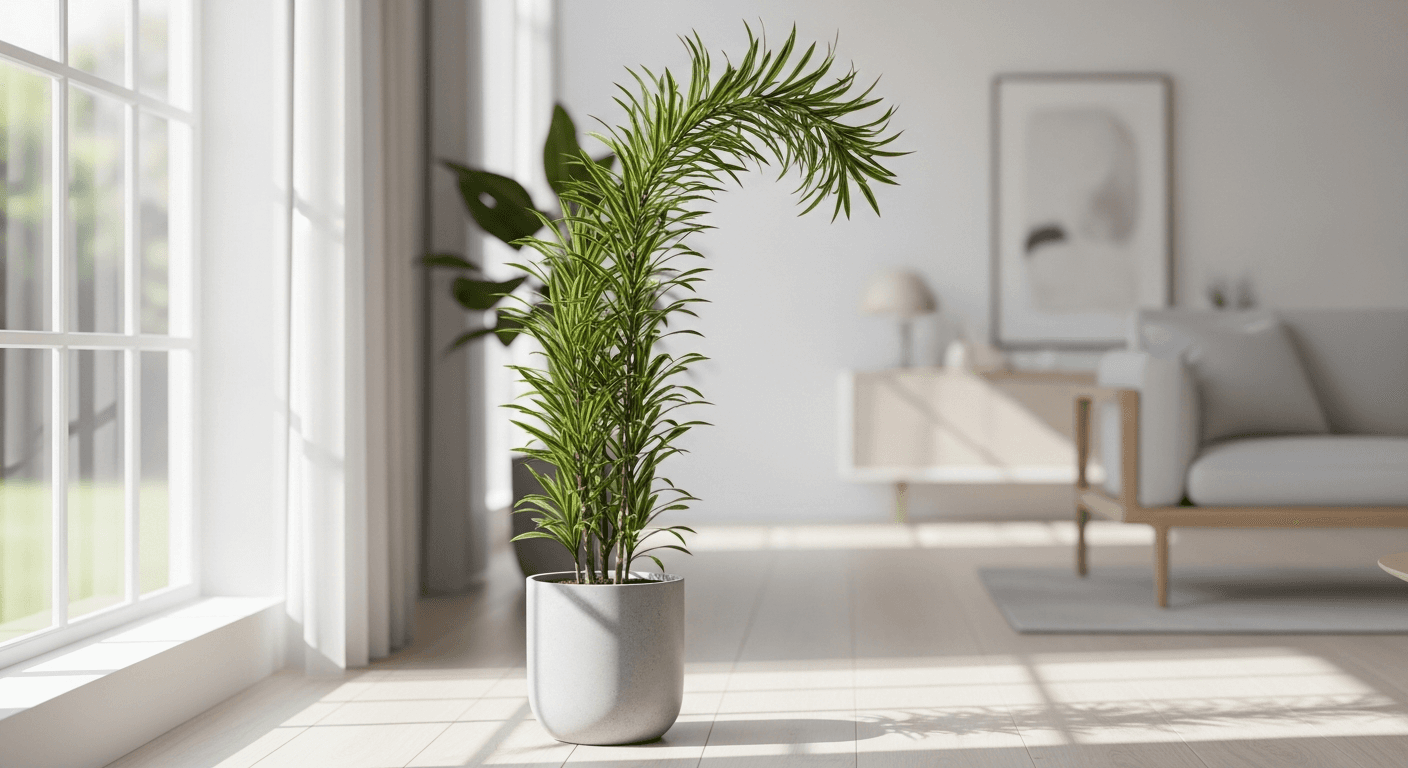
The Dracaena is one of the toughest and most elegant houseplants I know. Its thin, tufted leaves on tall stems bring a tropical feel, and it tolerates low light and missed waterings. It's ideal for anyone who wants a "tree" plant without the hassle. Here's everything to keep yours flawless, including the number-one reason for its brown tips.
Types of Dracaena
This genus includes very different classics with similar care:
- Marginata: thin green leaves with a red edge, on sinuous canes.
- Fragrans (corn plant): wide, corn-like leaves, often with a yellow central stripe.
- Lemon Lime: lime-green and cream stripes, very bright.
- Reflexa / 'Song of India': compact, with yellow margins.
Fun fact: botanically, the snake plant is now a Dracaena too, though its (more succulent) care is different.
Is your plant looking off and you are not sure why?
Free AI diagnosisBasic care, point by point
Light
| Light level | Result |
|---|---|
| Medium-bright indirect | Vivid color and healthy growth ✅ |
| Low light | Copes; slow growth, duller colors |
| Strong direct sun | Scorches the leaves |
Colorful varieties (lemon lime, corn plant) show best with good light; in low light new leaves come out greener. It's a good choice for low-light corners, though it appreciates bright indirect light.
Watering
Water when the top 1-2 inches of soil are dry. It's very sensitive to overwatering (rotting roots): better slightly dry than soggy. In winter, water much less. Go by the finger test, not the calendar (see the watering guide).
Water: the cause of brown tips
This is the Dracaena's most typical problem. It's very sensitive to fluoride, chlorine and salts in tap water, which build up and burn the leaf tips. If you have constant brown tips:
- Use water rested 24 hours, filtered or rainwater.
- Water thoroughly now and then to flush the salts accumulated in the soil.
Humidity, temperature and feeding
It tolerates normal household humidity, though it appreciates a little extra (fewer brown tips). Keep it between 65 and 80 °F (18-27 °C), away from cold drafts. Feed at half strength every 4-6 weeks in spring-summer.
How to prune it and shape it
One of its best features: if it grows too tall or loses its lower leaves (normal with age), cut the cane at the height you want with a saw or strong shears. It'll sprout just below the cut, forming one or several new heads, and the plant gets bushier. You can also root the cut piece.
Propagation (very easy from cuttings)
- Cut a cane segment 6-8 inches long.
- Put it in water or damp soil (keeping the orientation: the end that was down, down).
- In several weeks it roots and sprouts. More methods in how to propagate plants.
Quick care table
| Care | Dracaena |
|---|---|
| Light | Medium-bright indirect; tolerates low |
| Water | When dry (1-2 in) |
| Water type | Fluoride/chlorine-free (brown tips) |
| Difficulty | Very easy |
| Pets | Toxic if eaten |
Common problems
| Symptom | Likely cause | Fix |
|---|---|---|
| Brown tips | Fluoride/chlorine/salts or dry air | Rested/filtered water; flush the soil |
| Soft yellow leaves | Overwatering | Let it dry; check drainage |
| Lower leaves dropping | Normal with age | If many, check light and watering |
| Brown leaf spots | Direct sun or erratic watering | Move off sun; water regularly |
| Dull colors (varieties) | Too little light | More indirect light |
Is it toxic?
Yes, the Dracaena is toxic to dogs and cats if chewed (causes vomiting and drooling; it can be more pronounced in cats). Keep it out of reach; if you have pets, see pet-friendly options like the spider plant.
With medium light, sparse watering and fluoride-free water, the Dracaena will last you years, flawless and elegant. Yours with ugly tips? Try the AI diagnosis tool and we'll confirm the cause.
Related articles
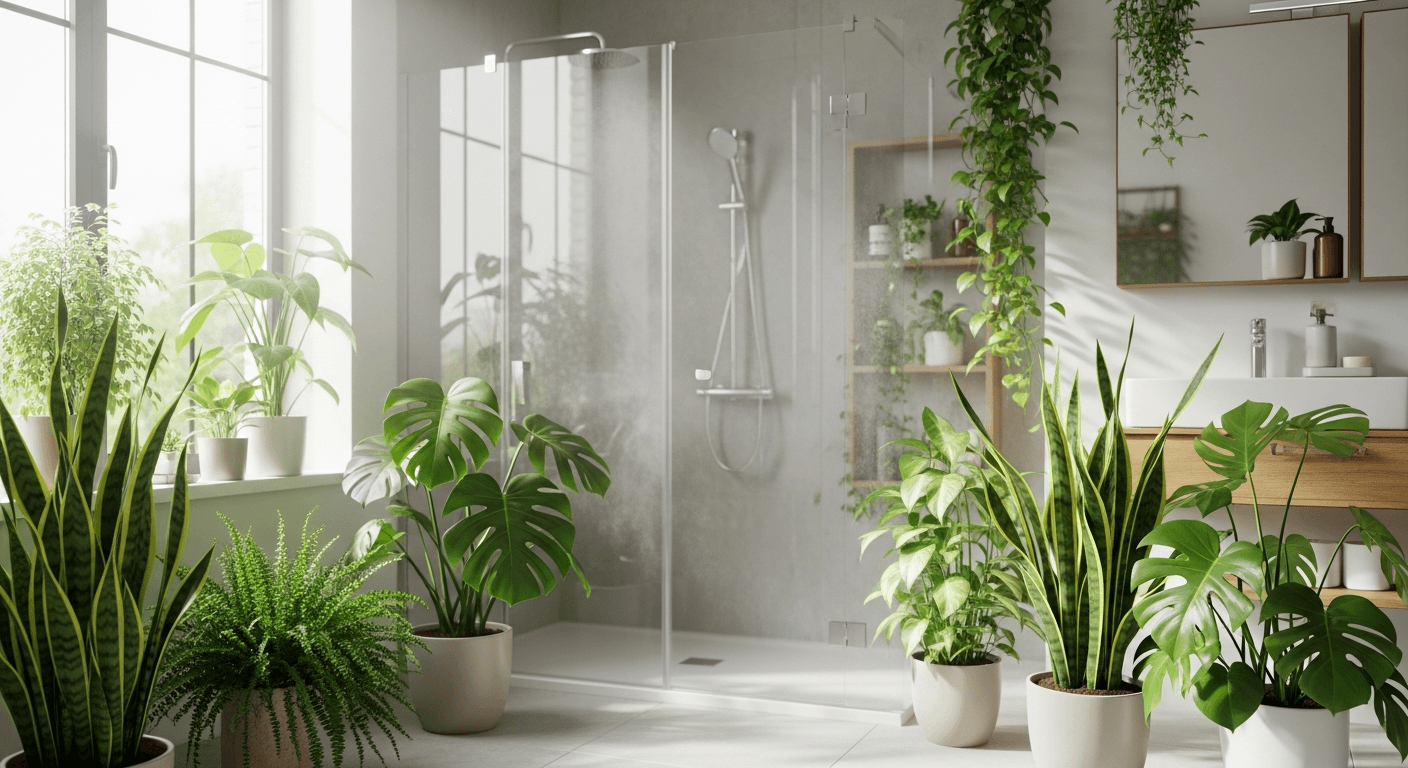
The Best Bathroom Plants (With or Without a Window)
Which plants thrive in a bathroom using the shower's humidity, which tolerate low light, and which to avoid with no window. A list with basic care tips.
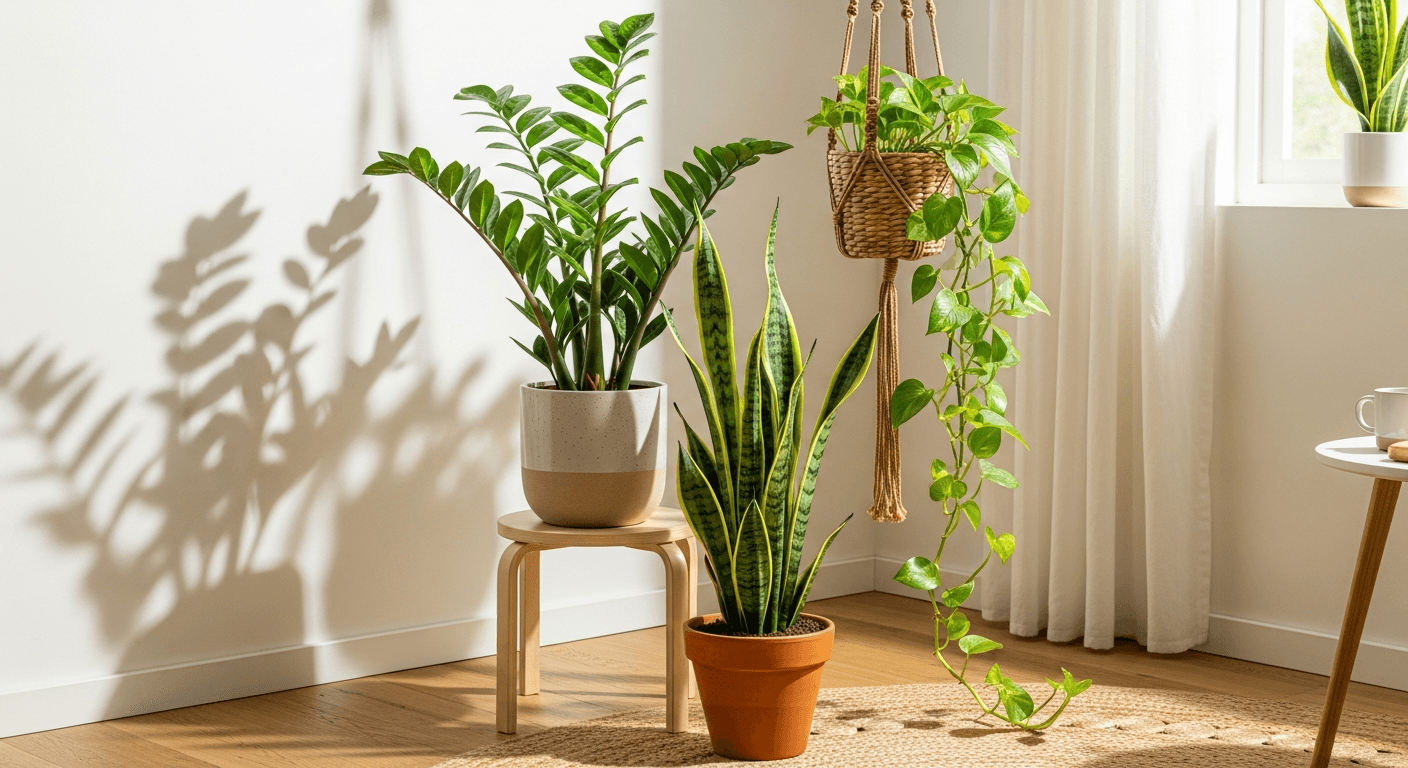
The Best Plants for Low-Light Indoor Spaces
Got a dark flat or a room with no sun? These plants thrive in low light. A list with their care and the tricks to keep them alive where others die.
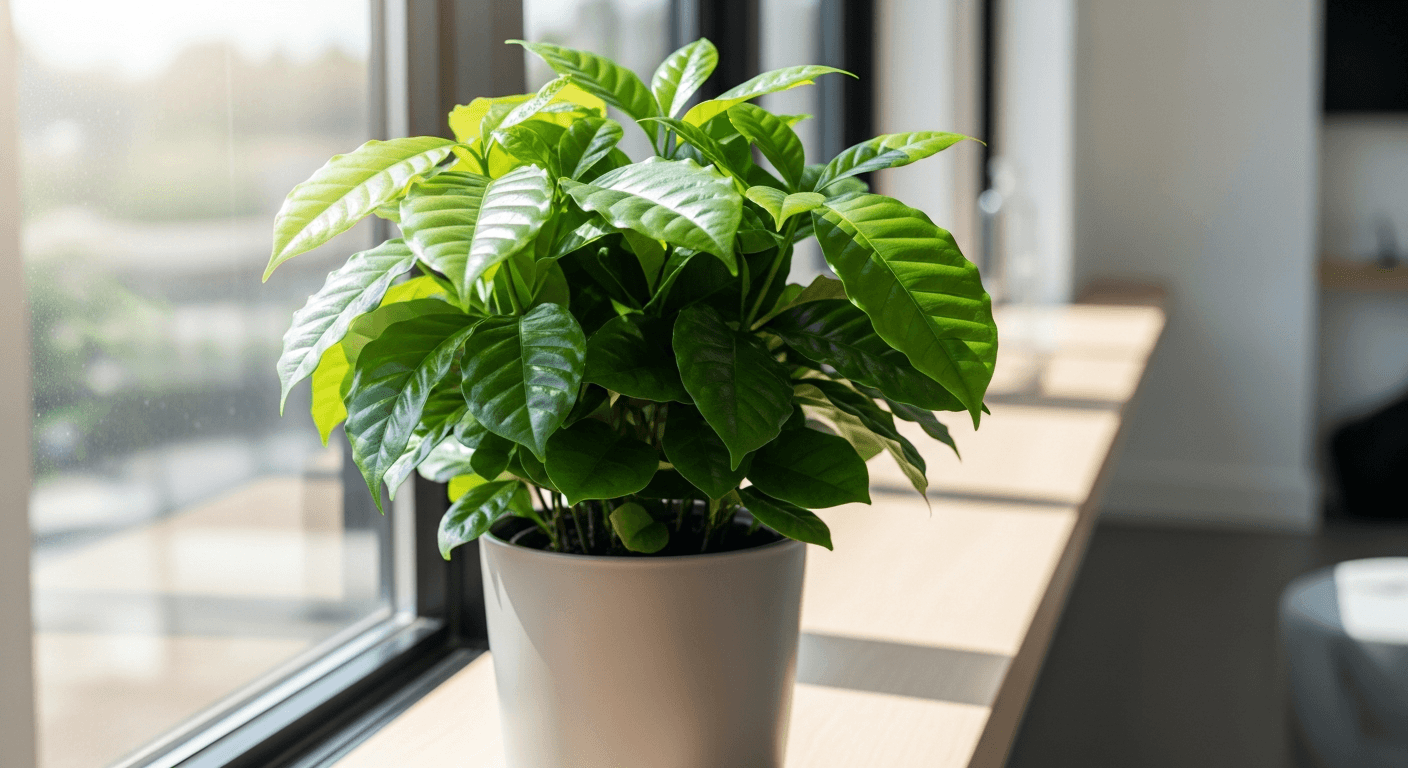
Coffee Plant Care: Growing Coffea at Home
Coffee plant (Coffea arabica) care as a houseplant: bright indirect light, humidity, watering, and whether you can really harvest your own coffee beans.
Trouble with your plant?
AI diagnosis