Plants That Actually Enjoy Bathroom Steam and Humidity
Which plants thrive in a bathroom using the shower's humidity, which tolerate low light, and which to avoid with no window. A list with basic care tips.
In this article
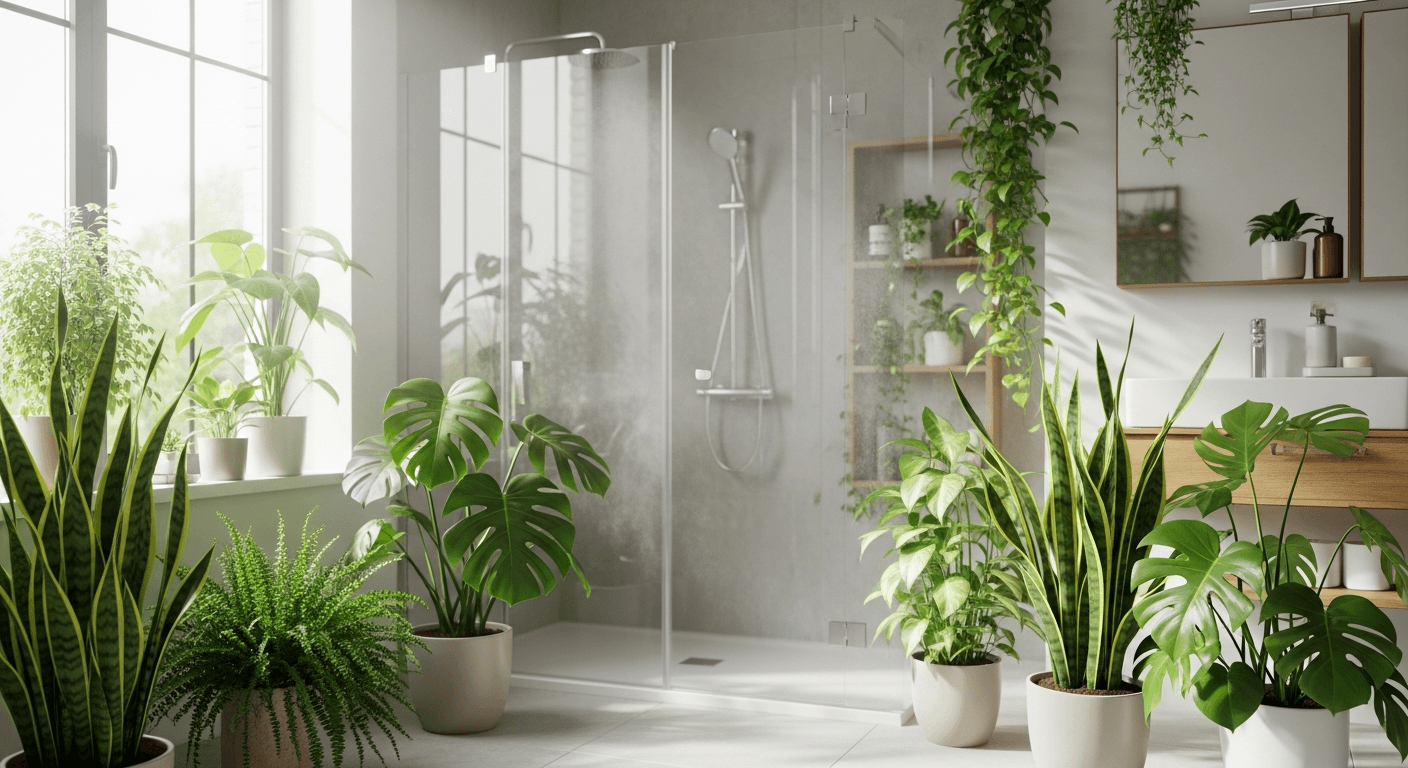
The first time I moved a sad, crispy-edged fern from my dry living room into the bathroom, it perked up within two weeks. That was the moment I understood something most plant guides bury: the bathroom is quietly one of the best rooms in the house for tropical plants. The shower throws off the ambient humidity that jungle plants crave and that is genuinely hard to maintain anywhere else without a humidifier running all day. The catch is almost always light, not water. Get the light question right and the rest is easy. Here is exactly which plants to pick, how bright your bathroom really needs to be, and how to keep them happy long-term.
Why (some) plants love the bathroom
Three things make a bathroom a tiny indoor greenhouse:
- High humidity. Every shower spikes the moisture in the air, recreating the steamy understory most houseplants come from. That extra humidity is what stops the brown, papery leaf tips you get from dry indoor air. If you have fought brown tips before, my humidity for plants guide explains why they happen and how the bathroom solves it.
- Steady, warm temperature. Bathrooms tend to be one of the most thermally stable rooms in the house. Tropicals hate cold drafts and sudden swings, so a room that stays a consistent 18-24 C (65-75 F) suits them well.
- The honest catch. Many bathrooms have a small frosted window, a north-facing window, or no window at all. Low light is the single factor that rules most plants out, so it has to drive every choice you make.
It helps to know that humidity and light are completely separate needs. A plant can love your bathroom's air and still slowly starve for lack of light. That is the trap, and it is why so many "great bathroom plants" lists fail people.
Is your plant looking off and you are not sure why?
Free AI diagnosisHow much light does your bathroom actually have?
Before you buy anything, figure out your real light level. The quickest test is the shadow test: at midday, hold your hand a foot above a surface near where the plant will live.
| Shadow you see | Light level | What it means |
|---|---|---|
| Sharp, crisp-edged shadow | Bright | Almost anything will work; even some flowering plants |
| Soft shadow with fuzzy edges | Medium / indirect | The sweet spot for most foliage tropicals |
| Faint, barely-there shadow | Low | Stick to the toughest shade plants below |
| No shadow at all | Too dark | No plant survives here without a grow light or rotation |
A second honest gut-check: if you could not comfortably read a paperback there during the day, it is too dark for a living plant. Frosted glass cuts a surprising amount of light, and a window blocked by the shower curtain or a neighboring wall counts for very little. When in doubt, assume your bathroom is one step darker than it looks. For the full picture on reading a room, see indoor plant light.
The best plants for a bathroom with some light
If you have a window with medium or indirect light, you can grow the genuinely good stuff. These are the plants that not only tolerate the bathroom but actively thrive on its humidity.
| Plant | Why it fits | Light it needs |
|---|---|---|
| Boston fern | Loves humidity; the bathroom is its ideal home and fixes the brown fronds it gets elsewhere | Medium, indirect |
| Calathea | A famously fussy tropical that hates dry air; it sulks far less in a humid bathroom | Medium, indirect; no direct sun |
| Pothos | Trails beautifully, tolerates low light, and forgives the odd missed watering | Low to bright |
| Peace lily | Takes shade, flowers indoors, and drinks up the humid air; its leaves tell you when it is thirsty | Low to medium |
| Orchid (Phalaenopsis) | Epiphytic by nature, so bathroom humidity around its roots suits it perfectly | Medium, bright indirect |
| Fittonia (nerve plant) | A drama queen that collapses in dry air but stays lush and crisp in bathroom humidity | Low to medium |
A few practical notes on this group:
- Boston ferns are the classic bathroom plant for a reason, but they want their soil kept lightly moist, never bone dry. The bathroom's humidity buys you time between waterings; it does not mean the roots can dry out completely.
- Calatheas and fittonias are the two that most reward a humid room. People struggle with them in living rooms precisely because of dry air, so the bathroom is where they finally behave.
- Phalaenopsis orchids love a bright bathroom window. The steamy air mimics the tree canopy they grow on in the wild, and you will often see healthier aerial roots than in a dry room.
For bathrooms with very little light or no window
A dark bathroom is not a dealbreaker; it just narrows the list to the truly shade-tolerant survivors.
- Snake plant (Sansevieria): about as close to indestructible as houseplants get. It handles dark corners, stores water in its thick leaves, and asks for almost nothing.
- ZZ plant (Zamioculcas): stores water in potato-like rhizomes and shrugs off low light. Let it dry out fully between waterings.
- Pothos: the all-rounder again, because it genuinely survives almost anywhere and tells you when it is thirsty by going limp.
Even these tough plants need some light to photosynthesize. Low light is not the same as darkness. A windowless bathroom with the door usually closed and only artificial light when someone is in there is, from a plant's point of view, a dark closet. You have two good fixes:
- Rotate them. Keep two of the same plant and swap them every week or two, one doing a "spa shift" in the bathroom while the other recharges in a bright room. This is the cheapest, most reliable solution for a windowless bathroom.
- Add an LED grow light on a timer. A small clip-on or strip light running 10-12 hours a day turns a dark bathroom into a viable home for almost any of the plants above. My grow lights guide covers what to actually buy and how to position it, and low light plants digs deeper into the tolerant species.
Watering and care in a humid room
The single biggest mistake people make with bathroom plants is watering them on their normal schedule. The humid air slows evaporation, so the soil stays wet far longer than it would in a dry room. Water on a calendar and you will drown them.
- Always check before watering. Push a finger 2-3 cm (about an inch) into the soil. If it feels cool and damp, wait. For most bathroom foliage plants, you will water noticeably less often than the same plant elsewhere in the house. Overwatering is by far the biggest killer here, and if you are not sure which way your plant is suffering, overwatering vs underwatering walks through the telltale signs.
- Use pots with drainage holes. This matters even more in a humid room, where excess water has nowhere to evaporate to. Never let a pot sit in a saucer of standing water.
- Ventilate after every shower. Humidity is the goal, but air that never moves is how fungus gets started. Crack the window or run the extractor fan for 15-20 minutes after a hot shower. Stagnant, constantly wet air invites powdery mildew and leaf spot on susceptible plants.
- Rotate the pot a quarter-turn every week or two so the plant grows evenly toward its light source instead of leaning and going lopsided.
- Wipe the leaves. Shower steam carries soap, hairspray, and limescale that settle on foliage and slowly block the pores the plant breathes through. A quick wipe with a damp cloth every couple of weeks keeps leaves clean and glossy; the cleaning leaves guide has the full method.
- Skip the misting. Misting is largely pointless in a bathroom; the room is already doing that job for you. Save your effort.
A quick symptom troubleshooter
| Symptom | Likely cause | Fix |
|---|---|---|
| Yellowing lower leaves, soggy soil | Overwatering | Let soil dry more; check drainage; repot if roots smell sour |
| Brown crispy tips despite humidity | Soft water salts, or roots too dry | Flush soil with water; check you are not under-watering |
| Pale, leggy, stretching growth | Not enough light | Move to brighter spot, rotate out, or add a grow light |
| White powdery patches on leaves | Powdery mildew from stagnant air | Improve airflow after showers; treat affected leaves |
| Mushy stems at the soil line | Rot from constant wetness | Cut back watering immediately; ensure the room ventilates |
What to avoid
Some plants simply do not belong in a bathroom no matter how lovely they look on the shelf.
- Cacti and succulents. They are built for dry air and blazing sun. Bathroom humidity plus low light is a recipe for soft, rotting tissue. Keep them on a sunny windowsill instead.
- Full-sun flowering plants. Geraniums, most herbs, and sun-lovers will stretch, pale, and refuse to bloom in a dim, humid room.
- Anything in a pot with no drainage. In a humid bathroom, a pot without a hole is a swamp. If you love a particular decorative pot, use it as a cachepot with a draining nursery pot tucked inside.
And the honest bottom line on windowless bathrooms: be realistic. With no natural light at all, your only real options are the rotation method or a grow light. There is no houseplant that lives forever in true darkness, and pretending otherwise just costs you a plant.
Putting it together
Pick a plant that matches your light, lean on the bathroom's free humidity, water less than your instincts tell you, and ventilate after showers. Do those four things and the bathroom becomes the greenest, most lush corner of your home, the one room where the fussy tropicals finally relax. If you want more ideas for tricky rooms, the same principles apply in my bedroom plants guide.
And if a bathroom plant starts throwing brown tips, yellow leaves, or spots and you cannot tell whether it is water, light, or something fungal, do not guess. Snap a photo and run it through the AI diagnosis tool; catching the cause early is what saves the plant.
Related articles
The Best Plants for Low-Light Indoor Spaces
Got a dark flat or a room with no sun? These plants thrive in low light. A list with their care and the tricks to keep them alive where others die.
Dracaena: Care for the Almost Indestructible Houseplant
Dracaena care (marginata, fragrans, lemon lime): light, watering, why it gets brown tips and how to prune it. Tough, elegant and low-water.
Fast-Growing Houseplants (Rewarding Results Fast)
The best fast-growing houseplants: pothos, tradescantia, spider plant and philodendron. How to speed up growth with light, feeding and timely repotting.
Trouble with your plant?
AI diagnosis