Houseplants That Grow Fast Enough to Notice
The best fast-growing houseplants: pothos, tradescantia, spider plant and philodendron. How to speed up growth with light, feeding and timely repotting.
In this article
- What "fast-growing" actually means indoors
- The fastest (and nearly indestructible)
- Other vigorous plants
- How to actually speed up growth
- 1. Light is the engine — and almost always the bottleneck
- 2. Work with the growing season, not against it
- 3. Feed in moderation during the active season
- 4. Give the roots room before they get strangled
- 5. Remove stress: watering and humidity
- Multiply the fast growers for free
- Troubleshooting: my fast plant has stalled
- What NOT to expect to be fast
- The downside of speed (and how to manage it)
- A simple in-season routine
When I killed my first three plants in a row, the thing that kept me going wasn't a pep talk — it was a single pothos cutting that put out a new leaf the same week I rooted it. Visible progress is the best teacher in the world, and fast growers hand it to you on a plate. If you want plants that reward attention quickly, multiply themselves for free, and forgive the beginner mistakes we all make, this is the shortlist I'd give a friend — plus the specific levers that turn a quick plant into a fast one.
Below you'll find the plants worth starting with, real numbers for how fast each one moves, the four things that actually control growth speed, and a troubleshooting section for when a plant that should be racing has stalled.
What "fast-growing" actually means indoors
A houseplant grows fast when three things line up: bright light, warm roots, and no stress holding it back. Indoors, most of the "speed" you can unlock comes from light — more on that below — but it helps to set expectations first.
A genuinely vigorous trailing plant can add 6 to 12 inches of vine per month in summer under good light. A spider plant can throw out a flowering runner with babies in a matter of weeks. By contrast, a snake plant might push one or two new leaves all year and still be perfectly healthy. Neither is broken; they're just built differently. Knowing which camp your plant sits in saves you from "fixing" a plant that was never going to sprint.
| Plant | Typical summer pace | Easiest way to propagate | Light it wants |
|---|---|---|---|
| Pothos | Fast: 6-12 in of vine/month | Water cuttings, roots in 1-2 weeks | Bright indirect (tolerates medium) |
| Tradescantia | Very fast, almost weekly | Water or soil cuttings, days to root | Bright indirect (needs it for color) |
| Spider plant | Fast, runners in weeks | Pot up the plantlets | Bright indirect; medium OK |
| Climbing philodendron | Fast and steady | Water cuttings | Medium to bright indirect |
| Syngonium | Fast, fills a pot quickly | Water or soil cuttings | Medium to bright indirect |
Is your plant looking off and you are not sure why?
Free AI diagnosisThe fastest (and nearly indestructible)
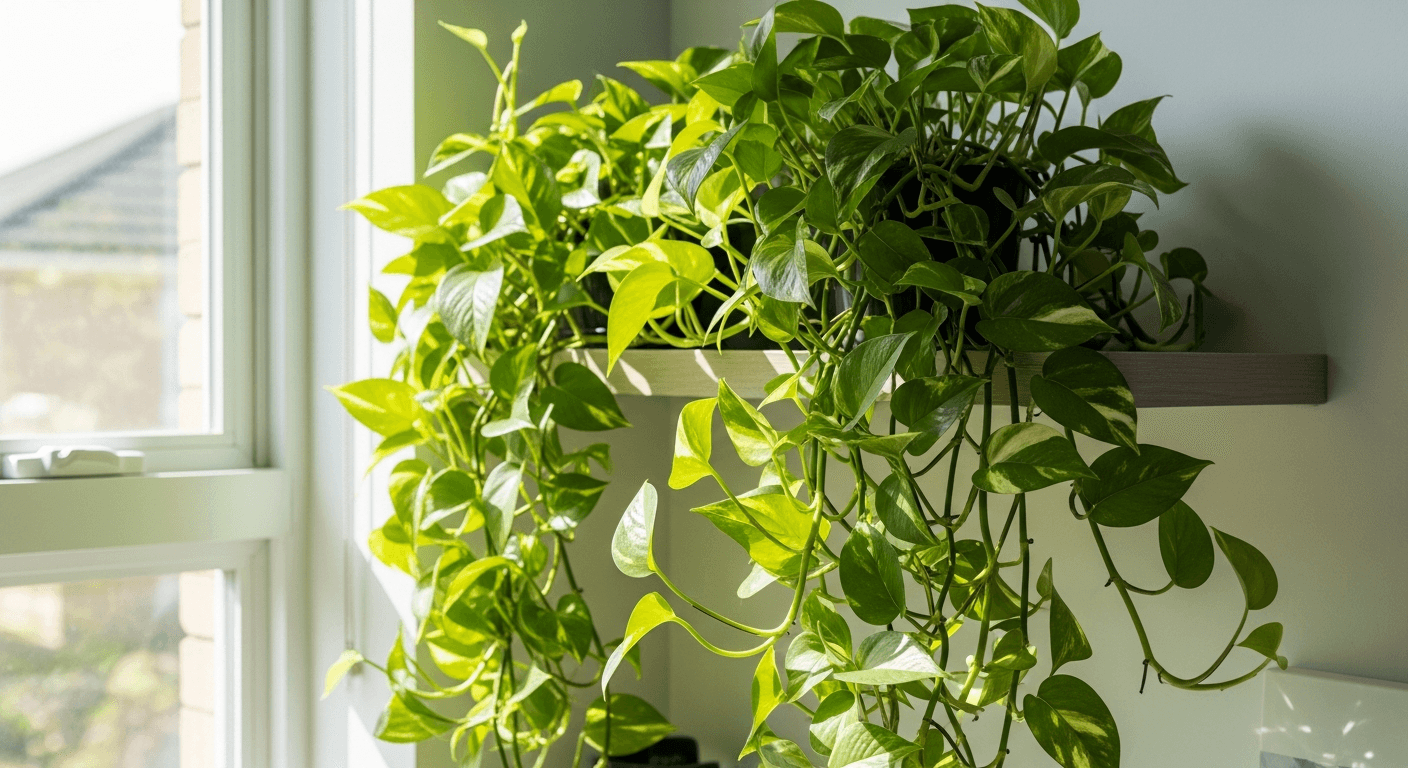
- Pothos (Epipremnum): the outright champion. It throws out yards of vine a year and roots in a glass of water in days. It's my favorite plant to put in a beginner's hands because it tells you exactly what it needs — droopy means thirsty, pale new leaves mean more light. The full deep-dive is in our pothos guide.
- Tradescantia: grows before your eyes and propagates effortlessly — a snapped-off piece will often root faster than anything else you own. Its purple and silver tones are stunning, but only in good light; in a dim corner it fades to plain green and goes leggy. See the tradescantia care notes for keeping that color.
- Spider plant (Chlorophytum): sends out arching runners tipped with "babies" you can pot up or root in water. One healthy mother plant can hand you a dozen new plants a year. The full routine is in our spider plant guide.
- Climbing philodendron: fast, leafy and very forgiving — it shrugs off the occasional missed watering and keeps climbing. Details in the philodendron guide.
Other vigorous plants
- Syngonium (arrowhead plant): grows quickly and fills a pot fast, with arrow-shaped leaves that shift shape as the plant matures. Pinch it back to keep it bushy — our syngonium guide covers the technique.
- Ivy: a speedy climber that will cover any corner you let it reach. It's vigorous to the point of needing a haircut, so keep scissors handy.
- Asparagus fern: turns lush and feathery in a single season and fills out faster than most "real" ferns. It's thirstier than the trailers above; the asparagus fern guide has the watering details.
How to actually speed up growth
A fast plant gets faster when you remove whatever is limiting it. In order of impact, here's where to put your effort.
1. Light is the engine — and almost always the bottleneck
Light is the single biggest lever, full stop. Photosynthesis is the fuel for every new leaf, so a plant in dim light simply cannot grow quickly no matter how perfectly you water or feed it. Move that same plant within a few feet of a bright window and the difference shows up in two to three weeks.
What "bright indirect" means in practice: a spot where, on a sunny day, you could read a book comfortably without a lamp, but where the plant isn't sitting in a beam of direct midday sun. An east window is ideal for most of these; a north window is the dimmest and will slow everything down. If your home is genuinely dark, a grow light closes the gap — our grow lights guide explains how to choose one, and the indoor plant light primer helps you read the light you already have.
A quick test: if new leaves are coming out smaller than the old ones, or the gaps between leaves (the internodes) are stretching long, the plant is reaching for light it can't find. That stretch is called etiolation, and it's the most common reason a "fast" plant looks disappointing.
2. Work with the growing season, not against it
These plants do their real growing in spring and summer, when days are long and warm. From roughly late autumn through winter they slow right down — that's normal and not a problem to solve. The practical rules for the off-season: stop fertilizing, water less often, and don't repot unless something is genuinely wrong. Pushing a plant in its dormant stretch usually backfires with soft, weak growth or root problems. Our plant care calendar maps out what to do month by month.
3. Feed in moderation during the active season
A fast grower is also a hungry one, and potting mix runs out of nutrients within a couple of months. During spring and summer, feed every 2 to 4 weeks with a balanced liquid fertilizer diluted to half the label strength. Half strength, more often, beats full strength occasionally — too much fertilizer salt burns roots and shows up as crispy brown leaf edges. Always water the soil first if it's bone dry, then feed, so you're never pouring concentrated feed onto parched roots. The full method is in our how to fertilize plants guide.
A simple rule I follow: if growth has obviously stopped (winter, or a recently repotted plant settling in), hold the food. Fertilizer doesn't cause growth; it only supports growth that light is already driving.
4. Give the roots room before they get strangled
A root-bound plant slows down because its roots have nowhere left to go. Tip the plant out of its pot and look: if you see a dense mat of roots circling the bottom, or roots escaping the drainage holes, it's time to move up. Choose a pot just 1 to 2 inches wider in diameter — no more. Oversizing tempts you into a soggy mess of unused wet soil, which invites rot. The best time is early spring, right as growth wakes up. Our how to repot a plant guide walks through it step by step, and a fresh, airy mix (see potting soil) gives the new roots something to work with.
5. Remove stress: watering and humidity
Stress brakes growth. The most common stressor is inconsistent watering — alternating between waterlogged and bone-dry. For these trailing tropicals, water thoroughly when the top inch or two of soil is dry, let the excess drain away completely, and never leave the pot sitting in a saucer of water. Most of them appreciate some ambient humidity too; a room that's comfortable for you is usually fine, but very dry winter air with the heating on can crisp the leaf tips.
Multiply the fast growers for free
The real joy of these plants is how easily they propagate. A cutting of pothos, tradescantia, philodendron or syngonium will root in a glass of water in a few weeks — no special equipment, just a snip below a node and a clean jar of water on a bright sill. Spider plants are even simpler: pin a baby down onto a small pot of soil while it's still attached to the runner, and it roots itself.
This is where fast growers pay you back. One plant becomes three, then a dozen, then gifts for friends. Our how to propagate plants guide covers water versus soil rooting and how to avoid the one or two ways cuttings rot instead of root.
Troubleshooting: my fast plant has stalled
When a plant that should be sprinting isn't, run through this before assuming it's sick.
| Symptom | Likely cause | Fix |
|---|---|---|
| Long gaps between leaves, leaning toward window | Not enough light | Move closer to a bright window or add a grow light |
| New leaves smaller and paler than old ones | Low light or spent soil | Brighten the spot; resume half-strength feeding |
| No new growth at all in summer | Root-bound or dormant from stress | Check roots; repot up one size if circling |
| Crispy brown leaf edges | Over-fertilizing or very dry air | Flush the soil with water; dilute feed; raise humidity |
| Yellowing lower leaves, soil stays wet | Overwatering | Let soil dry to 2 in; check drainage |
| Leggy, sparse, "bald" base | Etiolation from low light, no pruning | Brighten and prune back to force bushy regrowth |
That last one is worth its own note. If your plant has gone thin and leggy, more light is the cure, but a hard prune helps too — cutting a vine back just above a node forces it to branch and fill out. Our guide on leggy plants digs into why it happens and how to recover, and pruning houseplants shows where to make the cut.
What NOT to expect to be fast
To save yourself frustration, know that not every plant is a sprinter — and a slow plant is not a sick plant. Some of the most loved houseplants grow slowly by nature:
- Snake plant and ZZ: extremely slow, but nearly indestructible. A handful of new leaves a year is a good year.
- Cactus and most succulents: they grow at their own unhurried pace and resent being pushed.
- Indoor palms: push out only a few fronds a season.
If you want quick wins, start at the top of this guide and save the slow growers for once you've built up a bit of gardener's patience.
The downside of speed (and how to manage it)
Fast growth has a flip side that's easy to forget when you're celebrating new leaves:
- They need regular pruning to stay full rather than leggy or invasive. Plan on tidying trailers every couple of months in summer.
- They exhaust soil and pots sooner. Feed on schedule and repot in good time, or growth quietly grinds to a halt.
- Some get aggressive. Ivy and tradescantia in particular will sprawl across a shelf or root wherever a vine touches soil. Keep them in check, and never plant a vigorous ivy where it can escape outdoors.
None of this is a reason to avoid them — it's just the price of a plant that grows fast enough to notice.
A simple in-season routine
Put it all together and the ideal spring-summer routine looks like this:
- Bright indirect light — the closer to a good window, the faster.
- Check watering once or twice a week; water when the top inch or two is dry, then let it drain fully.
- Feed every 2-4 weeks with fertilizer at half strength.
- Glance at the roots each spring and pot up one size if they're circling.
- Pinch and prune every couple of months to keep growth bushy.
Follow that and a genuine fast grower can double in size in a single season — and hand you a stack of cuttings on the way.
Is your plant growing leggy, pale or stalled despite all this? Snap a photo and upload it to our AI diagnosis tool — it's how I now catch a problem in week one instead of week six, and it'll help you pin down exactly what yours is missing. 🌱
Related articles
The 12 Best Indoor Plants for Beginners
Starting out with plants? These 12 are nearly impossible to kill: tough, forgiving and pretty. With light, water, toxicity and the habits that actually kill them.
The Best Plants for the Kitchen (and Where to Put Them)
The best plants for the kitchen: easy herbs plus houseplants that tolerate humidity and low light. What to avoid near heat and how to care for them here.
The Best Air-Purifying Plants for Your Home
A list of the best air-purifying plants (snake plant, pothos, peace lily, spider plant, areca) with their care and a realistic note on how much they help.
Trouble with your plant?
AI diagnosis