Air-Cleaning Plants: What the Science Actually Shows
A list of the best air-purifying plants (snake plant, pothos, peace lily, spider plant, areca) with their care and a realistic note on how much they help.
In this article
- The realistic truth first
- The best candidates
- Snake plant (Sansevieria / Dracaena trifasciata)
- Pothos (Epipremnum aureum)
- Peace lily (Spathiphyllum)
- Spider plant (Chlorophytum comosum)
- Areca palm (Dypsis lutescens)
- Quick comparison
- How to actually get the most from them
- What they DON'T do
- Where to place them at home
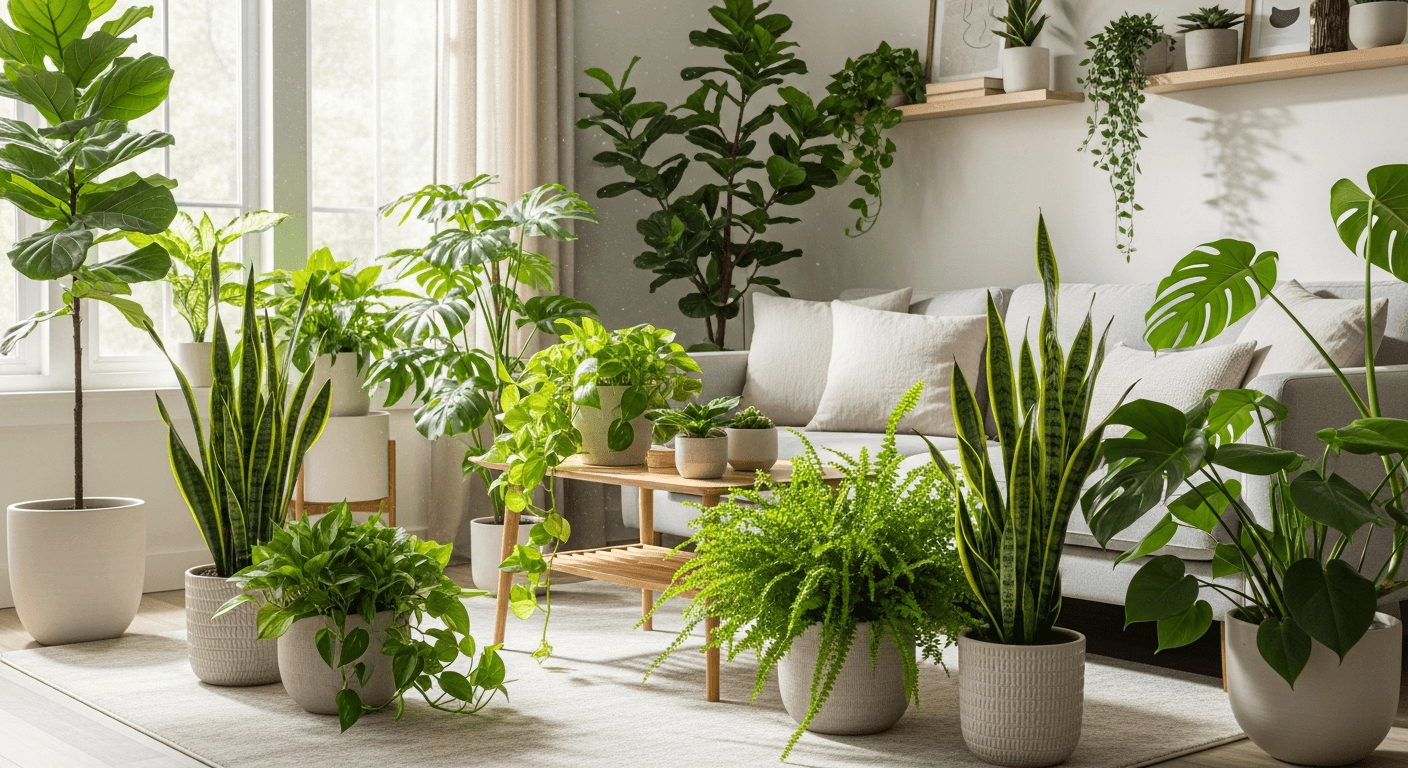
"Plants that clean the air in your home" is one of the most repeated claims on the internet, and it sits in a strange place: part truth, part marketing exaggeration. I fell for the bigger version of it years ago, lined a windowsill with greenery, and assumed I'd built myself a free air purifier. What I actually built was a lovely, calming corner that did almost nothing measurable to my air quality — and that's still a perfectly good reason to keep plants. Below are the best candidates, exactly how to care for them so they thrive, and an honest account of what to expect.
The realistic truth first
The famous study behind this whole idea was NASA's 1989 Clean Air Study, run in sealed laboratory chambers roughly the size of a small box — not a living room with doors, windows, furniture and constant air exchange. Inside those chambers, plants did break down volatile organic compounds (VOCs) like formaldehyde and benzene. The problem is scale. When researchers later did the math for real rooms, the conclusion was sobering: you'd need something like 10 to 100 plants per square meter to match the clean-air effect of simply opening a window for a few minutes.
That said, plants genuinely contribute in other ways. They add a little humidity through transpiration, release a small amount of oxygen, and — this part is well documented — reduce stress and make a space feel calmer and more pleasant to be in. So having them is a great idea. Just don't file them under "appliance."
Think of them as a wellbeing and decor bonus, not a plug-in air purifier.
If indoor air quality is a real concern for you (allergies, a stuffy apartment, a smoker in the house), the honest stack is: ventilate daily, run a HEPA filter if needed, and add plants on top for everything they're genuinely good at.
Is your plant looking off and you are not sure why?
Free AI diagnosisThe best candidates
These five are the classics for a reason — they're forgiving, widely available, and most of them tolerate the imperfect light of a typical home. I've ordered them roughly from "you cannot kill this" to "needs a little attention."
Snake plant (Sansevieria / Dracaena trifasciata)
Nearly indestructible, and one of the few houseplants that performs CAM photosynthesis, meaning it keeps its pores open at night and releases a trickle of oxygen after dark. That quirk is why it's a bedroom favorite. It tolerates low light and shrugs off forgotten watering — in fact, overwatering is the only reliable way to kill one. Care for it with our snake plant guide.
- Light: medium to bright indirect; copes surprisingly well with shade.
- Water: very little — let the soil dry out completely, then water sparingly. In winter, once a month is often plenty.
- Watch for: mushy, yellowing leaves at the base (classic overwatering and the start of root rot).
Pothos (Epipremnum aureum)
The easiest trailing plant there is. It grows in almost any light, forgives stretches of neglect, and roots in a glass of water within a couple of weeks — so one plant quickly becomes five. Perfect for beginners and for filling shelves and high spots.
- Light: indirect, medium to bright. Variegated types (golden, marble queen) need more light to keep their patterns; in deep shade they revert to plain green.
- Water: when the top 2–3 cm (about an inch) of soil is dry.
- Watch for: long bare stems with leaves only at the tips — that's a light problem, not a water one.
Peace lily (Spathiphyllum)
One of the few houseplants that reliably flowers indoors in modest light. Its best feature for forgetful waterers: it dramatically droops its whole canopy when thirsty, then perks back up within hours of a drink. Just don't let that become a routine — repeated wilting stresses the roots. Full care lives in our peace lily guide.
- Light: medium indirect. It survives low light but won't bloom there; brighter (still indirect) light brings the white spathes.
- Water: likes consistently slightly moist soil, never soggy. Use the droop as a backstop, not a schedule.
- Watch for: brown, crispy leaf tips — usually from tap-water minerals, low humidity, or letting it dry out too hard between waterings.
Spider plant (Chlorophytum comosum)
Tough, fast, prolific, and genuinely pet-safe — a rare combination. It sends out arching stems tipped with baby plantlets ("spiderettes") that you can snip and pot up for free plants all year. It's one of the most beginner-proof plants I recommend.
- Light: bright indirect is ideal; tolerates medium.
- Water: moderate; keep lightly moist but tolerant of the odd missed week.
- Watch for: brown tips, almost always from fluoride and chlorine in tap water. Switch to filtered or rainwater, or let tap water sit out overnight before using it.
Areca palm (Dypsis lutescens)
This is the one that brings tropical volume and a real sense of "jungle" to a room, and it's also pet-safe. It transpires generously, so a large, healthy specimen genuinely nudges up local humidity — useful in dry, heated apartments. It asks for a bit more attention than the others, mostly around consistent moisture and humidity.
- Light: bright indirect. Avoid harsh midday sun, which scorches the fronds.
- Water: keep the soil slightly moist; don't let it dry out completely, but never leave it standing in water.
- Watch for: browning frond tips (low humidity or dry soil) and spider mites in dry winter air.
Quick comparison
| Plant | Difficulty | Light | Water | Pet-safe | Standout trait |
|---|---|---|---|---|---|
| Snake plant | Very easy | Low–bright | Very low | No | Oxygen at night |
| Pothos | Very easy | Medium–bright | Low | No | Roots in water, fast |
| Peace lily | Easy | Medium indirect | Moderate | No | Flowers in low light |
| Spider plant | Very easy | Bright indirect | Moderate | Yes | Free baby plants |
| Areca palm | Medium | Bright indirect | Moderate–high | Yes | Adds humidity |
If you have curious pets, prioritise the spider plant and areca, and run through our pet-safe plants guide before adding the snake plant, pothos or peace lily, all of which are toxic if chewed.
How to actually get the most from them
You can't out-plant a closed window, but you can stack small wins so your greenery pulls its modest weight.
- Go for quantity and size. One small plant barely registers. A cluster of several per room — and especially a few large, broad-leaved specimens — moves more air and transpires more moisture than a row of tiny pots.
- Keep the leaves clean. A dust-coated leaf photosynthesizes and transpires worse, full stop. Wipe broad leaves every couple of weeks with a damp cloth; our leaf-cleaning guide covers the fuzzy-leaved ones that hate water on them.
- Match the plant to the light you have. A plant struggling in the wrong spot does very little of anything. If you're not sure how bright a corner really is, our indoor light guide walks through reading it without a meter, and the low-light plants guide lists what actually copes with dim rooms.
- Lean into humidity. If dry air is your real complaint, that's the effect plants deliver most reliably — group them together and pair them with the tactics in our humidity guide.
- Ventilate anyway. The best purifier in your home is still a window opened daily, ideally cross-ventilated for a few minutes.
What they DON'T do
It's worth being blunt here, because the myths set people up for disappointment:
- They don't noticeably clear cigarette smoke or strong cooking odours from a room.
- They don't replace a HEPA-filter purifier if you have allergies or asthma.
- They don't "absorb" radiation, EMF or Wi-Fi from your electronics — that one is pure myth.
- A single plant in the corner is not measurably changing your air; the wellbeing effect, though, is real even with one.
Where to place them at home
Spread your plants through the rooms where you actually spend time — the living room and the bedroom first. The snake plant is the bedside classic precisely because of its night-time oxygen quirk, and there's more on building a good sleep-room setup in our bedroom plants guide. In kitchens and bathrooms, where humidity runs higher and light is sometimes low, pothos and ferns like the Boston fern thrive — see the Boston fern guide if you want one that loves a steamy bathroom.
Avoid the temptation to pile everything into one dark corner for the look of it. One healthy, well-lit plant genuinely outperforms ten struggling in the shade, both for your air and for your sanity as a grower. And if you want a visible humidity effect, choose large, broad-leaved specimens over a scatter of small ones.
Fill your home with green for what it really offers — calm, a little humidity, and a lot of beauty — and treat the marginally fresher air as the pleasant bonus it is. If one of your "purifiers" is looking rough — yellowing, crisping, drooping in a way that doesn't bounce back — don't guess. Snap a photo and run it through our AI diagnosis tool, and you'll usually catch the real problem (almost always watering or light) while it's still fixable.
Related articles
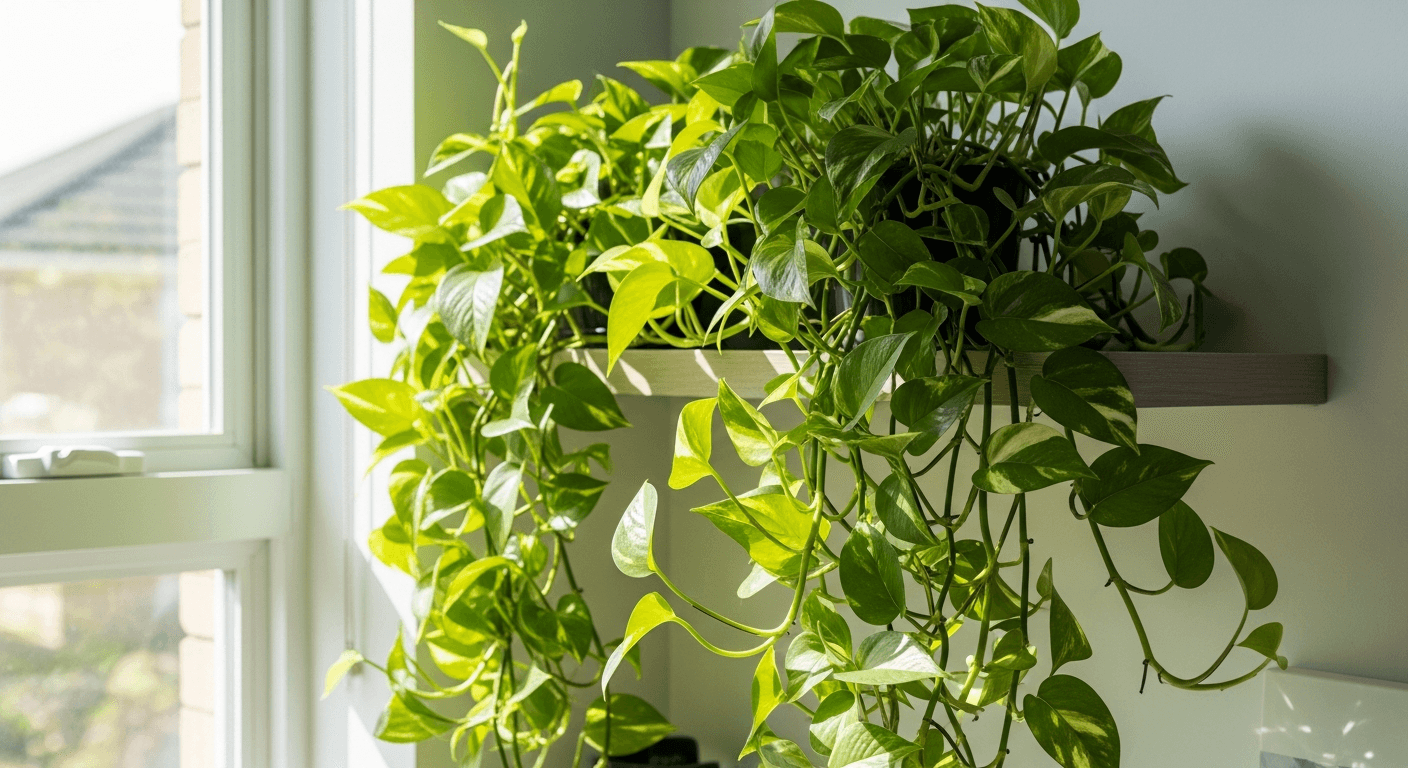
Fast-Growing Houseplants (Rewarding Results Fast)
The best fast-growing houseplants: pothos, tradescantia, spider plant and philodendron. How to speed up growth with light, feeding and timely repotting.
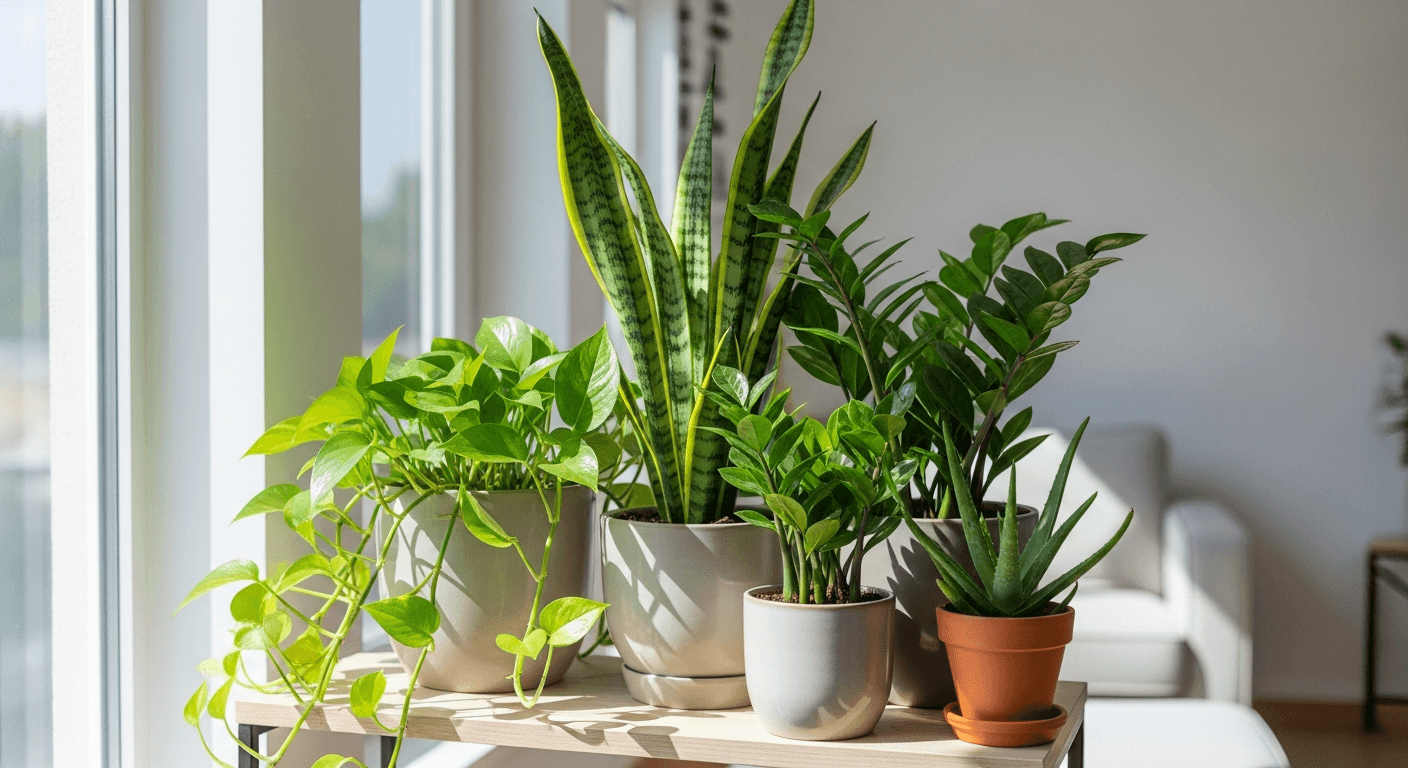
The 12 Best Indoor Plants for Beginners
Starting out with plants? These 12 are nearly impossible to kill: tough, forgiving and pretty. With light, water, toxicity and the habits that actually kill them.
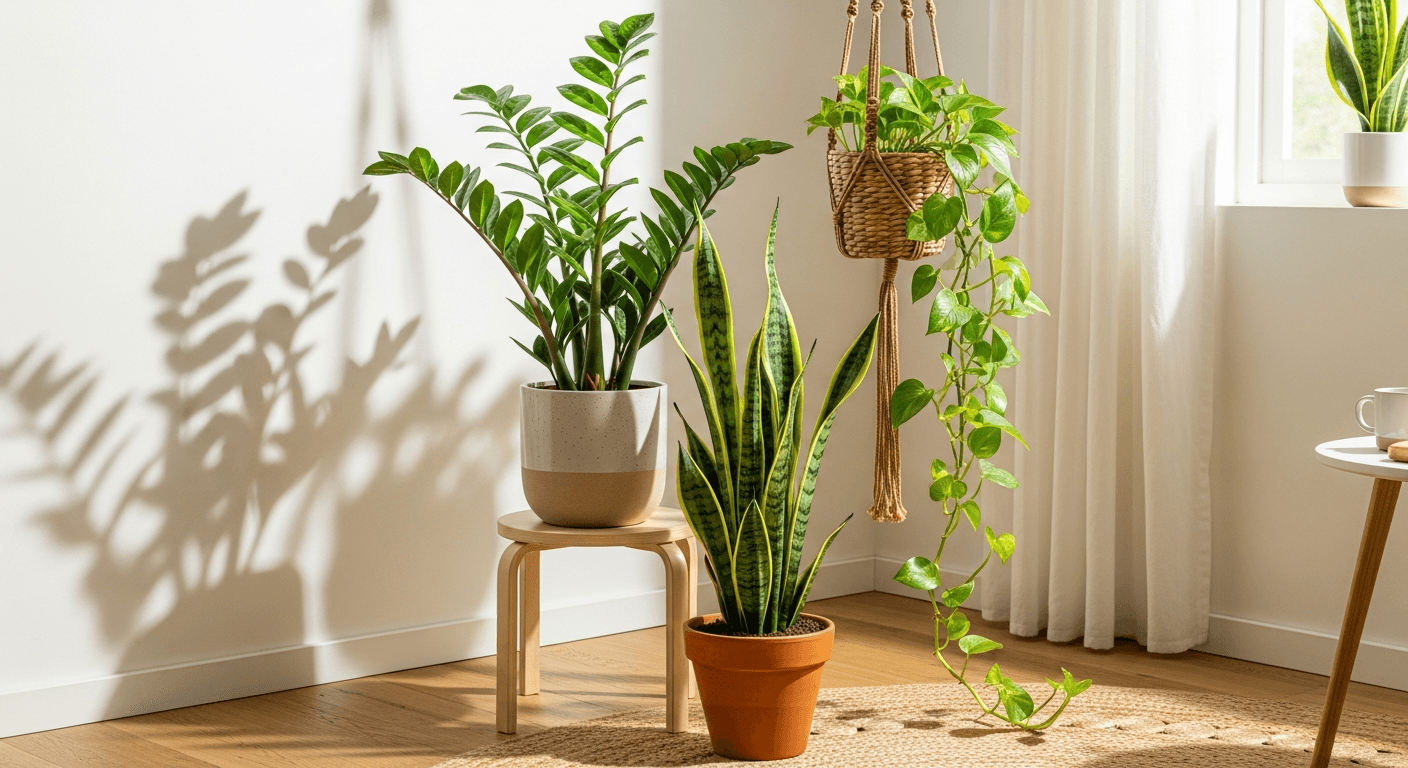
The Best Plants for Low-Light Indoor Spaces
Got a dark flat or a room with no sun? These plants thrive in low light. A list with their care and the tricks to keep them alive where others die.
Trouble with your plant?
AI diagnosis