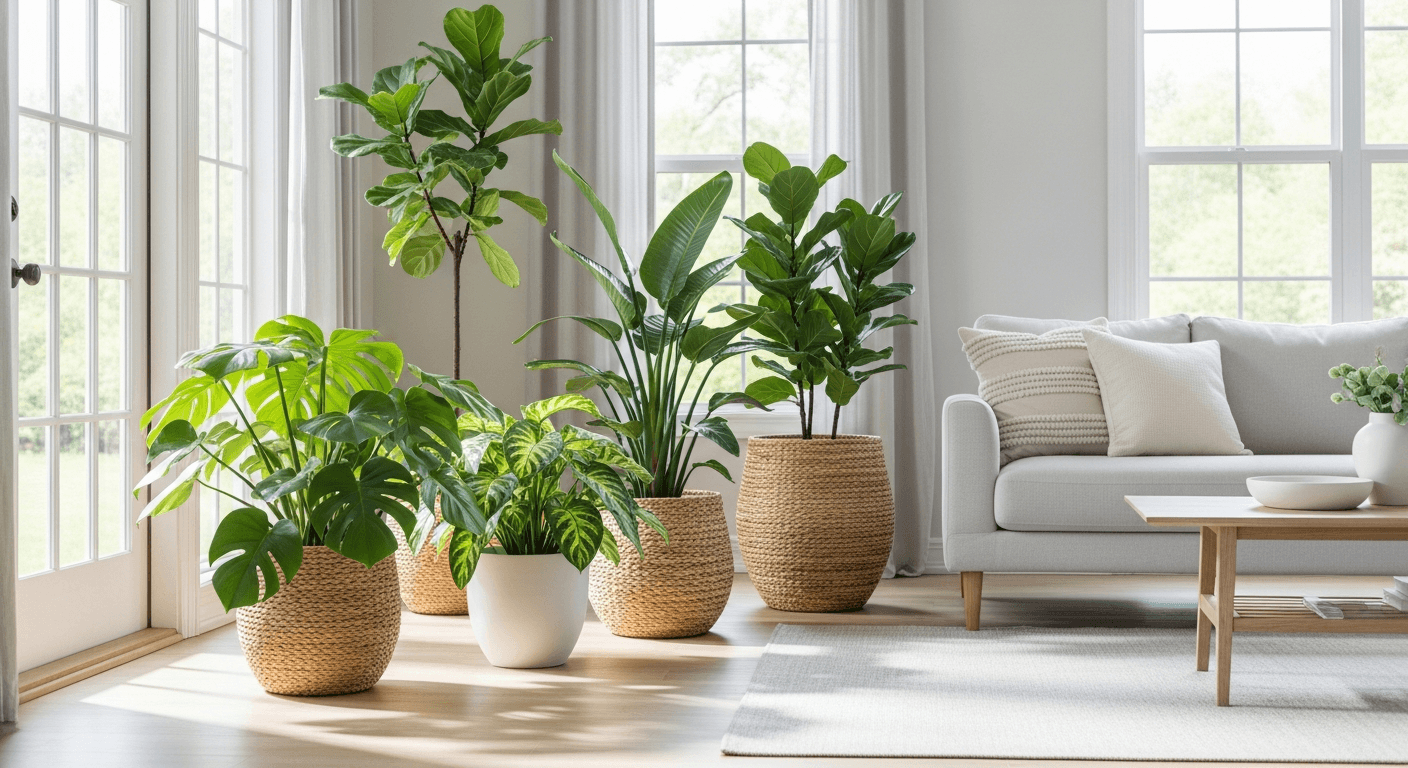
Big Plants to Fill an Empty Corner of the Living Room
The best large indoor plants to fill a corner: bird of paradise, fiddle leaf fig, Monstera, kentia and more, with their real light needs and care notes.
In this article
- Read your corner before you buy
- Quick comparison
- The best large plants, one by one
- 1. Bird of paradise (Strelitzia)
- 2. Fiddle leaf fig (Ficus lyrata)
- 3. Monstera deliciosa
- 4. Kentia palm (Howea forsteriana)
- 5. Rubber plant (Ficus elastica)
- 6. Dracaena
- 7. Areca palm
- 8. Large ZZ plant (Zamioculcas)
- How to care for a large plant
- Acclimate it slowly when it arrives
- Troubleshooting: symptom, cause, fix
A big floor plant completely transforms a room. It fills that awkward empty corner, draws the eye upward and creates a green focal point no piece of furniture can match. But large plants are an investment, often the priciest thing on the shelf, and the single biggest reason they fail is a mismatch between the species and the actual light in your home. I learned this the expensive way, watching a beautiful fiddle leaf drop a leaf a week in a corner that simply did not have the light to keep it alive.
This guide walks through the best large indoor plants, what each one genuinely needs, and how to keep a statement plant thriving for years instead of months. We will start with how to read your corner honestly, then go species by species, then cover the care routine that actually matters at this size.
Read your corner before you buy
Before you fall for a plant in the store, spend a few days paying attention to the corner you want to fill. "Bright" and "shady" are slippery words, so be specific:
- How far is it from the window? Light falls off fast. A spot two metres back from a window receives a fraction of the light of one right beside it, even if the room feels bright to your eyes.
- Which direction does the window face? South-facing windows (in the Northern Hemisphere) give the strongest light; east and west are moderate; north is the weakest. Reverse this in the Southern Hemisphere.
- What blocks the light? A balcony overhang, a tree outside, sheer curtains or a neighbouring building all cut available light dramatically.
- The shadow test: at midday, hold your hand a foot above the spot. A sharp, crisp shadow means high light; a soft, fuzzy shadow means medium; barely any shadow means low light. This thirty-second test will save you a dead plant.
If you want to measure properly, our guide to indoor plant light explains foot-candles, lux and how to use a free phone app to put real numbers on your corner.
A few other things to weigh before committing:
- Room to grow. Many of these hit the ceiling within a few years. Make sure you want a plant that gets that big.
- Pets and children. Several large favourites are toxic if chewed (I flag each one below). If that is a concern, see our roundup of pet-safe plants.
- Weight and access. A two-metre plant in a soil-filled pot can weigh 15-25 kg watered. Think about whether you can move it to clean or repot.
Is your plant looking off and you are not sure why?
Free AI diagnosisQuick comparison
Here is the short version, so you can match a plant to your corner at a glance.
| Plant | Light needed | Watering | Max indoor height | Pet-safe? |
|---|---|---|---|---|
| Bird of paradise | High, some direct sun | Keep evenly moist | ~2 m | No |
| Fiddle leaf fig | Very bright, indirect | Let top dry slightly | 2 m+ | No |
| Monstera deliciosa | Bright indirect | Top 5 cm dry | 2-3 m (with pole) | No |
| Kentia palm | Medium, tolerates shade | Top 5 cm dry | 2-3 m | Yes |
| Rubber plant | Medium to bright | Let top dry | 2 m+ | No |
| Dracaena | Low to medium | Sparing | 1.5-2 m | No |
| Areca palm | Bright indirect | Keep slightly moist | 2 m | Yes |
| ZZ plant (large) | Low to medium | Very sparing | 0.9-1.2 m | No |
The best large plants, one by one
1. Bird of paradise (Strelitzia)
Big paddle-shaped leaves give an instant tropical feel, and a healthy plant fans out to fill a corner like nothing else. It is one of the most spectacular choices for a genuinely bright room. The catch: it needs a lot of light, including a few hours of gentle direct sun, to look its best, and it drinks more than most. Water when the top couple of centimetres dry out, and expect the oldest leaves to split along the edges, which is normal and actually how the plant survives wind in the wild. Toxic if chewed. For the full routine, see our bird of paradise care guide.
2. Fiddle leaf fig (Ficus lyrata)
The interior-design darling, with huge violin-shaped leaves on a sculptural trunk. It is gorgeous and a little demanding. It wants constant, bright, indirect light, hates being moved, and sulks in drafts or sudden temperature swings, which is why so many drop their lower leaves after a relocation. Pick the spot before you buy and leave it there. Let the top few centimetres of soil dry between waterings, and dust those big leaves often. Our dedicated fiddle leaf fig guide covers brown spots and leaf drop in detail. If your corner is dimmer than this plant wants, choose something else; see low-light plants. Toxic if chewed.
3. Monstera deliciosa
Fast-growing and forgiving, Monstera fills a corner quickly with those iconic perforated leaves. It tolerates a range of light, though bright indirect produces the biggest, most fenestrated foliage. The trick to getting it tall rather than sprawling is a moss pole: the aerial roots grab on, the plant climbs, and the new leaves come out larger. Water when the top 5 cm of soil is dry. If you love how fast it grows, our guide to fast-growing plants has more in the same spirit. See the full Monstera guide for splitting and support. Toxic if chewed.
4. Kentia palm (Howea forsteriana)
The indoor palm par excellence: elegant, slow, and remarkably tolerant of medium light where most palms struggle. It adds soft volume and a classic, slightly Victorian feel with very little fuss, and it is one of the few statement plants that is genuinely pet-safe. Water when the top 5 cm dries; kentias dislike soggy roots far more than the occasional dry spell. Because it grows so slowly, buy it at the size you want.
5. Rubber plant (Ficus elastica)
Large, glossy, leathery leaves in deep green or dramatic burgundy. It grows strongly upward, which makes it a tidy choice for narrower corners, and it handles medium-to-bright light well. Let the top of the soil dry between waterings and wipe the leaves to keep that signature shine. Toxic if chewed, and the sap can irritate skin, so wear gloves when pruning.
6. Dracaena
A vertical cane topped with tufts of strappy leaves, available in several leaf colours and patterns. Dracaenas are champions of low-to-medium light and tolerate a fair amount of neglect, which makes them ideal for beginners who want height without the worry. A note of caution: they are sensitive to fluoride and salts, so if the leaf tips brown, switch to filtered or rainwater. Our dracaena guide explains the tip-burn fix. Mildly toxic if chewed, especially to pets.
7. Areca palm
Feathery, arching fronds that read as pure jungle and quickly fill a generous space. It wants bright indirect light and appreciates humidity, rewarding you with a lush, layered corner. Keep the soil lightly and evenly moist, never bone dry and never waterlogged. Like the kentia, it is pet-safe, which makes it a favourite in homes with cats. See the areca palm guide for browning-tip troubleshooting.
8. Large ZZ plant (Zamioculcas)
For the darkest, most forgotten corners, the ZZ is nearly indestructible. It stores water in thick underground rhizomes, copes with genuinely low light, and forgives weeks of forgetfulness. It will not tower like a palm, topping out around a metre, but a mature specimen fills space with dense, glossy, architectural foliage. Overwatering is the only real way to kill it, so err on the side of dry. Toxic if chewed.
How to care for a large plant
The care is not complicated, but a few habits make all the difference at this size:
- Rotate it a quarter turn every couple of weeks so it grows evenly toward the light instead of leaning and going lopsided.
- Wipe the dust off those big leaves every few weeks. Dust blocks light and clogs the pores the plant breathes through; our guide to cleaning leaves shows the gentlest method.
- Water for the size, not the calendar. A large plant in a large pot holds a lot of soil and dries slowly, so always check before watering: push a finger in to the second knuckle, or lift the pot to feel its weight. When you do water, water thoroughly until it runs from the drainage holes, then empty the saucer.
- Feed during the growing season. From spring through early autumn, a balanced liquid fertiliser at half strength every 3-4 weeks supports the steady new growth a big plant needs to look full.
- Repot every 2-3 years, or when roots circle the bottom or push out the drainage holes, ideally in spring. Our step-by-step repotting guide walks through sizing up the pot without overdoing it.
- Support tall specimens before they need it. Stake a leaning trunk or add a moss pole early, while the stem is still flexible.
Acclimate it slowly when it arrives
A large plant has often been grown in bright, humid greenhouse conditions, so dropping a few leaves in its first weeks at home is normal stress, not failure. Resist the urge to fix it by watering more, which usually makes things worse. Give it a stable spot in the best light you have, hold off on fertiliser for a month, and let it settle. Our guide to acclimating new plants covers the transition in full.
Troubleshooting: symptom, cause, fix
When a big plant starts looking off, the symptom usually points to one of a handful of causes.
| Symptom | Likely cause | Fix |
|---|---|---|
| Lower leaves yellow and drop | Overwatering or poor drainage | Check the roots; let the soil dry more between waterings; ensure the pot drains |
| New growth small, stems stretching toward window | Not enough light | Move closer to the window or add a grow light; rotate regularly |
| Crispy brown leaf edges or tips | Low humidity, salt buildup, or underwatering | Water more evenly; flush the pot; raise humidity for ferns and palms |
| Brown spots on leaves | Sunburn (if in direct sun) or fungal/bacterial issue | Move out of harsh sun; remove affected leaves; check for root rot |
| Plant leans hard to one side | Phototropism, not rotated | Turn a quarter every two weeks; stake if needed |
| Sudden mass leaf drop after moving it | Shock from relocation or draft | Return to a stable spot, keep conditions steady, wait it out |
The most common mistake by far is buying light blind. Many catalogue plants, fiddle leaf fig and bird of paradise especially, need far more light than they appear to in a styled photo. Putting one in a dark corner because it looks nice leads straight to dropping leaves and stretched, leggy stems. If your corner is genuinely dark, reach for a kentia, dracaena or ZZ and skip the divas.
If a big plant is already struggling and you have lost ground, our guide to reviving a dying plant walks through triage step by step.
Still not sure what is wrong? Take a clear photo of the affected leaves and run it through our AI diagnosis tool. It is the fastest way I know to pin down the cause before a small problem becomes a dead investment.
With the right species for your light and a few simple habits, a large plant will turn your living room into a greener, taller, more alive space for years to come.
Related articles
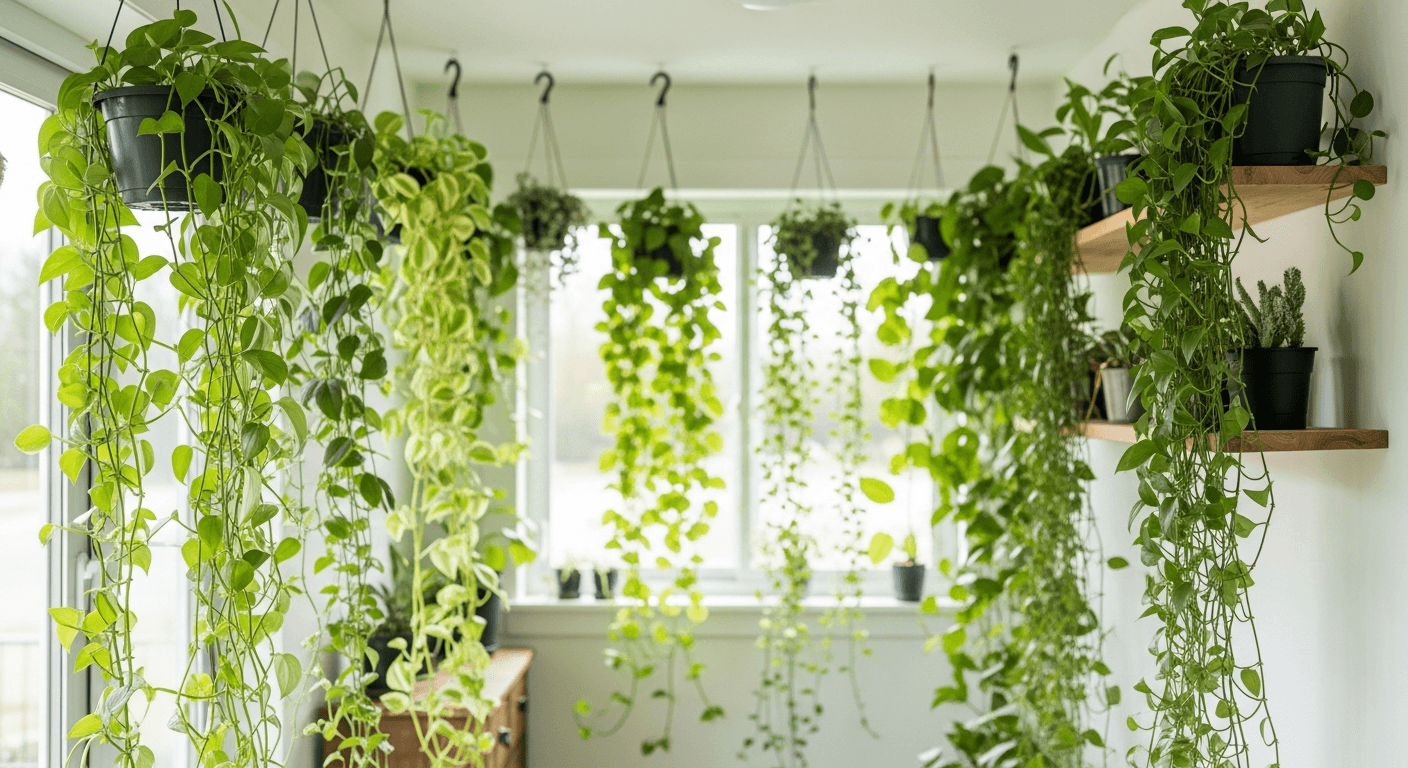
The Best Trailing and Hanging Indoor Plants
The best hanging indoor plants: pothos, string of hearts, ivy, spider plant and more, with quick care notes to fill your shelves with cascading green.
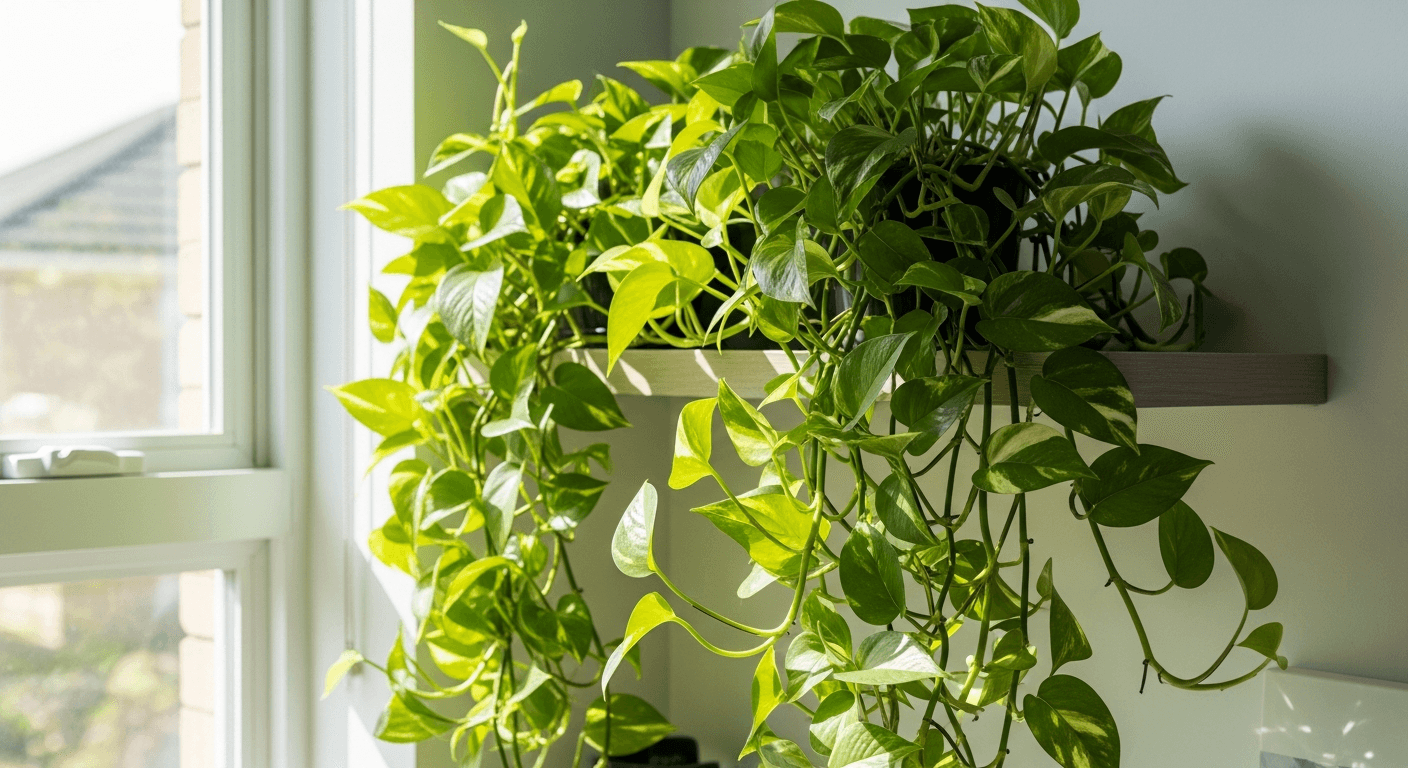
Fast-Growing Houseplants (Rewarding Results Fast)
The best fast-growing houseplants: pothos, tradescantia, spider plant and philodendron. How to speed up growth with light, feeding and timely repotting.
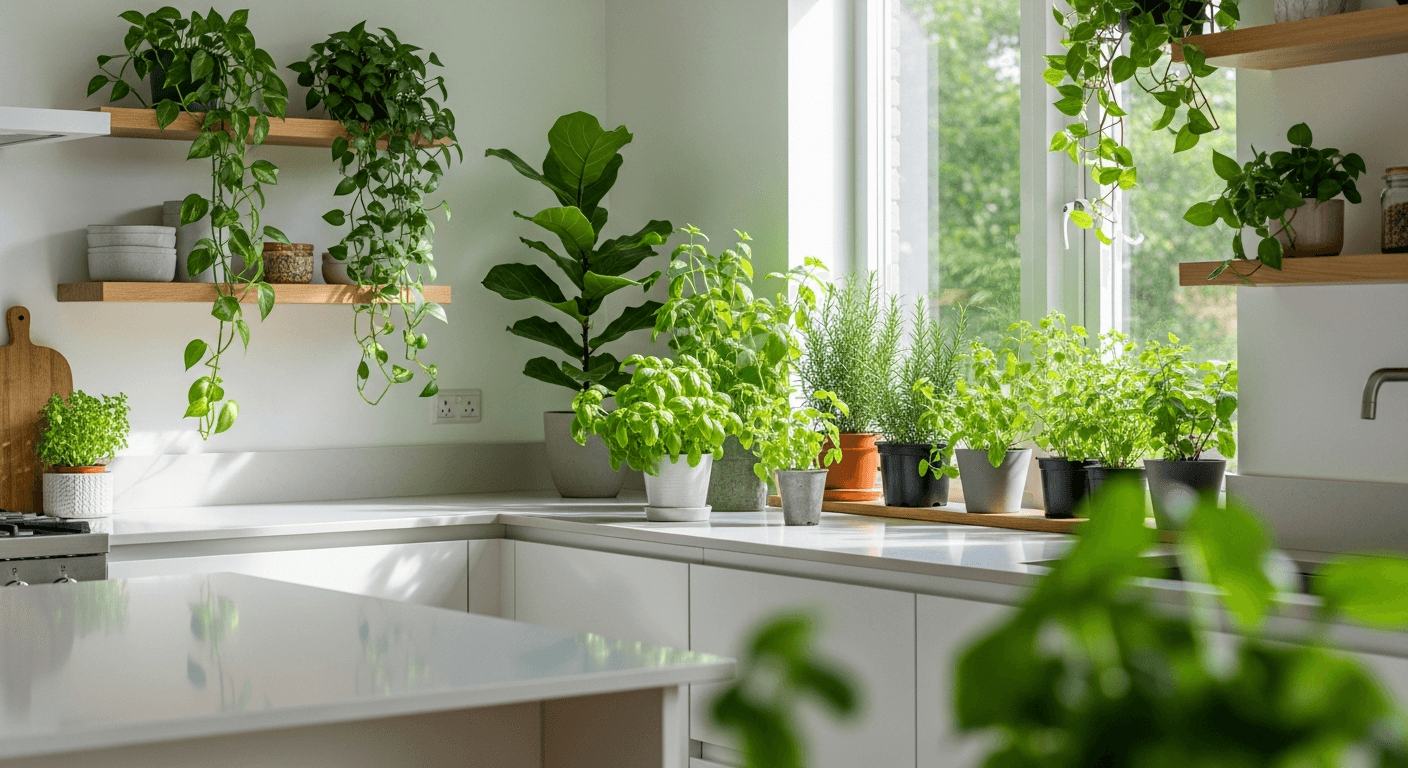
The Best Plants for the Kitchen (and Where to Put Them)
The best plants for the kitchen: easy herbs plus houseplants that tolerate humidity and low light. What to avoid near heat and how to care for them here.
Trouble with your plant?
AI diagnosis