Self-Watering Pots: Which Plants Suit Them and Which Do Not
How self-watering pots work (the reservoir and wicking), which plants love them and which hate them, and how to use them right without rotting the roots.
In this article
Self-watering pots promise exactly what every plant lover wants: forget about watering without your plants suffering for it. And used well, they deliver on that promise. I came to them the hard way, after losing a calathea to my own inconsistent watering can, and they genuinely steadied my hand. But they don't suit every plant, and they don't work by magic. Here's how they actually work on the inside, which plants thrive in them and which quietly rot, and the small habits that separate a happy reservoir from a suffocated root ball.
How they work on the inside
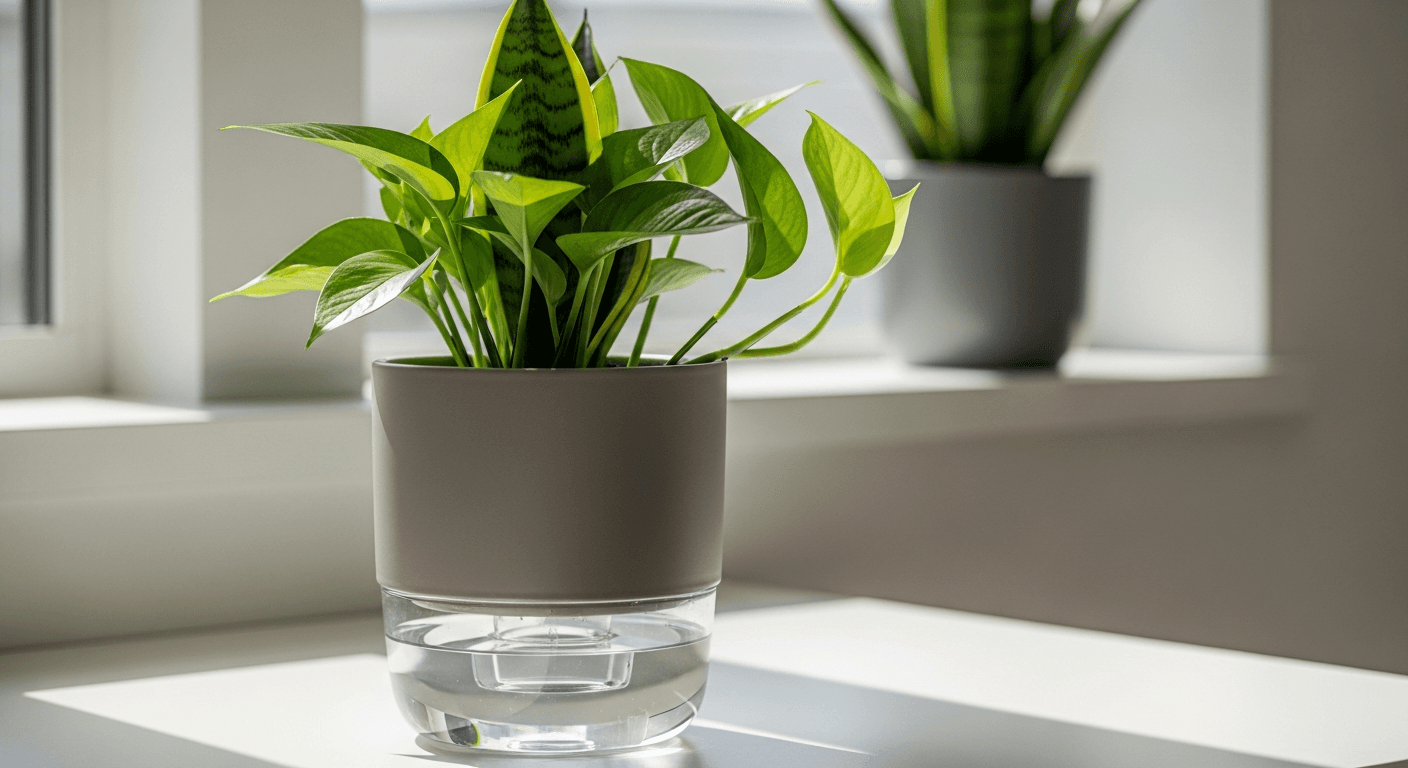
A self-watering pot has two compartments stacked together: the upper pot that holds the plant and potting mix, and a sealed water reservoir in the base. Between them sits a wicking system. Depending on the design, that's either a fabric or felt rope that dangles from the soil down into the water, or an inner pot whose bottom dips directly into the reservoir so the soil itself does the wicking.
The principle is capillary action — the same effect that lets a paper towel pull a spill upward against gravity. The dry soil at the bottom of the pot is "thirstier" than the wet wick, so water climbs the wick and spreads sideways into the mix. As the soil moistens, the pull weakens and the flow slows. The plant draws what it needs, when it needs it, and you simply top up the reservoir now and then.
Two parts matter for this to work and they're easy to miss:
- The overflow hole. Most quality pots have a small drainage port at the top of the reservoir. It exists so that if you overfill — or a downpour catches an outdoor pot — excess water escapes instead of drowning the roots. If your pot has one, never plug it.
- The air gap. There's a deliberate space between the bottom of the soil and the top of the water. The roots are not meant to sit in the water; they sit in damp soil that is fed by the water. That gap is what keeps oxygen reaching the root zone.
Is your plant looking off and you are not sure why?
Free AI diagnosisThe big advantages
- Less watering. A reservoir typically lasts anywhere from a few days to three or four weeks, depending on plant size, pot size, light and season. A leafy pothos in a bright window in July drinks far faster than the same plant in a dim December corner.
- Steady moisture. No more lurching between a swamp and a dust bowl. For plants that hate that swing — calatheas, ferns, marantas — consistency is the whole game.
- Stress-free travel. They're a serious upgrade over the bottle-and-string tricks I used to rely on. If you're heading off, pair them with the rest of the tactics in our guide to keeping plants watered while you're away.
- Bottom-up root growth. Watering from below encourages roots to grow down toward the moisture, building a deeper, more resilient root system than top watering tends to.
Which plants love them, and which hate them
This is the decision that makes or breaks the whole approach. Self-watering pots reward plants that want their soil evenly moist, and they punish plants that need to dry out between waterings. Get the match right and the pot does the thinking for you. Get it wrong and you've built a slow root-rot machine.
| Plant type | Self-watering pot? | Why |
|---|---|---|
| Leafy tropicals (pothos, philodendron, spider plant) | Yes | Like steady, even moisture |
| Calatheas, marantas, ferns | Yes — ideal | Wilt and crisp the instant they dry out |
| Heavily harvested herbs (basil, mint, parsley) | Yes | Fast growth means high, constant water demand |
| Peace lily | Yes | Thirsty and forgiving of damp soil |
| Succulents and cacti | No | Constant moisture rots roots within weeks |
| Snake plant, ZZ plant | No | "Indestructibles" that actually prefer drought |
| Orchids | No | Need airflow at the roots and a wet-then-dry cycle |
| Lavender, rosemary, herbs that like it lean | No | Mediterranean plants resent wet feet |
If you've fallen for the look of a self-watering planter but your plant is a drought lover, you have an easy out: leave the reservoir empty and water from the top on the plant's normal schedule, treating it as an ordinary pot. For genuine desert plants, a breathable terracotta pot is a better instinct anyway — our notes on cactus and succulent care explain why the wet-dry cycle keeps them alive. By contrast, a fussy calathea or an easygoing pothos is exactly the kind of plant these pots were built for.
Using them well in practice
How to set one up and use it right
- Use an airy, wicking-friendly mix. A dense, compacted soil chokes the capillary action — water can't climb it, and the reservoir empties without the top of the pot ever getting damp. Choose a light blend with perlite, bark or coco coir. If you're unsure what to reach for, our guide to choosing the right potting soil walks through the options.
- Water from the top for the first 3 to 6 weeks. A freshly potted plant has no roots long enough to reach the reservoir yet. If you rely on the reservoir from day one, the plant can sit thirsty above a full tank. Water normally from above until roots reach down, then let the reservoir take over.
- Fill the reservoir, then let it run dry before refilling. Don't keep it permanently brimming. Letting it empty completely lets the lower soil breathe and pulls fresh oxygen down to the roots. A useful rhythm: refill, wait until the gauge reads empty, wait one or two more days, then refill again.
- Read the gauge — or learn the weight. Most pots have a float indicator. If yours doesn't, lift it: a full reservoir is noticeably heavier, and after a week or two you'll judge it by feel.
- Flush and clean the reservoir monthly-ish. Standing water concentrates mineral salts and can grow algae or develop an odor. Every month or so, let it dry out fully, then refill — and a couple of times a year, water heavily from the top to flush salt buildup out through the overflow hole.
Common mistakes and how to fix them
Most self-watering failures trace back to a handful of habits. Here's how to spot them and what to do.
| Symptom | Likely cause | Fix |
|---|---|---|
| Lower leaves yellowing, soil always soggy, musty smell | Reservoir kept permanently full | Let it run dry between refills; check roots for rot |
| Plant wilts despite a full reservoir | Roots haven't reached the water yet, or wick failed | Top-water for a few weeks; confirm the wick touches the soil |
| Soil bone-dry on top, reservoir not draining | Mix too compact for capillary action | Repot with a lighter, airier blend |
| Tiny black flies around the pot | Constantly damp surface soil | Let the top dry; treat the gnats |
| White crust on soil or pot rim | Mineral salts from never flushing | Flush from the top until water runs out the overflow |
The single most damaging mistake is the gentlest-looking one: keeping the reservoir topped up at all times. It feels caring, but it means the soil never airs out, oxygen never reaches the roots, and they slowly drown. If you catch a sour smell, blackened mushy roots or sudden yellowing, you may already be dealing with root rot — act fast, because at that stage the pot isn't the cure, the wet-dry reset is.
The second classic trap is fungus gnats. A perpetually damp soil surface is their ideal nursery. The fix is mostly about that top inch of soil: let it dry between top waterings, since the reservoir keeps the lower soil moist regardless. If they've already moved in, our guide to getting rid of fungus gnats covers traps and treatments that work.
Do they replace hand watering?
Not entirely — but they take over the part most of us get wrong. You still refill the reservoir, glance at the gauge and keep an eye on the plant. What the pot handles for you is frequency: that nagging question of whether today is a watering day. For anyone who chronically overwaters or chronically forgets, that's the whole battle. If you're still building confidence with the watering can itself, our guide on how to water indoor plants and the breakdown of overwatering versus underwatering will sharpen your read of the warning signs.
And if your plant has yellow, soft or spotted leaves and you can't tell whether water is to blame, upload a photo to our AI diagnosis. It's the tool I lean on now before I jump to conclusions — it'll help you tell a thirst problem from a rot problem before you make the wrong move.
Conclusion
Self-watering pots are an excellent tool for moisture-loving plants and for anyone who travels or simply forgets. Almost everything good about them comes down to two habits: choose a plant that actually wants steady moisture, and let the reservoir empty between refills so the roots can breathe. Match the plant, respect the air gap, and you'll keep beautifully hydrated plants without ever hovering over the watering can.
Related articles
Fast-Growing Houseplants (Rewarding Results Fast)
The best fast-growing houseplants: pothos, tradescantia, spider plant and philodendron. How to speed up growth with light, feeding and timely repotting.
The Best Plants for the Kitchen (and Where to Put Them)
The best plants for the kitchen: easy herbs plus houseplants that tolerate humidity and low light. What to avoid near heat and how to care for them here.
The Best Trailing and Hanging Indoor Plants
The best hanging indoor plants: pothos, string of hearts, ivy, spider plant and more, with quick care notes to fill your shelves with cascading green.
Trouble with your plant?
AI diagnosis