Pilea: The Chinese Money Plant and Its Free Pups
Pilea peperomioides (Chinese money plant) care: light, watering, why it makes so many pups and how to propagate it. Round, easy and pet-friendly.
In this article
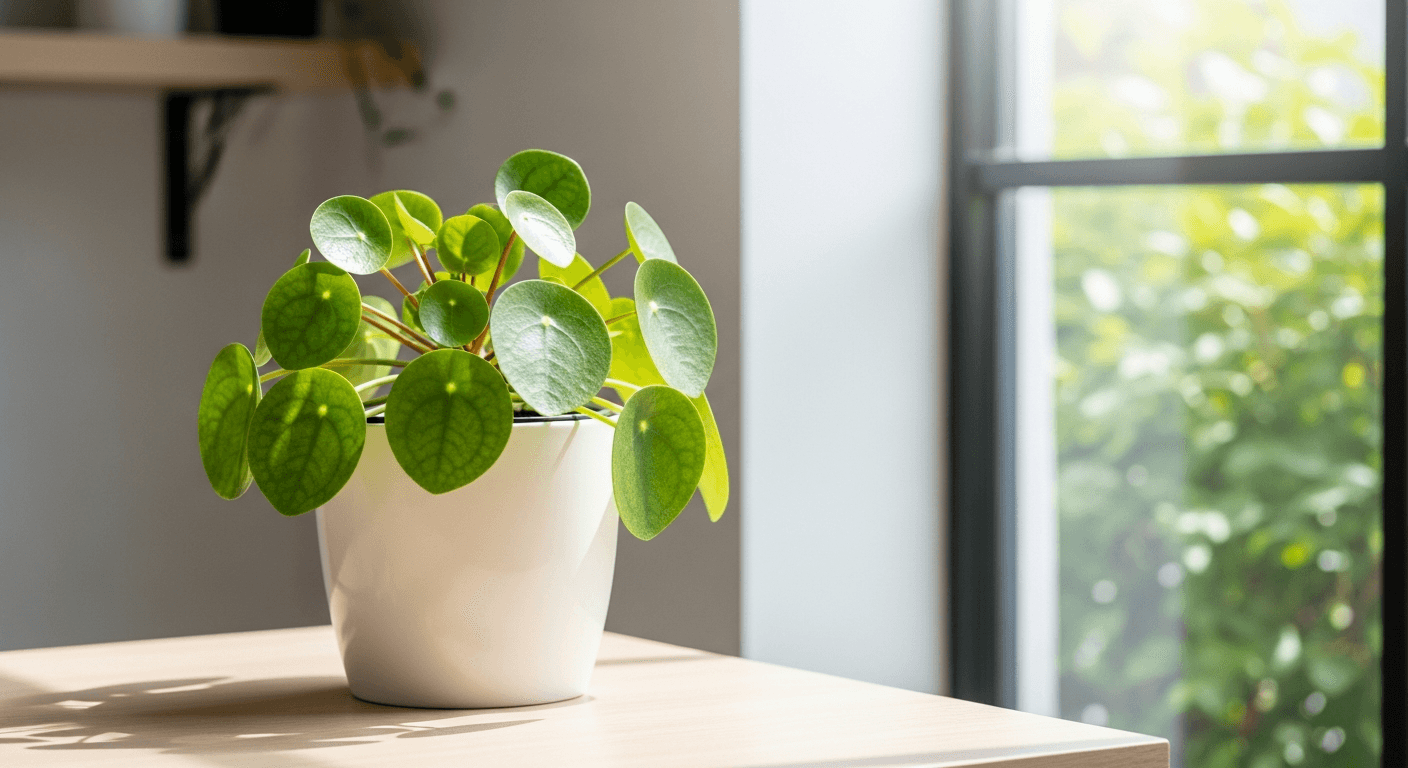
Pilea peperomioides, the "Chinese money plant," went viral for its round, coin-like leaves, its cheerful look and, above all, how easy it is to propagate: it makes pups non-stop. It's compact, perfect for a shelf or desk, and also non-toxic, so I highly recommend it for homes with pets. Fun fact: for years it was only shared as cuttings among enthusiasts before it reached garden centers.
Basic care, point by point
Light
| Light level | Result |
|---|---|
| Bright indirect | Big leaves, compact plant ✅ |
| Medium light | Grows, slightly smaller leaves |
| Low light | Long stem, spaced-out small leaves |
| Strong direct sun | Scorches and bleaches the leaves |
It wants bright indirect light. Rotate the pot a quarter turn each week or it'll grow lopsided toward the light (very obvious on this plant). See the light guide.
Is your plant looking off and you are not sure why?
Free AI diagnosisWatering
Water when the top inch of soil is dry. It likes regular moisture but hates waterlogging: yellow, drooping leaves usually mean overwatering. Lower leaves drop naturally with age, leaving a visible stem (that's normal). Go by the finger test (see the watering guide).
Humidity, temperature and feeding
It handles normal household humidity well. Keep it between 60 and 80 °F (15-27 °C), away from cold drafts and radiators. Feed at half strength every 4 weeks in spring-summer; it grows fast when happy.
Soil and pot
All-purpose soil with good drainage (add perlite) and a pot with holes. Don't put it in a huge pot: it prefers to be a bit snug, and that encourages it to make pups.
The pups: endless free plants
This is the best part of the Pilea. When it's happy, it sends out two kinds of plantlets:
- In the soil: they sprout from the rhizome next to the mother plant.
- On the stem: small leaves that emerge directly from the trunk.
To multiply it from the soil pups:
- Wait for the pup to reach a couple of inches with its own roots.
- Move the soil aside and separate it with a clean cut below the surface, leaving roots on it.
- Pot it up and water it. Great for gifting!
More methods in how to propagate plants. Along with the pothos and the spider plant, it's one of the most rewarding plants to start out with.
How to get a full, upright Pilea
Two simple tricks:
- Rotate it weekly so it grows straight and doesn't lean.
- Leave the soil pups to grow around the mother for a dense clump, or separate them for more plants. If the stem goes "bald" and long from low light, give it more light; you can also behead the top and re-root it.
The white spots: not a pest
If you see tiny white dots on the underside of the leaves, relax: they're cystoliths, perfectly normal mineral deposits of this species, not scale or fungus. There's nothing to treat.
Quick care table
| Care | Pilea peperomioides |
|---|---|
| Light | Bright indirect |
| Water | When dry (top inch) |
| Humidity | Normal household |
| Difficulty | Easy |
| Pets | Non-toxic ✅ |
Common problems
| Symptom | Likely cause | Fix |
|---|---|---|
| Cupped or curled leaves | Too much or too little light | Adjust the location |
| Yellow leaves drooping | Overwatering | Let it dry; check drainage |
| Long, bare stem | Too little light | More light; behead and re-root |
| Grows lopsided | Not rotating it | Turn a quarter turn each week |
| White dots on undersides | Cystoliths (normal) | Nothing, it's not a pest |
The best part: it's pet-friendly
The Pilea is safe for dogs and cats, a big advantage over many trendy plants (it's on our pet-friendly plants list). Thanks to its compact size, simple care and safety, it's one of the best plants for beginners.
Give it bright light, careful watering and a weekly turn, and your Pilea will fill up with green coins and pups to give away. Yours looking off? Try the AI diagnosis tool.
Related articles
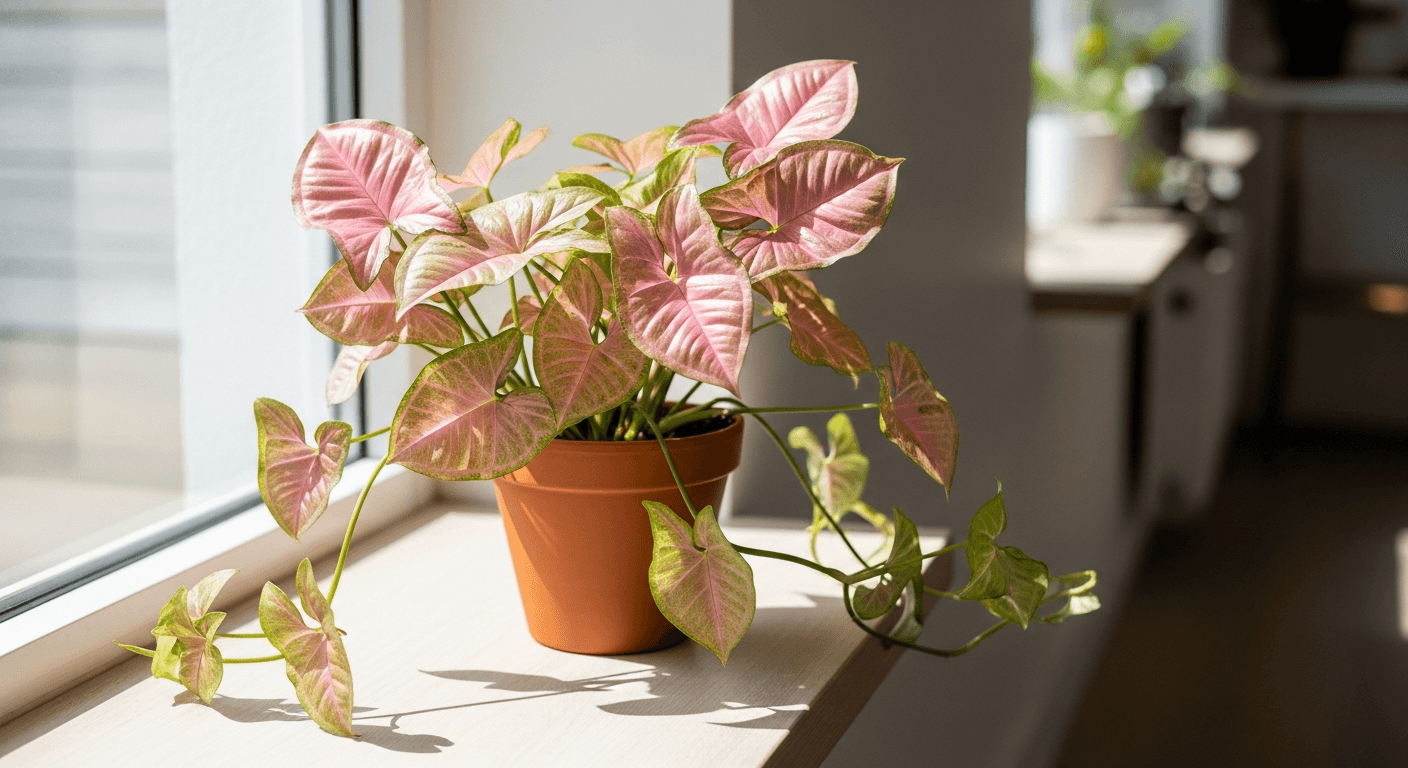
Syngonium (Arrowhead Plant): Care Guide
How to care for syngonium (arrowhead plant): light for variegation, watering, training it to climb or stay bushy, easy propagation, and toxicity to pets.
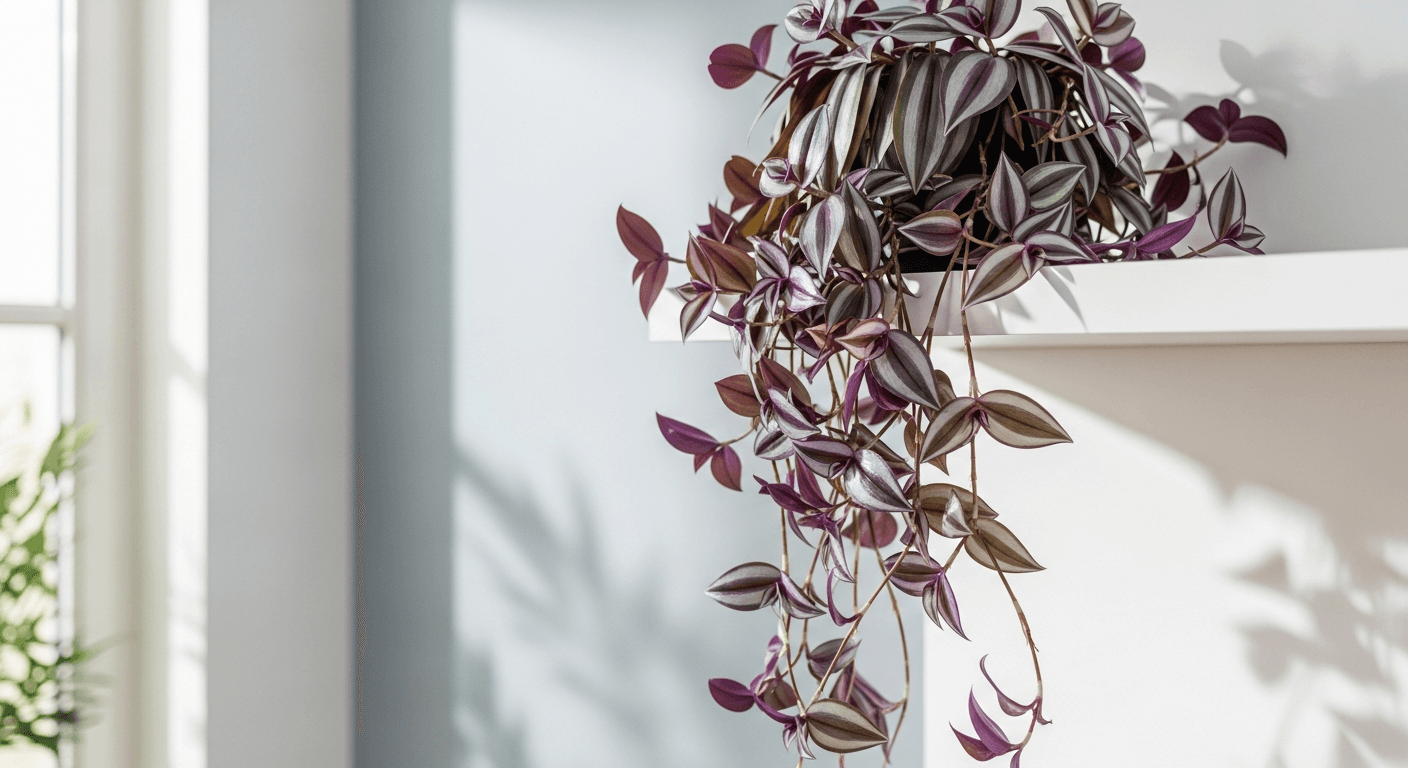
Tradescantia (Wandering Dude): Care Guide
How to care for tradescantia (zebrina, purple heart): bright light for color, watering, pinching to keep it full, super easy propagation, and toxicity.
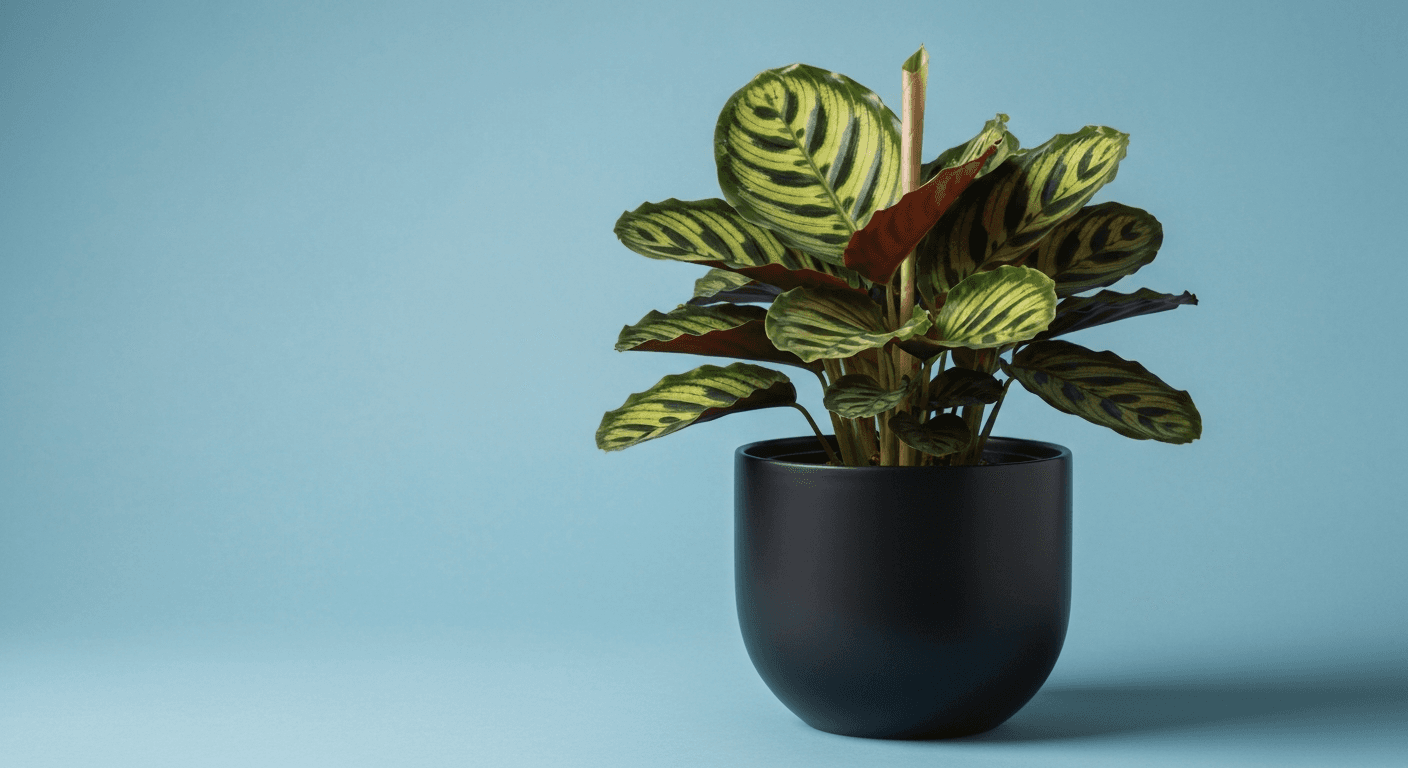
Calathea Care: The 'Prayer Plant' Without Brown Tips
Calathea care: why it gets brown tips, which water to use, humidity, light and watering. The plant with stunning leaves that move at dusk. Pet-friendly too.
Trouble with your plant?
AI diagnosis